Species · Reptiles
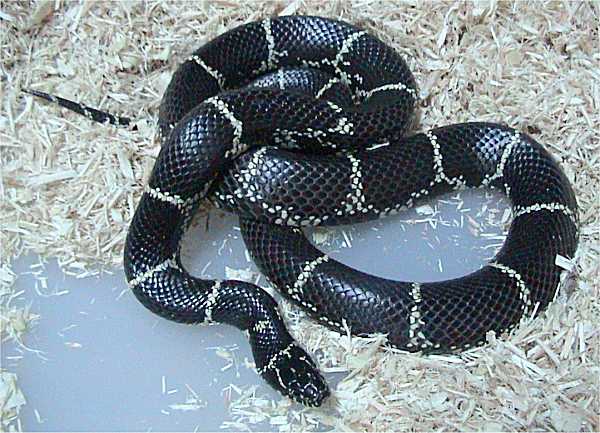
Ecuadorian Milksnake Lampropeltis micropholis
The scientific name of the Ecuadorian Milksnake is Lampropeltis micropholis. It is a species of reptile in the family Colubridae (colubrid), order Squamata. The name dates from 1860.
- Scientific name
- Lampropeltis micropholis Cope, 1860
- Common name
- Ecuadorian Milksnake
- Genus
- Lampropeltis
- Family
- Colubridae (Colubrid)
- Order
- Squamata
- Class
- Reptilia
- Red List category
- LC Least Concern
- Recorded in
- 7 countries
- Name status
- accepted in the Catalogue of Life
Overview
Lampropeltis micropholis, commonly known as the Ecuadorian milk snake, is a species of milk snake.
Classification of the Ecuadorian Milksnake
| Kingdom | Animalia |
|---|---|
| Phylum | Chordata |
| Subphylum | Vertebrata |
| Infraphylum | Gnathostomata |
| Parvphylum | Osteichthyes |
| Megaclass | Tetrapoda |
| Class | Reptilia (Reptile) |
| Order | Squamata (Snakes) |
| Suborder | Serpentes (Snakes) |
| Infraorder | Alethinophidia |
| Family | Colubridae (Colubrid) |
| Subfamily | Colubrinae |
| Genus | Lampropeltis (Kingsnakes) |
| Species | Lampropeltis micropholis Cope, 1860 |
Where the Ecuadorian Milksnake is found
Checklists and occurrence records place Lampropeltis micropholis in 7 countries across North America and South America. GBIF holds 797 georeferenced records of it.
Countries
Regions and cities with the most records
- Antioquia, Colombia 78
- Pichincha, Ecuador 67
- Cundinamarca, Colombia 58
- Quito, Ecuador 53
- Guayas, Ecuador 41
- Santander Department, Colombia 39
- Puntarenas Province, Costa Rica 33
- Chiriquí Province, Panama 28
- Boyacá, Colombia 25
- Huila Department, Colombia 23
- Caldas Department, Colombia 22
- Eloy Alfaro, Ecuador 22
- Guayaquil, Ecuador 21
- Cauca Department, Colombia 18
- Valle del Cauca Department, Colombia 18
- Quindío Department, Colombia 17
- San José, Costa Rica 16
- Santo Domingo de los Tsáchilas, Ecuador 16
- Dosquebradas, Colombia 15
- Envigado, Colombia 15
- Imbabura, Ecuador 15
- Itagüí, Colombia 15
- Manizales, Colombia 15
- Medellín, Colombia 15
- Pereira, Colombia 14
- Risaralda Department, Colombia 14
- Santa Rosa de Cabal, Colombia 14
- Chinchiná, Colombia 13
- Bello, Colombia 12
- Caldas, Colombia 12
- Santo Domingo de los Colorados, Ecuador 12
- Copacabana, Colombia 11
- Cali, Colombia 10
- Chocó, Colombia 10
- Daule, Ecuador 10
- La Estrella, Colombia 10
Range as the checklists state it
E Costa Rica, Panama, Colombia, Ecuador; possibly Venezuela
A number beside a place is its count of GBIF occurrence records. A place without a number comes from a checklist alone. Records show where a species has been observed or collected, which can include escapes and vagrants.
Common names
English
- Ecuadorian Milksnake
- Andean Milksnake
- Black Milksnake
- Ecuadoran Milksnake
- South American Milksnake
Names in 5 other languages
- Czech
- korálovka sedlatá andská
- Danish
- Sydlig Mælkesnog
- German
- Ekuador-Dreiecksnatter
- Italian
- Falso corallo sudamericano, Serpente del latte sudamericano
- Spanish
- Falsa coral interandina, Falsa coral ratonera, Falsa coralillo real sudamericana, Serpiente de leche
Synonyms
4 other scientific names have been used for this species and are now treated as synonyms of Lampropeltis micropholis.
- Lampropeltis triangulum andesiana Williams, 1978
- Lampropeltis triangulum gaigae Dunn, 1937
- Lampropeltis triangulum gaigeae Dunn, 1937
- Lampropeltis triangulum micropholis Cope, 1860
Related species
-
 Milk SnakeLampropeltis triangulum
-
 California KingsnakeLampropeltis californiae
-
 Scarlet KingsnakeLampropeltis elapsoides
-
 Common KingsnakeLampropeltis getula
-
 Speckled KingsnakeLampropeltis holbrooki
-
 California Mountain KingsnakeLampropeltis zonata
-
 Black KingsnakeLampropeltis nigra
-
 Prairie KingsnakeLampropeltis calligaster
Compare
Questions and answers
What is the scientific name of the Ecuadorian Milksnake?
The scientific name of the Ecuadorian Milksnake is Lampropeltis micropholis. Written with its author, the full name is Lampropeltis micropholis Cope, 1860.
Which family does the Ecuadorian Milksnake belong to?
Lampropeltis micropholis belongs to the family Colubridae, in the order Squamata and the class Reptilia.
Where is the Ecuadorian Milksnake found?
Checklists and occurrence records place Lampropeltis micropholis in 7 countries, including Colombia, Ecuador, Costa Rica, Panama, Mexico and Guatemala.
What is the conservation status of the Ecuadorian Milksnake?
The IUCN Red List category recorded for Lampropeltis micropholis is Least Concern (LC).
What other names does the Ecuadorian Milksnake have?
Lampropeltis micropholis is also known in English as Andean Milksnake, Black Milksnake, Ecuadoran Milksnake and South American Milksnake.
Sources
Data
- Catalogue of Life, 2026-10-16 XR cc by
- Global Biodiversity Information Facility CC BY 4.0
- Wikidata CC0
- English Wikipedia CC BY-SA 4.0
- GeoNames CC BY 4.0
- Within the Catalogue of Life, this name comes from The Reptile Database cc by
References
- Cope, E. D. (1860). Catalogue of the Colubridae in the Museum of the Academy of Natural Sciences of Philadelphia, with notes and descriptions of new species. Part II. Proc. Acad. Nat. Sci. Philadelphia 12: 241-266.
- Barbour, T., and L. J. Cole. (1906). Vertebrata from Yucatan. Reptilia, Amphibia and Pisces. Bull. Mus. Comp. Zool. Harvard 50: 146-159.
- Despax, R. (1910). Mission géodésique de l’Équateur. Collections recueillies par M. le Dr Rivet. Liste des ophidiens et descriptions des espèces nouvelles. (Note préliminaire.). Bull. Mus. Natl. Hist. Nat. Paris 16: 368-376.
- Blanchard, Frank N. (1921). A revision of the king snakes: genus Lampropeltis. Bull. US Natl. Mus. (114): 1-260.
- Dunn, & Emmett Reid. (1937). Notes on tropical Lampropeltis. Occasional Papers of the Museum of Zoology, University of Michigan (353): 1-11.
- Slevin, J. R. (1942). Notes on a collection of reptiles from Boquete, Panama, with the description of a new species of Hydromorphus. Proc. Cal. Acad. Sci. 23: 463-480.
- Barbour, Thomas, Loveridge, & Arthur. (1946). First supplement to typical reptiles and amphibians. Bull. Mus. Comp. Zool. Harvard 96 (2): 59-214.
- Taylor, E. H. (1951). A brief review ot the snakes of Costa Rica. Univ. Kansas Sci. Bull. 34 (1): 3-188.
- Mertens, R. (1956). Das Problem der Mimikry bei Korallenschlangen. Zool. Jahrb., Abt Syst. Ökol. Geogr. Tiere 84: 541-576 + Plates 6-14.
- Mertens, R. (1956). Das Problem der Mimikry bei Korallenschlangen. English Translation by Andrew Durso. Smithsonian Herpetological Information Service 160 (2023).
- Smith, H. M. (1958). Handlist of the snakes of Panamá. Herpetologica 14: 222-224.
- Peters, J. A. (1960). The snakes of Ecuador; check list and key. Bull. Mus. Comp. Zool. Harvard 122: 489-541.
- Peters, James A.; Donoso-Barros, Roberto & Orejas-Miranda, Braulio. (1970). Catalogue of the Neotropical Squamata: Part I Snakes. Bull. US Natl. Mus. 297: 347 Pp.
- Williams, K. L. (1978). Systematics and natural history of the American milk snake Lampropeltis triangulum. Milwaukee Publ. Mus. Contrib. Biol. Geol. No. 2, 258 Pp.
- Mehrtens, J. M. (1987). Living snakes of the world in color. Sterling Publ. Co., Hic., New York, NY: 480 Pp.
- Williams, K. L. (1988). Systematics and natural history of the American milk snake Lampropeltis triangulum. 2nd ed. Milwaukee Publ. Mus. Contrib. Biol. Geol.
- Frank, N. (1994). The American Milk Snake Lampropeltis triangulum. Reptile & Amphibian Mag. (30): 20-33.
- Williams K L. (1994). Lampropeltis triangulum (Lacepede), milk snake. Catalogue of American Amphibians and Reptiles 594: 1-10.
- Kornacker, P. M. (1999). Checklist and key to the snakes of Venezuela. PaKo-Verlag, Rheinbach, Germany, 270 Pp.
- BARRIO, C. L. & NAVARRETE, L.F.,. (1999). Geographic Distribution: Serpentes: Lampropeltis triangulum andesiana. Herpetological Review 30(3): 174-175.
- Köhler, G. (2008). Reptiles of Central America. 2nd Ed. Herpeton-Verlag, 400 Pp.
- Carrera, C. et al. (2009). Guía de Campo de los Pequeños Vertebrados del Distrito Metropolitano de Quito (DMQ). Publicación Miscelánea N° 5. Serie de Publicaciones Del Museo Ecuatoriano de Ciencias Naturales (MECN) – Fondo Ambiental Del MDMQ. 1-89 Pp. Imprenta Nuevo Arte. Quito-Ecuador.
- RIVAS, GILSON A.; CÉSAR R. MOLINA, GABRIEL N. UGUETO, TITO R. BARROS, CÉSAR L. BAR- RIO-AMORÓS & PHILIPPE J. R. KOK. (2012). Reptiles of Venezuela: an updated and commented checklist. Zootaxa 3211: 1–64.
- Gabirot, Marianne; Pablo Picerno, Jorge Valencia, Pilar Lopez, and José Martin. (2012). Species Recognition by Chemical Cues in Neotropical Snakes. Copeia 2012 (3): 472-477.
- Ruane, Sara; Robert W. Bryson, Jr., R. Alexander Pyron, and Frank T. Burbrink. (2014). Coalescent Species Delimitation in Milksnakes (genus Lampropeltis) and Impacts on Phylogenetic Comparative Analyses. Systematic Biology 63 (2): 231-250, Doi:10.1093/Sysbio/Syt099.
This species in other databases
Page built on 25 November 2026. See how the catalog is made and all sources and licences.
Cite this page
ScientificNames.org. (2026). Lampropeltis micropholis (Ecuadorian Milksnake). Retrieved November 25, 2026, from https://scientificnames.org/species/lampropeltis-micropholis
“Lampropeltis micropholis (Ecuadorian Milksnake).” ScientificNames.org, 2026, scientificnames.org/species/lampropeltis-micropholis. Accessed 25 Nov. 2026.
ScientificNames.org. “Lampropeltis micropholis (Ecuadorian Milksnake).” Accessed November 25, 2026. https://scientificnames.org/species/lampropeltis-micropholis.
@misc{scientificnames_lampropeltis_micropholis_ecuadorian_milksnake,
  author = {{ScientificNames.org}},
  title = {Lampropeltis micropholis (Ecuadorian Milksnake)},
  year = {2026},
  url = {https://scientificnames.org/species/lampropeltis-micropholis},
  note = {Accessed 2026-11-25}
}