Species · Flowering plants
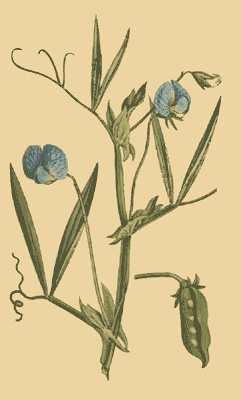
Spanish Vetchling Lathyrus clymenum
The scientific name of the Spanish Vetchling is Lathyrus clymenum. It is a species of flowering plant in the family Fabaceae (bean), order Fabales.
- Scientific name
- Lathyrus clymenum L.
- Common name
- Spanish Vetchling
- Genus
- Lathyrus
- Family
- Fabaceae (Bean)
- Order
- Fabales
- Class
- Magnoliopsida
- Red List category
- LC Least Concern
- Recorded in
- 35 countries
- Name status
- accepted in the Catalogue of Life

Overview
The seeds are used to prepare fava Santorinis and contain approximately 25% protein.
Written 26 November 2026 from the sources listed below. Each statement was checked against the passage it cites; statements that could not be supported were removed.
Habitat
Spanish vetchling grows naturally in Mediterranean environments. Populations have been recorded growing in disturbed habitats in Israel since 1999.[1][2]
Uses
Spanish vetchling has been cultivated as a food crop on Santorini and neighbouring islands for approximately 3,500 years. The cultivated crop can produce approximately 800 kilograms of beans per hectare when weather conditions are favourable.[3][4][5][6]
The seeds are used to prepare the Greek dish known as fava Santorinis. The cooked seeds are prepared as a purée mixed with chopped onion and typically served with olive oil and lemon juice.[7][8]
The seeds contain approximately 25% protein and provide approximately 26% dietary fibre. They have a very low fat content, and most of their carbohydrates derive from complex carbohydrates and protein.[9][10][11][12]
Spanish vetchling is included among European Union products with Protected Designation of Origin status.[13]
Classification of the Spanish Vetchling
| Kingdom | Plantae |
|---|---|
| Subkingdom | Pteridobiotina |
| Phylum | Tracheophyta |
| Class | Magnoliopsida |
| Order | Fabales |
| Family | Fabaceae (Bean) |
| Genus | Lathyrus (Pea) |
| Species | Lathyrus clymenum L. |
Where the Spanish Vetchling is found
Checklists and occurrence records place Lathyrus clymenum in 35 countries across Africa, Asia and Europe. GBIF holds 15,046 georeferenced records of it.
Countries where it is native or its origin is not stated
- Afghanistan 71
- Albania
- Algeria 152
- Belgium 14
- Bulgaria 10
- Cabo Verde 3
- Croatia 9
- Czechia 11
- Denmark 6
- Estonia 17
- France 3,776
- Gibraltar 39
- Greece 363
- Hungary 3
- Israel 49
- Italy 1,892
- Libya 8
- Malta 100
- Montenegro 8
- Morocco 174
- Poland 3
- Russia 12
- Spain 5,640
- Sweden 27
- Switzerland 7
- Syria 3
- The Netherlands 8
- Tunisia 35
- Turkey 30
- Ukraine 3
- United Kingdom 21
Countries where it has been introduced
Regions and cities with the most records
- Catalonia, Spain 2,070
- Provence-Alpes-Côte d'Azur, France 1,586
- Occitanie, France 863
- Sant Cugat del Vallès, Spain 771
- Rubí, Spain 755
- Molins de Rei, Spain 749
- Sant Andreu de la Barca, Spain 737
- Sant Quirze del Vallès, Spain 727
- Barberà del Vallès, Spain 704
- Cerdanyola del Vallès, Spain 700
- Esplugues de Llobregat, Spain 700
- Sant Just Desvern, Spain 693
- Ripollet, Spain 692
- Barcelona, Spain 691
- Sabadell, Spain 689
- Sant Vicenç dels Horts, Spain 689
- Sant Feliu de Llobregat, Spain 679
- L'Hospitalet de Llobregat, Spain 677
- Montcada i Reixac, Spain 674
- La Valette-du-Var, France 668
- Santa Coloma de Gramenet, Spain 666
- Santa Perpètua de Mogoda, Spain 664
- Sant Joan Despí, Spain 661
- La Garde, France 660
- Corsica, France 657
- Cornellà de Llobregat, Spain 655
- La Crau, France 652
- Martorell, Spain 650
- Llefià, Spain 646
- Sant Adrià de Besòs, Spain 640
- Sant Boi de Llobregat, Spain 634
- El Prat de Llobregat, Spain 618
- Badalona, Spain 615
- Mollet del Vallès, Spain 608
- Viladecans, Spain 596
- Faro, Portugal 579
3 more countries have a few records outside this range
These countries hold a few records of Lathyrus clymenum but lie outside the range the checklists give for it. Such records are often zoo or garden specimens, museum material or vagrants, so the species is not counted as occurring there.
A number beside a place is its count of GBIF occurrence records. A place without a number comes from a checklist alone. Records show where a species has been observed or collected, which can include escapes and vagrants.
Common names
English
- Spanish Vetchling
- Crimson Pea
Names in 18 other languages
- Catalan
- Fesol bord, Guixó articulat
- Czech
- hrachor popínavý
- Danish
- Middelhavs-fladbælg
- Estonian
- kahevärviline seahernes
- Finnish
- espanjannätkelmä
- French
- Gesse climène, Gesse clymène, Gesse d'Espagne, Gesse pourpre
- German
- Purpur-Platterbse, Purpurne Platterbse
- Hebrew
- טופח ספרדי
- Hungarian
- Borsóbükköny
- Italian
- Cicerchia porporina
- Japanese
- オトメレンリソウ
- Portuguese
- Chicharão-de-Torres, Cisirão-de-Torres, Cizirão-das-torres, Ervilhaca-púrpura
- Russian
- Чина членистая
- Slovenian
- purpurni grahor
- Spanish
- Arvejón, Cicercha purpurina
- Swedish
- bandvial, ledvial
- Turkish
- Fafulyas
- nap
- Doleca
Synonyms
40 other scientific names have been used for this species and are now treated as synonyms of Lathyrus clymenum.
- Clymenum alatum (Ten.) Link
- Clymenum tenuifolium (Desf.) Link
- Clymenum uncinatum Moench
- Clymenum uncinatum var. purpureum Alef.
- Clymenum uncinatum var. vulgare Alef.
- Lathyros clymenus (L.) St.-Lag.
- Lathyrus articulatus subsp. articulatus
- Lathyrus articulatus subsp. clymenum (L.) Maire
- Lathyrus articulatus subsp. clymenum L.
- Lathyrus articulatus subsp. euclymenum Maire
- Lathyrus articulatus subsp. typicus Maire
- Lathyrus articulatus var. latifolius Rouy
- Lathyrus articulatus var. ligusticus Burnat
- Lathyrus articulatus var. tenuifolius (Desf.) Rouy
- Lathyrus auriculatus Bertol.
- Lathyrus clymensum L.
- Lathyrus clymenum subsp. tenuifolius (Desf.) Nyman
- Lathyrus clymenum subvar. latifolius (Godr. & Gren.) Pérez Lara
- Lathyrus clymenum var. angustifolius Rouy
- Lathyrus clymenum var. latifolius Godr. & Gren.
- Lathyrus clymenum var. tenuifolius (Desf.) Batt.
- Lathyrus clymenum var. tenuifolius Godr. & Gren.
- Lathyrus cornutus Biehler
- Lathyrus macrorrhizus var. tenuifolius (Desf.) Gren. & Godr.
- Lathyrus montanus subsp. tenuifolius (Desf.) Arcang.
- Lathyrus montanus var. tenuifolius (Desf.) Garcke
- Lathyrus tataricus Schreb. ex Spreng.
- Lathyrus tenuifolius Desf.
- Lathyrus tenuifolius var. clymenum (L.) Porta
- Lathyrus tuntasii Heldr. ex Halácsy
- Lathyrus vicioides Bubani
- Orobus articulatus A.Braun
- Orobus clymenum (L.) A.Braun
- Pisum clymenum (L.) E.H.L.Krause
- Lathyrus alatus Ten. ambiguous synonym
- Lathyrus alatus Sm. ambiguous synonym
- Lathyrus articulatus Loisel. misapplied
- Lathyrus palustris Láng ex Ten. ambiguous synonym
- Lathyrus purpureus Desf. ambiguous synonym
- Orobus alatus (Ten.) A.Braun ambiguous synonym
Related species
-
 Sweet PeaLathyrus odoratus
-
 Indian PeaLathyrus sativus
-
 Perennial PeaLathyrus latifolius
-
 Tuberous PeaLathyrus tuberosus
-
 Sea PeaLathyrus japonicus
-
 Yellow VetchLathyrus aphaca
-
 Heath-peaLathyrus linifolius
-
 Yellow VetchlingLathyrus pratensis
Compare
Questions and answers
What is the scientific name of the Spanish Vetchling?
The scientific name of the Spanish Vetchling is Lathyrus clymenum. Written with its author, the full name is Lathyrus clymenum L..
Which family does the Spanish Vetchling belong to?
Lathyrus clymenum belongs to the family Fabaceae, in the order Fabales and the class Magnoliopsida.
Where is the Spanish Vetchling found?
Checklists and occurrence records place Lathyrus clymenum in 35 countries, including Spain, France, Italy, Greece, Morocco and Algeria.
What is the conservation status of the Spanish Vetchling?
The IUCN Red List category recorded for Lathyrus clymenum is Least Concern (LC).
What other names does the Spanish Vetchling have?
Lathyrus clymenum is also known in English as Crimson Pea.
Sources
Passages the profile rests on
- The species grows naturally in Mediterranean environments. Source passage: “native to the Mediterranean.” — English Wikipedia
- Populations of the species have been recorded growing in disturbed habitats in Israel since 1999. Source passage: “Lathyrus clymenum populations were identified in Israel since 1999, growing in disturbed habitats.” — academia.edu
- The plant is cultivated on the Greek island of Santorini. Source passage: “The plant is cultivated on the island of Santorini in Greece” — English Wikipedia
- Residents of Santorini and neighbouring islands have cultivated this legume for approximately 3,500 years. Source passage: “For 3,500 years residents of Santorini and neighbouring islands have been cultivating the legume species Lathyrus clymenum” — English Wikipedia
- The species has been cultivated on Santorini and neighbouring islands as a food crop. Source passage: “The species has historical significance, used as food over ...” — academia.edu
- The cultivated crop can produce approximately 800 kilograms of beans per hectare when weather conditions are favourable. Source passage: “When weather conditions are good, farmers on the island can reap about 800 kilograms of beans per hectare.” — English Wikipedia
- The seeds are used to prepare the Greek dish known as fava Santorinis. Source passage: “The seeds are used to prepare a Greek dish called fava santorinis.” — English Wikipedia
- The cooked seeds are prepared as a purée mixed with chopped onion and typically served with olive oil and lemon juice. Source passage: “The cooked fava are mixed with chopped onion into a purée, typically served with chopped onion, olive oil and lemon juice.” — English Wikipedia
- The seeds contain approximately 25% protein. Source passage: “has a very high protein content (25%)” — English Wikipedia
- The seeds provide approximately 26% dietary fibre. Source passage: “is an excellent source of dietary fibre (26%).” — English Wikipedia
- The seeds have a very low fat content. Source passage: “It is very low in fat” — English Wikipedia
- Most of the carbohydrates in the seeds derive from complex carbohydrates and protein. Source passage: “as most of its carbohydrates derive from complex carbohydrates and protein.” — English Wikipedia
- The species is included among European Union products with Protected Designation of Origin status. Source passage: “was recently added to the European Union's products with a Protected Designation of Origin.” — English Wikipedia
Data
- Catalogue of Life, 2026-10-16 XR cc by
- Global Biodiversity Information Facility CC BY 4.0
- Wikidata CC0
- GeoNames CC BY 4.0
- Wikimedia Commons per image; credit shown with each image
- Within the Catalogue of Life, this name comes from The World Checklist of Vascular Plants (WCVP): Fabaceae cc by
References
- Sp. Pl.: 732 (1753) where the name was published
This species in other databases
- Catalogue of Life 3SKTM
- Wikidata Q12813815
- iNaturalist 82741
- World Flora Online wfo-0000212676
- GRIN 21555
Page built on 26 November 2026. See how the catalog is made and all sources and licences.
Cite this page
ScientificNames.org. (2026). Lathyrus clymenum (Spanish Vetchling). Retrieved November 26, 2026, from https://scientificnames.org/species/lathyrus-clymenum
“Lathyrus clymenum (Spanish Vetchling).” ScientificNames.org, 2026, scientificnames.org/species/lathyrus-clymenum. Accessed 26 Nov. 2026.
ScientificNames.org. “Lathyrus clymenum (Spanish Vetchling).” Accessed November 26, 2026. https://scientificnames.org/species/lathyrus-clymenum.
@misc{scientificnames_lathyrus_clymenum_spanish_vetchling,
  author = {{ScientificNames.org}},
  title = {Lathyrus clymenum (Spanish Vetchling)},
  year = {2026},
  url = {https://scientificnames.org/species/lathyrus-clymenum},
  note = {Accessed 2026-11-26}
}