Species · Flowering plants
Canary Island Lavender Lavandula canariensis
The scientific name of the Canary Island Lavender is Lavandula canariensis. It is a species of flowering plant in the family Lamiaceae (mint family), order Lamiales.
- Scientific name
- Lavandula canariensis (L.) Mill.
- Common name
- Canary Island Lavender
- Genus
- Lavandula
- Family
- Lamiaceae (Mint Family)
- Order
- Lamiales
- Class
- Magnoliopsida
- Recorded in
- 3 countries
- Name status
- accepted in the Catalogue of Life

Overview
Canary Island Lavender is a woody, evergreen shrub. The species is native to the Canary Islands. It has finely divided leaves and small, fragrant blue flowers that open from dark purple buds.
Written 26 November 2026 from the sources listed below. Each statement was checked against the passage it cites; statements that could not be supported were removed.
Appearance
Its leaves are bipinnate, rich green and covered with fine, downy hairs. They are also finely divided, slightly hairy and grey-green.[1][2]
Its flowers are small, fragrant and blue, growing in spikes from dark purple buds. The flowering stems are slender and branching.[3][4]
Habitat
Canary Island Lavender is native to the Canary Islands. Its natural distribution is the Canary Islands.[5][6]
Behaviour
The species produces flowers during summer. Its flowers are fragrant.[7][8]
Reproduction and life cycle
Canary Island Lavender can be propagated using semi-hardwood cuttings taken in summer.[9]
Uses
The species can be grown outdoors during summer in conditions corresponding to RHS hardiness rating H1B or H1C.[10][11]
Classification of the Canary Island Lavender
| Kingdom | Plantae |
|---|---|
| Subkingdom | Pteridobiotina |
| Phylum | Tracheophyta |
| Class | Magnoliopsida |
| Order | Lamiales |
| Family | Lamiaceae (Mint Family) |
| Subfamily | Nepetoideae |
| Tribe | Ocimeae |
| Subtribe | Lavandulinae |
| Genus | Lavandula (Lavender) |
| Species | Lavandula canariensis (L.) Mill. |
Where the Canary Island Lavender is found
Checklists and occurrence records place Lavandula canariensis in 3 countries across Africa. GBIF holds 1,885 georeferenced records of it.
Countries
Regions and cities with the most records
- Canary Islands, Spain 1,527
- Tacoronte, Spain 357
- Los Llanos de Aridane, Spain 345
- Santa Cruz de la Palma, Spain 333
- La Orotava, Spain 326
- La Laguna, Spain 307
- Candelaria, Spain 299
- Güimar, Spain 293
- Santa Cruz de Tenerife, Spain 232
- Puerto de la Cruz, Spain 215
- Santa Brígida, Spain 208
- Realejo Alto, Spain 201
- Los Realejos, Spain 196
- Icod de los Vinos, Spain 190
- San Bartolomé de Tirajana, Spain 182
- Arucas, Spain 171
- Guía de Isora, Spain 167
- Las Palmas de Gran Canaria, Spain 160
- Santa Lucía, Spain 146
- Telde, Spain 144
- Granadilla de Abona, Spain 139
- San Miguel De Abona, Spain 132
- Arona, Spain 128
- Adeje, Spain 127
- Ingenio, Spain 127
- Agüimes, Spain 126
- San Isidro, Spain 126
- Carrizal, Spain 121
- Gáldar, Spain 93
- Mogán, Spain 29
- Maspalomas, Spain 22
- Playa del Ingles, Spain 21
- Teguise, Spain 15
- Pájara, Spain 9
- San Bartolomé, Spain 7
- Puerto del Rosario, Spain 6
7 more countries have a few records outside this range
These countries hold a few records of Lavandula canariensis but lie outside the range the checklists give for it. Such records are often zoo or garden specimens, museum material or vagrants, so the species is not counted as occurring there.
A number beside a place is its count of GBIF occurrence records. A place without a number comes from a checklist alone. Records show where a species has been observed or collected, which can include escapes and vagrants.
Common names
English
- Canary Island Lavender
Names in 7 other languages
- Chinese
- 加那利薰衣草
- Estonian
- kanaari lavendel
- Finnish
- kanarianlaventeli
- French
- Lavande des Canaries
- German
- Kanaren-Lavendel
- Russian
- Лаванда канарская
- Slovak
- levanduľa kanárska
Subspecies and varieties
- Lavandula canariensis subsp. canariae (Grancanarian Lavender) subspecies
- Lavandula canariensis subsp. canariensis (Canary Island Lavender) subspecies
- Lavandula canariensis subsp. fuerteventurae (Fuerteventuran Lavender) subspecies
- Lavandula canariensis subsp. gomerensis (La Gomera Island Lavender) subspecies
- Lavandula canariensis subsp. hierrensis (El Hierro Island Lavender) subspecies
- Lavandula canariensis subsp. lancerottensis (Lanzarotan Lavender) subspecies
- Lavandula canariensis subsp. palmensis (La Palma Island Lavender) subspecies
Related species
-
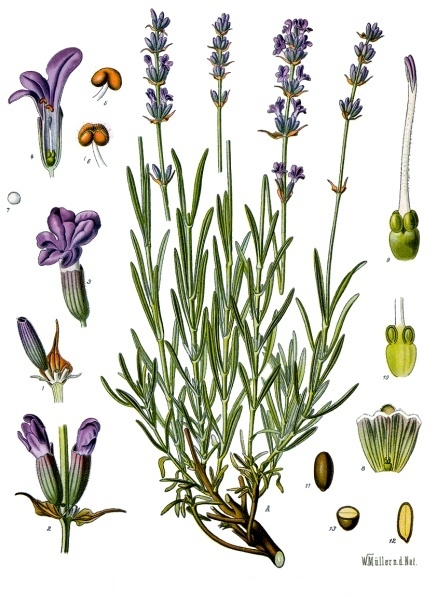 LavenderLavandula angustifolia
-
 French LavenderLavandula stoechas
-
 French LavenderLavandula dentata
-
 Broad-leaved LavenderLavandula latifolia
-
 Fern-leaf LavenderLavandula multifida
-
 Spanish LavenderLavandula pedunculata
-
 Woolly LavenderLavandula lanata
-
 Green LavenderLavandula viridis
Compare
Questions and answers
What is the scientific name of the Canary Island Lavender?
The scientific name of the Canary Island Lavender is Lavandula canariensis. Written with its author, the full name is Lavandula canariensis (L.) Mill..
Which family does the Canary Island Lavender belong to?
Lavandula canariensis belongs to the family Lamiaceae, in the order Lamiales and the class Magnoliopsida.
Where is the Canary Island Lavender found?
Checklists and occurrence records place Lavandula canariensis in 3 countries: Spain, Morocco and Cabo Verde.
Sources
Passages the profile rests on
- Its leaves are bipinnate, rich green and covered with fine, downy hairs. Source passage: “The leaves are bipinnate, rich green, and covered in fine, downy hairs.” — English Wikipedia
- Its leaves are finely divided, slightly hairy and grey-green. Source passage: “with finely divided, slightly hairy grey-green leaves.” — rhs.org.uk
- Its flowers are small, fragrant and blue, growing in spikes from dark purple buds. Source passage: “Flowers appear in spikes of small, fragrant blue, opening from dark purple buds” — English Wikipedia
- Its flowering stems are slender and branching. Source passage: “are borne on slender branching stems in summer” — rhs.org.uk
- The species is native to the Canary Islands. Source passage: “native to the Canary Islands.” — English Wikipedia
- The species is native to the Canary Islands. Source passage: “native to the Canary Islands.” — inaturalist.org
- The species produces flowers during summer. Source passage: “are borne on branching stems in summer.” — English Wikipedia
- The species produces fragrant flowers. Source passage: “spikes of small, fragrant blue” — English Wikipedia
- The species can be propagated using semi-hardwood cuttings taken in summer. Source passage: “Propagate by semi-hardwood cuttings in summer.” — rhs.org.uk
- The species can be grown outdoors during summer in conditions corresponding to RHS hardiness rating H1B. Source passage: “H1B: can be grown outside in the summer (10 - 15)” — rhs.org.uk
- The species can be grown outdoors during summer in conditions corresponding to RHS hardiness rating H1C. Source passage: “H1C: can be grown outside in the summer (5 - 10)” — rhs.org.uk
Data
- Catalogue of Life, 2026-10-16 XR cc by
- Global Biodiversity Information Facility CC BY 4.0
- Wikidata CC0
- GeoNames CC BY 4.0
- Wikimedia Commons per image; credit shown with each image
- Within the Catalogue of Life, this name comes from Synonymic Checklists of the Vascular Plants of the World cc by
References
- (L.) Mill. where the name was published
This species in other databases
- Catalogue of Life 3SND9
- Wikidata Q3828016
- iNaturalist 525546
- World Flora Online wfo-0000224139
- GRIN 404640
Page built on 28 November 2026. See how the catalog is made and all sources and licences.
Cite this page
ScientificNames.org. (2026). Lavandula canariensis (Canary Island Lavender). Retrieved November 28, 2026, from https://scientificnames.org/species/lavandula-canariensis
“Lavandula canariensis (Canary Island Lavender).” ScientificNames.org, 2026, scientificnames.org/species/lavandula-canariensis. Accessed 28 Nov. 2026.
ScientificNames.org. “Lavandula canariensis (Canary Island Lavender).” Accessed November 28, 2026. https://scientificnames.org/species/lavandula-canariensis.
@misc{scientificnames_lavandula_canariensis_canary_island_lavender,
  author = {{ScientificNames.org}},
  title = {Lavandula canariensis (Canary Island Lavender)},
  year = {2026},
  url = {https://scientificnames.org/species/lavandula-canariensis},
  note = {Accessed 2026-11-28}
}