Species · Flowering plants
Green Lavender Lavandula viridis
The scientific name of the Green Lavender is Lavandula viridis. It is a species of flowering plant in the family Lamiaceae (mint family), order Lamiales.
- Scientific name
- Lavandula viridis L'Hér.
- Common name
- Green Lavender
- Genus
- Lavandula
- Family
- Lamiaceae (Mint Family)
- Order
- Lamiales
- Class
- Magnoliopsida
- Recorded in
- 2 countries
- Name status
- accepted in the Catalogue of Life

Overview
Lavandula viridis is endemic to the southwestern Iberian Peninsula, with native populations in the Algarve and Baixo Alentejo regions of southern Portugal and in Huelva and Seville in Spain. It is a sticky, strongly aromatic shrub whose white flowers quickly become brown and whose essential oils exhibit antifungal activity.
Written 26 November 2026 from the sources listed below. Each statement was checked against the passage it cites; statements that could not be supported were removed.
Appearance
Green lavender is a sticky, strongly aromatic shrub with a woody base and leafy upper growth. Mature plants typically reach 50–70 cm in height, although some grow to 100 cm.[1][2]
Its linear leaves measure approximately 2.5–4 cm long and 0.3–0.5 cm wide, with blunt tips. Small, highly branched hairs cover the leaves and flowering parts, giving the plant its sticky texture.[3][4]
The unbranched flower stalks measure approximately 5–10 cm and are covered in highly branched hairs. The fertile bracts are greenish-white and hairy, with rounded tips and narrow bases.[5][6]
The flowers initially appear white before quickly becoming brown. The calyx measures approximately 0.8–1 cm and has four triangular lobes, while the tubular corolla has a wider upper portion and is usually approximately 1.5 times as large as the calyx. The pollen is orange.[7][8][9][10]
Habitat
Green lavender commonly grows in dry conditions and nutrient-poor soils. It requires very little water for growth and thrives in warm climates.[11][12][13]
The species can occur in Mediterranean coastal regions at relatively low elevations.[14]
Behaviour
The white flowers attract night-flying insect pollinators, including moths. During daylight hours, the plant's strong lemon-like scent helps attract bees.[15][16]
Uses
Green lavender has been used medicinally because its tissues contain high concentrations of essential oils. A study identified 51 essential oil compounds, most commonly concentrated in actively growing shoots.[17][18][19]
The essential oils contain predominantly oxygen-containing monoterpenes, followed by monoterpene hydrocarbons. The four compounds with the highest percentages are 1,8-cineole, camphor, alpha-pinene, and linalool, in that order.[20][21]
The essential oils exhibit antifungal activity against yeasts and filamentous fungi, including strains belonging to Candida, Aspergillus, Trichophyton, Epidermophyton, and Cryptococcus. Activity is strongest against Cryptococcus, followed by Candida, and weakest against Aspergillus strains.[22][23][24][25]
Classification of the Green Lavender
| Kingdom | Plantae |
|---|---|
| Subkingdom | Pteridobiotina |
| Phylum | Tracheophyta |
| Class | Magnoliopsida |
| Order | Lamiales |
| Family | Lamiaceae (Mint Family) |
| Subfamily | Nepetoideae |
| Tribe | Ocimeae |
| Subtribe | Lavandulinae |
| Genus | Lavandula (Lavender) |
| Species | Lavandula viridis L'Hér. |
Where the Green Lavender is found
Checklists and occurrence records place Lavandula viridis in 2 countries across Europe. GBIF holds 1,446 georeferenced records of it.
Countries where it is native or its origin is not stated
Countries where it has been introduced
Regions and cities with the most records
- Faro, Portugal 684
- Beja, Portugal 303
- Loulé, Portugal 224
- Quelfes, Portugal 104
- Laranjeiro, Portugal 103
- Olhão, Portugal 95
- Faro, Portugal 88
- Quarteira, Portugal 77
- Portimão, Portugal 75
- Ayamonte, Spain 47
- Tavira, Portugal 38
- Azores, Portugal 37
- Lagos, Portugal 30
- Coimbra, Portugal 20
- Coimbra, Portugal 20
- Condeixa-a-Nova, Portugal 20
- Eiras, Portugal 20
- Ribeira de Frades, Portugal 20
- Santo António dos Olivais, Portugal 20
- São Martinho do Bispo, Portugal 20
- São Paulo de Frades, Portugal 20
- Porto de Mós, Portugal 16
- Isla Cristina, Spain 15
- Caniço, Portugal 8
- Funchal, Portugal 8
- Madeira, Portugal 8
- Santo António, Portugal 8
- Beja, Portugal 7
- Câmara de Lobos, Portugal 7
- São Martinho, Portugal 7
- Évora, Portugal 6
- Huelva, Spain 4
- Moguer, Spain 4
- Lepe, Spain 3
2 more countries have a few records outside this range
These countries hold a few records of Lavandula viridis but lie outside the range the checklists give for it. Such records are often zoo or garden specimens, museum material or vagrants, so the species is not counted as occurring there.
Range as the checklists state it
S-Portugal; SW-Spain; Azores [I] (Terceira [I]); Madeira [I] (Madeira Isl. [I])
A number beside a place is its count of GBIF occurrence records. A place without a number comes from a checklist alone. Records show where a species has been observed or collected, which can include escapes and vagrants.
Common names
English
- Green Lavender
- Madeira Lavender
- Green Spanish Lavender
- Lemon Lavender
- Yellow Lavender
Names in 5 other languages
- Afrikaans
- white lavender, wit lavantel
- Dutch
- Groene lavendel
- Estonian
- rohelavendel
- Portuguese
- Rosmaninho verde, rosmaninho, rosmaninho-verde
- Spanish
- Cantueso verde
Synonyms
2 other scientific names have been used for this species and are now treated as synonyms of Lavandula viridis.
- Lavandula massonii Cels ex Ging.
- Lavandula stoechas var. albiflora Buch ambiguous synonym
Related species
-
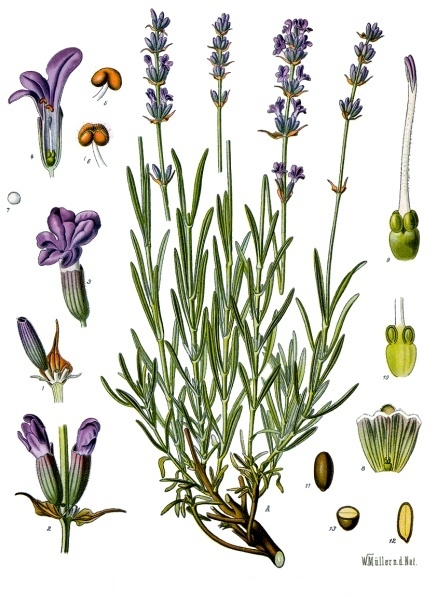 LavenderLavandula angustifolia
-
 French LavenderLavandula stoechas
-
 French LavenderLavandula dentata
-
 Broad-leaved LavenderLavandula latifolia
-
 Fern-leaf LavenderLavandula multifida
-
 Spanish LavenderLavandula pedunculata
-
 Woolly LavenderLavandula lanata
-
 Canary Island LavenderLavandula canariensis
Compare
Questions and answers
What is the scientific name of the Green Lavender?
The scientific name of the Green Lavender is Lavandula viridis. Written with its author, the full name is Lavandula viridis L'Hér..
Which family does the Green Lavender belong to?
Lavandula viridis belongs to the family Lamiaceae, in the order Lamiales and the class Magnoliopsida.
Where is the Green Lavender found?
Checklists and occurrence records place Lavandula viridis in 2 countries, including Spain.
What other names does the Green Lavender have?
Lavandula viridis is also known in English as Madeira Lavender, Green Spanish Lavender, Lemon Lavender and Yellow Lavender.
Sources
Passages the profile rests on
- Lavandula viridis is a sticky, strongly aromatic shrub with a woody base and leafy upper growth. Source passage: “Lavandula viridis is a viscid, highly aromatic shrub that is woody towards the base and leafy towards the top.” — English Wikipedia
- Mature plants typically reach 50–70 cm in height, although some grow to 100 cm. Source passage: “The average height of a mature plant is 50–70 cm, but it sometimes ranges up to 100 cm.” — English Wikipedia
- The leaves are linear, measure approximately 2.5–4 cm long and 0.3–0.5 cm wide, and have blunt tips. Source passage: “The leaves, which are attached directly to the stem, are approximately 2.5–4 cm x 0.3-0.5 cm, linear, and taper to a blunt apex.” — English Wikipedia
- The leaves and flowering parts have small, highly branched hairs that give the plant a sticky texture. Source passage: “Small, highly branched hairs cover the leaves and flowering portions of the plant, leading to its sticky texture.” — English Wikipedia
- The unbranched flower stalks measure approximately 5–10 cm and are covered in highly branched hairs. Source passage: “The peduncles are approximately 5–10 cm, unbranched, and covered in similar highly branched hairs.” — English Wikipedia
- Its fertile bracts are greenish-white, hairy, and characterized by rounded tips and narrow bases. Source passage: “Also covered in these hairs are the bracts, which are fertile and greenish-white with a rounded apex and a narrow base.” — English Wikipedia
- The flowers initially appear white before quickly becoming brown. Source passage: “The small flowers begin white but quickly turn to brown.” — English Wikipedia
- The calyx measures approximately 0.8–1 cm and has four triangular lobes. Source passage: “The calyx is approximately 0.8–1 cm long with four triangular lobes.” — English Wikipedia
- The corolla is tubular, has a wider upper portion, and is usually approximately 1.5 times as large as the calyx. Source passage: “The corolla is tubular with a wider superior portion, and it is usually about 1.5 times the size of the calyx.” — English Wikipedia
- The pollen of this species is orange. Source passage: “The pollen of L. viridis is orange.” — English Wikipedia
- The species commonly grows in dry conditions and nutrient-poor soils. Source passage: “often found growing in dry conditions and nutrient poor soils” — English Wikipedia
- Lavandula viridis requires very little water for growth. Source passage: “needing very little water to grow.” — English Wikipedia
- The species thrives in warm climates. Source passage: “Thriving in warm climates” — English Wikipedia
- The species can occur in Mediterranean coastal regions at relatively low elevations. Source passage: “It can also be found in coastal regions of the Mediterranean at fairly low altitudes.” — English Wikipedia
- The white flowers attract night-flying insect pollinators, including moths. Source passage: “The white color of the flowers are used to attract night-flying insect pollinators such as moths” — English Wikipedia
- The plant's strong lemon-like scent helps attract bees during daylight hours. Source passage: “the plant's strong, lemon-like scent helps attract bees during the day.” — English Wikipedia
- Lavandula viridis has been used medicinally because its tissues contain high concentrations of essential oils. Source passage: “Lavandula viridis has been utilized for medicinal purposes due to the high concentration of essential oils present in its tissue.” — English Wikipedia
- A study identified 51 essential oil compounds in this species. Source passage: “One study identified fifty-one essential oil compounds in this species” — English Wikipedia
- The essential oil compounds are most commonly concentrated in actively growing shoots. Source passage: “and they were most commonly found in the actively growing shoots.” — English Wikipedia
- The essential oils contain predominantly oxygen-containing monoterpenes, followed by monoterpene hydrocarbons. Source passage: “The oils have a large proportion of oxygen-containing monoterpenes, followed by monoterpene hydrocarbons.” — English Wikipedia
- The four compounds with the highest percentages in the essential oil are 1,8-cineole, camphor, alpha-pinene, and linalool, in that order. Source passage: “Among the fifty-one compounds, 1,8-cineole, camphor, alpha-pinene, and linalool had the highest percentages, respectively.” — English Wikipedia
- The species' essential oils exhibit antifungal activity against yeasts and filamentous fungi. Source passage: “these oils were found to exhibit antifungal activity against yeasts and filamentous fungi” — English Wikipedia
- The essential oils have demonstrated antifungal activity against strains belonging to Candida, Aspergillus, Trichophyton, Epidermophyton, and Cryptococcus. Source passage: “specifically strains of Candida, Aspergillus, Trichophyton, Epidermophyton, and Cryptococcus.” — English Wikipedia
- The species' antifungal activity is strongest against Cryptococcus, followed by Candida. Source passage: “Of these strains, L. viridis was most active against Cryptococcus, then Candida” — English Wikipedia
- The species exhibits its weakest antifungal activity against Aspergillus strains. Source passage: “and was least effective against Aspergillus strains.” — English Wikipedia
Data
- Catalogue of Life, 2026-10-16 XR cc by
- Global Biodiversity Information Facility CC BY 4.0
- Wikidata CC0
- GeoNames CC BY 4.0
- Wikimedia Commons per image; credit shown with each image
- Within the Catalogue of Life, this name comes from Synonymic Checklists of the Vascular Plants of the World cc by
References
- L’Hér. Sert. Angl. 19 (1789). where the name was published
This species in other databases
- Catalogue of Life 3SNG4
- Wikidata Q2206924
- iNaturalist 354469
- World Flora Online wfo-0000224268
- GRIN 453643
Page built on 28 November 2026. See how the catalog is made and all sources and licences.
Cite this page
ScientificNames.org. (2026). Lavandula viridis (Green Lavender). Retrieved November 28, 2026, from https://scientificnames.org/species/lavandula-viridis
“Lavandula viridis (Green Lavender).” ScientificNames.org, 2026, scientificnames.org/species/lavandula-viridis. Accessed 28 Nov. 2026.
ScientificNames.org. “Lavandula viridis (Green Lavender).” Accessed November 28, 2026. https://scientificnames.org/species/lavandula-viridis.
@misc{scientificnames_lavandula_viridis_green_lavender,
  author = {{ScientificNames.org}},
  title = {Lavandula viridis (Green Lavender)},
  year = {2026},
  url = {https://scientificnames.org/species/lavandula-viridis},
  note = {Accessed 2026-11-28}
}