Species · Fishes
West Coast Seabream Lithognathus aureti
The scientific name of the West Coast Seabream is Lithognathus aureti. It is a species of fish in the family Sparidae (porgies), order Perciformes. The name dates from 1962.
- Scientific name
- Lithognathus aureti Smith, 1962
- Common name
- West Coast Seabream
- Genus
- Lithognathus
- Family
- Sparidae (Porgies)
- Order
- Perciformes
- Class
- Teleostei
- Red List category
- EN Endangered
- Environment
- brackish, marine
- Recorded in
- 2 countries
- Name status
- accepted in the Catalogue of Life

Overview
The West Coast Seabream is a member of the Sparidae sea bream family. It inhabits coastal reef and sandy habitats in the surf zone close to shore, generally at depths shallower than 10 m. It exhibits protandrous hermaphroditism, beginning adult life as a male before changing sex to female.
Written 27 November 2026 from the sources listed below. Each statement was checked against the passage it cites; statements that could not be supported were removed.
Appearance
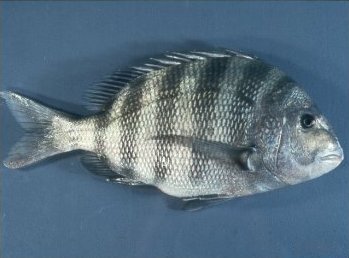
The West Coast Seabream has a deep-bodied shape and silvery-grey coloration with approximately seven faint vertical bars. These bars are more prominent in juveniles.[1][2]
Its head is shorter than its body depth, with a slightly convex profile above the eye. The snout lacks scales, and the upper jaw is protrusible.[3][4]
Its teeth comprise one outer row of pointed teeth and two inner rows of small molars. The dorsal fin has eleven spines and nine to ten soft rays, while the anal fin has three spines and eight to nine soft rays.[5][6][7]
The pectoral fin is longer than the head and contains fifteen to sixteen soft rays. The species can reach approximately 100 cm in length, with a maximum recorded weight of 19.3 kg.[8][9][10]
Habitat
The West Coast Seabream inhabits the surf zone close to shore, generally at depths shallower than 10 m. It occupies coastal reef and sandy habitats.[11][12]
Diet
The West Coast Seabream feeds on seabed invertebrates, including crabs, polychaete worms and bivalve molluscs. Its recorded prey taxa also include bony fishes, other mollusks, algae, crustaceans and cnidarians.[13][14]
Bivalves are the most important prey category, accounting for 95.9% of the species' index of relative importance. Black mussels and brown mussels have been identified as primary prey of the southern population.[15][16]
The species is classified as a generalist feeder based on the diversity of its recorded prey taxa.[17]
Behaviour
The West Coast Seabream exhibits protandrous hermaphroditism, beginning adult life as a male before changing sex to female. Males typically change sex after reaching maturity.[18][19]
Its feeding intensity peaks opportunistically during winter and summer according to food availability.[20]
Reproduction and life cycle
Spawning takes place during the austral summer, from October through February, with peak activity between December and February. Eggs are spawned in the surf zone.[21][22]
The average age at male maturity is approximately 4.8 years in northern populations and 6 years in southern populations. The average age at female maturity is approximately 7.2 years in northern populations and 9.7 years in southern populations.[23][24]
Eggs tend to drift northward with ocean currents after spawning. Eggs and larvae likely drift northward under the influence of the Benguela Current.[22][25]
Conservation
The West Coast Seabream is classified as Endangered by the International Union for Conservation of Nature. Its total population is declining.[26][27]
Slow growth and longevity make the species susceptible to overfishing.[28]
Uses
The northern population is popular among rock-and-surf recreational sea anglers. The southern population is occasionally targeted by commercial line-fishing.[29][30]
West coast steenbras is among the main marine fish species harvested by linefishing in Namibia.[31]
Similar species
The sand steenbras (Lithognathus mormyrus) can be confused with the West Coast Seabream. It has a shallower body, more dorsal and anal fin rays, and ten to fourteen dark bars.[32]
The white steenbras (Lithognathus lithognathus) also resembles the West Coast Seabream. It has a longer head and a more slender body.[33]
Classification of the West Coast Seabream
| Kingdom | Animalia |
|---|---|
| Phylum | Chordata |
| Subphylum | Vertebrata |
| Infraphylum | Gnathostomata |
| Parvphylum | Osteichthyes |
| Gigaclass | Actinopterygii |
| Superclass | Actinopteri |
| Class | Teleostei (Teleost) |
| Order | Perciformes |
| Suborder | Percoidei |
| Family | Sparidae (Porgies) |
| Genus | Lithognathus |
| Species | Lithognathus aureti Smith, 1962 |
Where the West Coast Seabream is found
Checklists and occurrence records place Lithognathus aureti in 2 countries. GBIF holds 53 georeferenced records of it.
Countries
Regions and cities with the most records
A number beside a place is its count of GBIF occurrence records. A place without a number comes from a checklist alone. Records show where a species has been observed or collected, which can include escapes and vagrants.
Common names
English
- West Coast Seabream
- Steenbras
- West Coast Steenbras
Names in 6 other languages
- Afrikaans
- Witvis
- Chinese
- 短頭石頜鯛
- Czech
- mořan angolský
- French
- Marbré de la côte ouest
- Russian
- Африканский землерой
- Spanish
- Herrera de la Costa Oeste
Related species
-
 Sand SteenbrasLithognathus mormyrus
- White SteenbrasLithognathus lithognathus
- SteenbrasLithognathus olivieri
-
 Gilt-head BreamSparus aurata
-
 BogueBoops boops
-
 SheepsheadArchosargus probatocephalus
-
 Red Sea BreamPagrus major
-
 Salema PorgySarpa salpa
Compare
Questions and answers
What is the scientific name of the West Coast Seabream?
The scientific name of the West Coast Seabream is Lithognathus aureti. Written with its author, the full name is Lithognathus aureti Smith, 1962.
Which family does the West Coast Seabream belong to?
Lithognathus aureti belongs to the family Sparidae, in the order Perciformes and the class Teleostei.
Where is the West Coast Seabream found?
Checklists and occurrence records place Lithognathus aureti in 2 countries: Namibia and South Africa.
What is the conservation status of the West Coast Seabream?
The IUCN Red List category recorded for Lithognathus aureti is Endangered (EN).
What other names does the West Coast Seabream have?
Lithognathus aureti is also known in English as Steenbras and West Coast Steenbras.
Sources
Passages the profile rests on
- The species has a deep-bodied shape. Source passage: “The west coast seabream is a deep-bodied fish” — English Wikipedia
- The species has a silvery-grey coloration with approximately seven faint vertical bars that are more prominent in juveniles. Source passage: “The colour is silvery-grey with about seven faint, vertical bars which are more visible in young fish.” — English Wikipedia
- The species has a head shorter than its body depth and a slightly convex profile above the eye. Source passage: “The head is shorter than its depth, and the profile is slightly convex above the eye.” — English Wikipedia
- The species lacks scales on its snout and has a protrusible upper jaw. Source passage: “There are no scales on the snout and the upper jaw is protrusible.” — English Wikipedia
- Its teeth comprise one outer row of pointed teeth and two inner rows of small molars. Source passage: “The teeth are small, with a single outer row of pointed teeth and two inner rows of small molars.” — English Wikipedia
- Its dorsal fin has eleven spines and nine to ten soft rays. Source passage: “The dorsal fin has eleven spines and nine to ten soft rays” — English Wikipedia
- Its anal fin has three spines and eight to nine soft rays. Source passage: “the anal fin has three spines and eight to nine soft rays.” — English Wikipedia
- Its pectoral fin is longer than its head and contains fifteen to sixteen soft rays. Source passage: “The pectoral fin is longer than the head and has fifteen to sixteen soft rays.” — English Wikipedia
- The species can reach approximately 100 cm in length. Source passage: “can grow to a length of about 100 cm (39 in).” — English Wikipedia
- The maximum recorded weight of the species is 19.3 kg. Source passage: “The maximum recorded weight is 19.3 kilograms (43 lb).” — English Wikipedia
- The species inhabits the surf zone close to shore, generally at depths shallower than 10 m. Source passage: “It lives close inshore in the surf zone, usually at depths of less than 10 m (33 ft)” — English Wikipedia
- The species occupies coastal reef and sandy habitats. Source passage: “occupy unique niches in the coastal reef and sandy habitat” — pmc.ncbi.nlm.nih.gov
- The species feeds on seabed invertebrates, including crabs, polychaete worms and bivalve molluscs. Source passage: “feeds on invertebrates on the seabed such as crabs, polychaete worms and bivalve molluscs.” — English Wikipedia
- Seven prey taxa recorded for the species include bivalves, bony fishes, other mollusks, algae, crustaceans, cnidarians and polychaetes. Source passage: “Seven prey taxa were found in the diet of west coast steenbras (bivalves, bony fishes, other mollusks, algae, crustaceans, cnidaria, and polychaetas)” — pmc.ncbi.nlm.nih.gov
- Bivalves constitute the most important prey category in the species' diet, accounting for 95.9% of its index of relative importance. Source passage: “The bivalves were the most important prey items in the diet of west coast steenbras (95.9% index of relative importance [IRI]).” — pmc.ncbi.nlm.nih.gov
- Black mussels and brown mussels have been identified as primary prey of the southern population. Source passage: “finding black mussels (Choromytilus merdionalis) and brown mussels (Perna perna) as their primary prey” — pmc.ncbi.nlm.nih.gov
- The species' feeding behavior is classified as generalist based on the diversity of recorded prey taxa. Source passage: “indicating generalist feeding behavior in both the species.” — pmc.ncbi.nlm.nih.gov
- The species exhibits protandrous hermaphroditism, beginning adult life as a male before changing sex to female. Source passage: “This means it starts its adult life as a male and later changes its sex to female.” — English Wikipedia
- Males typically change sex after reaching maturity. Source passage: “males typically changing sex after reaching maturity” — pmc.ncbi.nlm.nih.gov
- The species' feeding intensity peaks opportunistically during winter and summer according to food availability. Source passage: “The peak in feeding intensity of west coast steenbras appeared to be opportunistic during winter and summer periods depending on food availability.” — pmc.ncbi.nlm.nih.gov
- Spawning takes place during the austral summer, from October through February, with peak activity between December and February. Source passage: “Spawning occurs in the austral summer (October–February) with a peak in December–February” — pmc.ncbi.nlm.nih.gov
- Eggs are spawned in the surf zone and tend to drift northward with ocean currents. Source passage: “The eggs are spawned in the surf zone and tend to drift northwards with the sea current.” — English Wikipedia
- The average age at male maturity is approximately 4.8 years in northern populations and 6 years in southern populations. Source passage: “As a male, the average age to reach maturity is about 4.8 years for northern populations and about 6 years for southern ones.” — English Wikipedia
- The average age at female maturity is approximately 7.2 years in northern populations and 9.7 years in southern populations. Source passage: “As a female, the average ages are 7.2 and 9.7 respectively.” — English Wikipedia
- Eggs and larvae likely drift northward after spawning under the influence of the Benguela Current. Source passage: “Eggs and larvae likely drift northward with the Benguela Current after spawning in the surf zone” — pmc.ncbi.nlm.nih.gov
- The species is classified as Endangered by the International Union for Conservation of Nature. Source passage: “the International Union for Conservation of Nature has listed its conservation status as being "Endangered".” — English Wikipedia
- The total population of the species is declining. Source passage: “The total population is declining” — English Wikipedia
- Slow growth and longevity make the species susceptible to overfishing. Source passage: “because of its slow growth rate and longevity, this fish is susceptible to over-fishing.” — English Wikipedia
- The northern population is popular among rock-and-surf recreational sea anglers. Source passage: “The northern population of west coast seabream is a popular fish with rock-and-surf sea anglers” — English Wikipedia
- The southern population is occasionally targeted by commercial line-fishing. Source passage: “the southern population is sometimes the target of commercial line-fishing.” — English Wikipedia
- West coast steenbras is among the main marine fish species harvested by linefishing in Namibia. Source passage: “the main species harvested being silver kob (Argyrosomus inodorus) and west coast steenbras (Lithognathus aureti)” — pmc.ncbi.nlm.nih.gov
- The sand steenbras (Lithognathus mormyrus) can be confused with this species but has a shallower body, more dorsal and anal fin rays, and ten to fourteen dark bars. Source passage: “This species could be confused with the sand steenbras (Lithognathus mormyrus), but that has a shallower body, more rays in its dorsal and anal fins, and ten to fourteen dark bars.” — English Wikipedia
- The white steenbras (Lithognathus lithognathus) resembles this species but has a longer head and a more slender body. Source passage: “The white steenbras (Lithognathus lithognathus) is also similar, but has a longer head and more slender body.” — English Wikipedia
Data
- Catalogue of Life, 2026-10-16 XR cc by
- Global Biodiversity Information Facility CC BY 4.0
- Wikidata CC0
- GeoNames CC BY 4.0
- Wikimedia Commons per image; credit shown with each image
- Within the Catalogue of Life, this name comes from World Register of Marine Species cc by
References
- Smith, J. L. B. (1962). The sparid genus Lithognathus Swainson, 1839 with description of an interesting new species. South African Journal of Science, 58 (no. 4): 109–114, Pls. 1–2. where the name was published
This species in other databases
- Catalogue of Life 3VKQG
- Wikidata Q1919285
- iNaturalist 446165
- WoRMS urn:lsid:marinespecies.org:taxname:218605
- ITIS 647950
Page built on 27 November 2026. See how the catalog is made and all sources and licences.
Cite this page
ScientificNames.org. (2026). Lithognathus aureti (West Coast Seabream). Retrieved November 27, 2026, from https://scientificnames.org/species/lithognathus-aureti
“Lithognathus aureti (West Coast Seabream).” ScientificNames.org, 2026, scientificnames.org/species/lithognathus-aureti. Accessed 27 Nov. 2026.
ScientificNames.org. “Lithognathus aureti (West Coast Seabream).” Accessed November 27, 2026. https://scientificnames.org/species/lithognathus-aureti.
@misc{scientificnames_lithognathus_aureti_west_coast_seabream,
  author = {{ScientificNames.org}},
  title = {Lithognathus aureti (West Coast Seabream)},
  year = {2026},
  url = {https://scientificnames.org/species/lithognathus-aureti},
  note = {Accessed 2026-11-27}
}