Species · Fishes
White Steenbras Lithognathus lithognathus
The scientific name of the White Steenbras is Lithognathus lithognathus. It is a species of fish in the family Sparidae (porgies), order Perciformes. The name dates from 1829.
- Scientific name
- Lithognathus lithognathus (Cuvier, 1829)
- Common name
- White Steenbras
- Genus
- Lithognathus
- Family
- Sparidae (Porgies)
- Order
- Perciformes
- Class
- Teleostei
- Red List category
- EN Endangered
- Environment
- brackish, marine
- Recorded in
- 3 countries
- Name status
- accepted in the Catalogue of Life
Overview
The species is endemic to South Africa. It is slow-growing and late-maturing and forms large breeding shoals.
Written 26 November 2026 from the sources listed below. Each statement was checked against the passage it cites; statements that could not be supported were removed.
Diet
The White Steenbras diet consists mostly of bivalves, polychaete worms and crustaceans.[1]
Behaviour
The White Steenbras is slow-growing and late-maturing.[2]
Reproduction and life cycle
The species forms large breeding shoals.[3]
Conservation
The White Steenbras is classified as endangered. Overfishing, particularly by seine netting operations in False Bay, has contributed to its endangered status.[4][5]
The species was identified as a priority for research, management and conservation in a National Linefish Status Report.[6]
Its estimated vulnerability score is high to very high at 72 out of 100.[7]
Its estimated vulnerability score is very high at 78 out of 100.[8]
Classification of the White Steenbras
| Kingdom | Animalia |
|---|---|
| Phylum | Chordata |
| Subphylum | Vertebrata |
| Infraphylum | Gnathostomata |
| Parvphylum | Osteichthyes |
| Gigaclass | Actinopterygii |
| Superclass | Actinopteri |
| Class | Teleostei (Teleost) |
| Order | Perciformes |
| Suborder | Percoidei |
| Family | Sparidae (Porgies) |
| Genus | Lithognathus |
| Species | Lithognathus lithognathus (Cuvier, 1829) |
Where the White Steenbras is found
Checklists and occurrence records place Lithognathus lithognathus in 3 countries. GBIF holds 1,452 georeferenced records of it.
Countries
Regions and cities with the most records
- Western Cape, South Africa 147
- Eastern Cape, South Africa 132
- Retreat, South Africa 76
- Muizenberg, South Africa 55
- Plettenberg Bay, South Africa 52
- Rondebosch, South Africa 51
- Gansbaai, South Africa 42
- Hermanus, South Africa 39
- Mossel Bay, South Africa 35
- Cape Town, South Africa 31
- Groot-Brakrivier, South Africa 30
- Gqeberha, South Africa 29
- Durbanville, South Africa 23
- Knysna, South Africa 22
- Motherwell, South Africa 20
- East London, South Africa 19
- Gonubie, South Africa 16
- Jeffreys Bay, South Africa 16
- Port Alfred, South Africa 16
- Mdantsane, South Africa 15
- Despatch, South Africa 14
- Port Shepstone, South Africa 14
- George, South Africa 13
- Humansdorp, South Africa 12
- Kruisfontein, South Africa 10
- Lüderitz, Namibia 9
- Durban, South Africa 7
- Margate, South Africa 6
- Scottburgh, South Africa 6
- Somerset West, South Africa 6
- eMuziwezinto, South Africa 6
- Ga-Malakhe, South Africa 5
- Kuils River, South Africa 4
- Stellenbosch, South Africa 4
- Walvis Bay, Namibia 4
- eMkhomazi, South Africa 4
A number beside a place is its count of GBIF occurrence records. A place without a number comes from a checklist alone. Records show where a species has been observed or collected, which can include escapes and vagrants.
Common names
English
- White Steenbras
- Pignose Grunter
- Whitefish
Names in 8 other languages
- Afrikaans
- Witsteenbras
- Chinese
- 長頭石頜鯛
- Czech
- mořan jihoafrický
- Danish
- Hvid blankesten
- French
- Marbré Du Cap
- Portuguese
- Ferreira-branca
- Russian
- Белый землерой
- Spanish
- Erla, Herrera Del Cabo
Synonyms
5 other scientific names have been used for this species and are now treated as synonyms of Lithognathus lithognathus.
- Lithognathus capensis (Swainson, 1839)
- Lithognatus lithognathus (Cuvier, 1829)
- Pagellus capensis Swainson, 1839
- Pagellus lithognathus (Cuvier, 1829)
- Pagrus lithognathus Cuvier, 1829
Related species
-
 Sand SteenbrasLithognathus mormyrus
-
 West Coast SeabreamLithognathus aureti
- SteenbrasLithognathus olivieri
-
 Gilt-head BreamSparus aurata
-
 BogueBoops boops
-
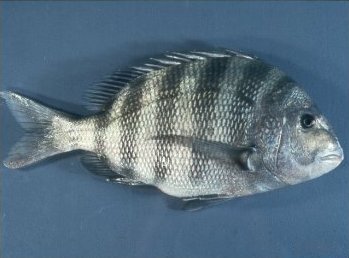 SheepsheadArchosargus probatocephalus
-
 Red Sea BreamPagrus major
-
 Salema PorgySarpa salpa
Compare
Questions and answers
What is the scientific name of the White Steenbras?
The scientific name of the White Steenbras is Lithognathus lithognathus. Written with its author, the full name is Lithognathus lithognathus (Cuvier, 1829).
Which family does the White Steenbras belong to?
Lithognathus lithognathus belongs to the family Sparidae, in the order Perciformes and the class Teleostei.
Where is the White Steenbras found?
Checklists and occurrence records place Lithognathus lithognathus in 3 countries: South Africa, Namibia and Angola.
What is the conservation status of the White Steenbras?
The IUCN Red List category recorded for Lithognathus lithognathus is Endangered (EN).
What other names does the White Steenbras have?
Lithognathus lithognathus is also known in English as Pignose Grunter and Whitefish.
Sources
Passages the profile rests on
- The white steenbras diet consists mostly of bivalves, polychaete worms and crustaceans. Source passage: “the diet of the white steenbras (Lithognathus lithognathus) mostly consisted of bivalves, Polychaeta worms, crustaceans” — pmc.ncbi.nlm.nih.gov
- The white steenbras is described as slow-growing and late-maturing. Source passage: “The White Steenbras (Lithognathus lithognathus) is a slow-growing, long-lived, late maturing, and estuarine” — speciesstatus.sanbi.org
- The species forms large breeding shoals. Source passage: “Massive breeding shoals are illegally wiped out by beach seine netters each year” — English Wikipedia
- The white steenbras is classified as endangered. Source passage: “the white steenbras is now endangered” — English Wikipedia
- Overfishing, particularly by seine netting operations in False Bay, has contributed to the endangered status of the white steenbras. Source passage: “Due to overfishing, primarily by seine netting operations in False Bay, the white steenbras is now endangered” — English Wikipedia
- The species was identified as a priority for research, management and conservation in a National Linefish Status Report. Source passage: “The species was identified as a priority for research, management and conservation in a National Linefish Status Report.” — English Wikipedia
- The white steenbras has a high to very high estimated vulnerability score of 72 out of 100. Source passage: “High to very high vulnerability (72 of 100).” — fishbase.se
- The white steenbras has a very high estimated vulnerability score of 78 out of 100. Source passage: “Very high vulnerability (78 of 100).” — fishbase.se
Data
- Catalogue of Life, 2026-10-16 XR cc by
- Global Biodiversity Information Facility CC BY 4.0
- Wikidata CC0
- GeoNames CC BY 4.0
- Within the Catalogue of Life, this name comes from World Register of Marine Species cc by
This species in other databases
- Catalogue of Life 3VKQJ
- Wikidata Q2089224
- iNaturalist 104749
- WoRMS urn:lsid:marinespecies.org:taxname:218604
- ITIS 647951
Page built on 27 November 2026. See how the catalog is made and all sources and licences.
Cite this page
ScientificNames.org. (2026). Lithognathus lithognathus (White Steenbras). Retrieved November 27, 2026, from https://scientificnames.org/species/lithognathus-lithognathus
“Lithognathus lithognathus (White Steenbras).” ScientificNames.org, 2026, scientificnames.org/species/lithognathus-lithognathus. Accessed 27 Nov. 2026.
ScientificNames.org. “Lithognathus lithognathus (White Steenbras).” Accessed November 27, 2026. https://scientificnames.org/species/lithognathus-lithognathus.
@misc{scientificnames_lithognathus_lithognathus_white_steenbras,
  author = {{ScientificNames.org}},
  title = {Lithognathus lithognathus (White Steenbras)},
  year = {2026},
  url = {https://scientificnames.org/species/lithognathus-lithognathus},
  note = {Accessed 2026-11-27}
}