Species · Mammals
Jaguar Panthera onca
The scientific name of the Jaguar is Panthera onca. It is a species of mammal in the family Felidae (cats), order Carnivora. The name dates from 1758.
- Scientific name
- Panthera onca (Linnaeus, 1758)
- Common name
- Jaguar
- Genus
- Panthera
- Family
- Felidae (Cats)
- Order
- Carnivora
- Class
- Mammalia
- Red List category
- NT Near Threatened
- Recorded in
- 19 countries
- Name status
- accepted in the Catalogue of Life

Overview
The Jaguar (Panthera onca) is a mammal in the family Felidae, order Carnivora, and class Mammalia. Its present geographical range extends from the United States and Mexico through Central America into South America.
Written 24 November 2026 from the sources listed below. Each statement was checked against the passage it cites; statements that could not be supported were removed.
Appearance
The Jaguar has pale yellow, tan, or reddish-yellow fur, a whitish underside, and black spots arranged into rosettes across its sides. Some individuals have a melanistic black coat and are commonly called black panthers.[1][2]
Jaguars in most regions typically weigh between 56 and 96 kg. Exceptionally large males have been recorded weighing up to 158 kg, while females are typically 10–20% smaller than males.[3][4][5]
In Venezuela and Brazil, reported average male weights are approximately 95 kg.[6]
Habitat
The Jaguar inhabits tropical and subtropical moist broadleaf forests, rainforests, and cloud forests. It also occupies wetlands, dry grasslands, and seasonally flooded open areas.[7][8]
Jaguars favor riverbanks and swamps with dense vegetation. They have been recorded at elevations reaching approximately 3,800 metres, although they avoid montane forests.[9][10]
In the Mayan forests of Mexico and Guatemala, studied Jaguars favored undisturbed dense habitats away from roads.[11]
Diet
The Jaguar is an obligate carnivore that obtains its nutritional requirements entirely from animal flesh. At least 111 wild prey species have been documented in its geographical range.[12][13]
A Belizean Jaguar population consumed nine-banded armadillos, other vertebrates weighing no more than 10 kg, and ungulates, particularly peccaries. Jaguars in Belize have also been documented switching between wild and domestic ungulates as prey.[14][15]
Jaguars are opportunistic predators whose dietary breadth increases with prey species richness.[16]
Behaviour
Jaguars generally hunt alone and use stalking and ambush tactics to capture prey. They are predominantly active at night and during twilight.[17][18]
Jaguars in the Amazon rainforest and Pantanal are largely active during daylight hours. Black Jaguars have been observed at higher densities in tropical rainforests and are more active during daylight.[19][20]
Jaguars are capable swimmers and have been observed swimming at least 1.3 km between islands and shorelines. They also climb trees, although less frequently than cougars.[21][22]
The Jaguar can kill mammalian prey by biting through the skull between the ears and fatally damaging the brain.[23]
Conservation
The Jaguar has been classified as Near Threatened on the IUCN Red List since 2002. Its wild population is believed to have declined since the late 1990s.[24][25]
Major threats include habitat loss, habitat fragmentation, poaching for body-part trade, and killings associated with conflicts involving humans.[26]
Jaguar conservation planning identifies 51 large areas containing at least 50 breeding individuals each.[27]
Classification of the Jaguar
| Kingdom | Animalia |
|---|---|
| Phylum | Chordata |
| Subphylum | Vertebrata |
| Infraphylum | Gnathostomata |
| Parvphylum | Osteichthyes |
| Megaclass | Tetrapoda |
| Class | Mammalia (Mammal) |
| Subclass | Theria |
| Infraclass | Eutheria |
| Order | Carnivora (Carnivores) |
| Suborder | Feliformia (Cat-like Carnivores) |
| Family | Felidae (Cats) |
| Subfamily | Pantherinae |
| Genus | Panthera (Roaring Cats) |
| Species | Panthera onca (Linnaeus, 1758) |
Where the Jaguar is found
Checklists and occurrence records place Panthera onca in 19 countries across North America and South America. GBIF holds 145,273 georeferenced records of it.
Countries
- Argentina 8,949
- Belize 118
- Bolivia 163
- Brazil 97,433
- Colombia 1,187
- Costa Rica 6,284
- Ecuador 761
- French Guiana 672
- Guatemala 126
- Guyana 36
- Honduras 10
- Mexico 6,566
- Nicaragua 24
- Panama 39
- Paraguay 21,808
- Peru 172
- Suriname 703
- United States 189
- Venezuela 33
Regions and cities with the most records
- Mato Grosso, Brazil 42,935
- Mato Grosso do Sul, Brazil 32,921
- Misiones, Argentina 8,121
- Alto Paraguay, Paraguay 7,854
- Amazonas, Brazil 7,020
- Piauí, Brazil 6,963
- Presidente Hayes, Paraguay 6,426
- Guanacaste Province, Costa Rica 5,961
- Goiás, Brazil 5,578
- Boquerón Department, Paraguay 4,631
- Sonora, Mexico 2,202
- Chiapas, Mexico 1,477
- Paraná, Brazil 1,217
- Foz do Iguaçu, Brazil 1,194
- Presidente Franco, Paraguay 1,191
- Canindeyú, Paraguay 1,139
- Santa Cruz Department, Bolivia 1,082
- Yucatán, Mexico 1,047
- Caaguazú Department, Paraguay 654
- Putumayo Department, Colombia 479
- Orellana Province, Ecuador 435
- São Paulo, Brazil 319
- Ciudad del Este, Paraguay 262
- Zacatecas, Mexico 239
- Quintana Roo, Mexico 234
- Pará, Brazil 218
- Santander Department, Colombia 204
- Nayarit, Mexico 198
- Tamaulipas, Mexico 194
- Campeche, Mexico 169
- Sinaloa, Mexico 162
- Petén, Guatemala 138
- Santo Antônio do Descoberto, Brazil 116
- Meta Department, Colombia 96
- Esmeraldas, Ecuador 92
- Madre de Dios, Peru 92
3 more countries have a few records outside this range
These countries hold a few records of Panthera onca but lie outside the range the checklists give for it. Such records are often zoo or garden specimens, museum material or vagrants, so the species is not counted as occurring there.
Range as the checklists state it
Middle America
North America
South America
A number beside a place is its count of GBIF occurrence records. A place without a number comes from a checklist alone. Records show where a species has been observed or collected, which can include escapes and vagrants.
Common names
English
- Jaguar
- American Tiger
- Arizonan Jaguar
- Black Jaguar
- Black Panther
- Central American Jaguar
- Goldman's Jaguar
- Mexican Jaguar
- North American Jaguar
- Northern Jaguar
- South American Jaguar
- Southern Jaguar
- West Mexican Jaguar
Names in 62 other languages
- Albanian
- Jaguari
- Arabic
- نمر الأمريكي, يغور
- Armenian
- Յագուար
- Azerbaijani
- Yaquar
- Bengali
- জাগুয়ার
- Breton
- Jagoar
- Burmese
- ဂျိုက်ဂွါး
- Chinese
- 美洲豹
- Czech
- Jaguár, jaguár brazilský, jaguár mexický, jaguár paraguayský
- Esperanto
- Jaguaro
- Estonian
- Jaaguar
- Faroese
- Jaguarur
- Finnish
- Jaguaari
- French
- Jaguar
- Galician
- Xaguar
- Georgian
- იაგუარი
- Greek
- Ιαγουάρος
- Hebrew
- יגואר
- Hindi
- जैगुआर
- Icelandic
- Jagúar
- Italian
- Giaguaro
- Japanese
- ジャガー
- Kazakh
- Ягуар
- Korean
- 재규어
- Latvian
- Jaguārs
- Lithuanian
- Jaguaras
- Macedonian
- Јагуар
- Malay
- sembarang ngenjuk namo
- Malayalam
- ജാഗ്വാർ
- Marathi
- जॅग्वार
- Persian
- جگوار
- Polish
- jaguar amerykański
- Portuguese
- Onca, Onça, Onça-pintada
- Punjabi
- ਜੈਗੁਆਰ
- Scottish Gaelic
- Iaguar
- Slovak
- Jaguár americký
- Spanish
- Anítina, Jaguar, Mancueva, Mano de plomo, Pintamenudita, Tigre, Tigre amapolo, Tigre malibú
- Swahili
- Jagwa
- Tamil
- சிறுத்தைப்புலி
- Telugu
- జాగ్వర్
- Thai
- เสือจากัวร์
- Urdu
- جیگوار
- Vietnamese
- Báo đốm, Báo đốm Mỹ
- amh
- የዱር ድመት
- arg
- Chaguar
- aym
- Jach'a titi
- chr
- ᎠᎺᎵᎨ ᏢᏓᏥ ᎤᏅᏣᏗ
- chu
- Ꙗгоуаръ
- ckb
- جاگوار
- cor
- Jagwar
- cos
- Giaguaru
- grn
- Jaguarete
- kab
- Ayagwar
- lao
- ເສືອອາເມລິກາ
- ltg
- Jaguars
- nan
- Bí-chiu-pà
- nav
- Shádiʼááhdę́ę́ʼ náshdóítsoh łikizhígíí
- que
- Uturunku
- srm
- Gan pende m’beti
- tpn
- Akãgu'su, Ya'war-e'te, Ya'wara
- yid
- יאגואר
- zza
- Caguar
Synonyms
25 other scientific names have been used for this species and are now treated as synonyms of Panthera onca.
- Felis centralis Mearns, 1901
- Felis jaguapara Liais, 1872
- Felis jaguarete Liais, 1872
- Felis jaguatyrica Liais, 1872
- Felis notialis Hollister, 1914
- Felis onca Linnaeus, 1758
- Felis onca boliviensis Nelson & Goldman, 1933
- Felis onca coxi Nelson & Goldman, 1933
- Felis onca milleri Nelson & Goldman, 1933
- Felis onca paulensis Nelson & Goldman, 1933
- Felis onca ucayalae Nelson & Goldman, 1933
- Felis paraguensis Hollister, 1914
- Felis ramsayi Miller, 1930
- Leopardus hernandesii Gray, 1857
- Panthera onca arizonensis (Goldman, 1932)
- Panthera onca centralis (Mearns, 1901)
- Panthera onca goldmani (Mearns, 1901)
- Panthera onca hernandesi (Gray, 1857)
- Panthera onca hernandesii (Gray, 1857)
- Panthera onca onca (Linnaeus, 1758)
- Panthera onca palustris (Ameghino, 1888)
- Panthera onca paraguensis (Hollister, 1914)
- Panthera onca peruviana (de Blainville, 1843)
- Panthera onca veraecrucis (Nelson & Goldman, 1933)
- Panthera onca veraecruscis (Nelson & Goldman, 1933)
Related species
-
 TigerPanthera tigris
-
 LionPanthera leo
-
 LeopardPanthera pardus
-
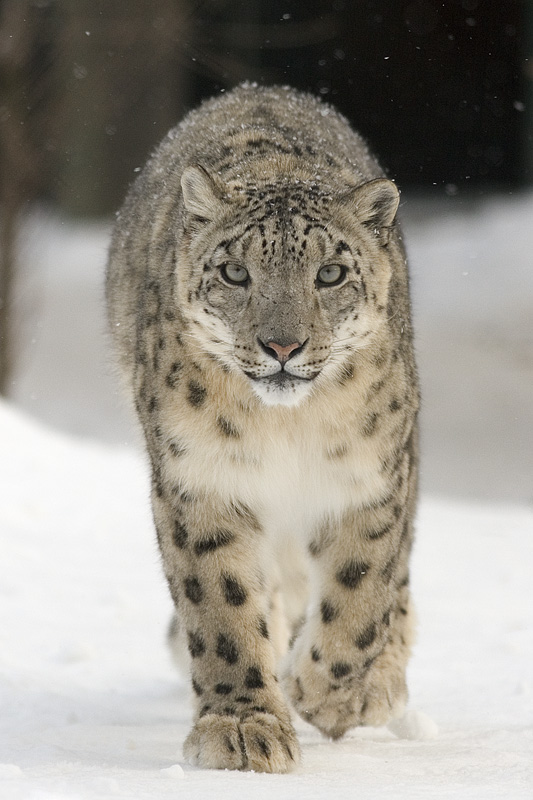 Snow LeopardPanthera uncia
-
 Cave LionPanthera spelaea
-
 European JaguarPanthera gombaszoegensis
-
 Longdan TigerPanthera zdanskyi
- CatFelis catus
Compare
Questions and answers
What is the scientific name of the Jaguar?
The scientific name of the Jaguar is Panthera onca. Written with its author, the full name is Panthera onca (Linnaeus, 1758).
Which family does the Jaguar belong to?
Panthera onca belongs to the family Felidae, in the order Carnivora and the class Mammalia.
Where is the Jaguar found?
Checklists and occurrence records place Panthera onca in 19 countries, including Brazil, Paraguay, Argentina, Mexico, Costa Rica and Colombia.
What is the conservation status of the Jaguar?
The IUCN Red List category recorded for Panthera onca is Near Threatened (NT).
What other names does the Jaguar have?
Panthera onca is also known in English as American Tiger, Arizonan Jaguar, Black Jaguar, Black Panther, Central American Jaguar and Goldman's Jaguar.
What are the 7 levels of classification for a jaguar?
The recorded classification is class Mammalia, order Carnivora, and family Felidae. The Jaguar has been classified as a monotypic taxon since 2017.[28]
What is a jaguar's main diet?
The Jaguar eats animal flesh. Its documented prey includes nine-banded armadillos, other vertebrates weighing no more than 10 kg, and ungulates, particularly peccaries.[12][14]
What type of habitat do jaguars live in?
Jaguars inhabit tropical and subtropical moist broadleaf forests, rainforests, cloud forests, wetlands, dry grasslands, and seasonally flooded open areas.[7][8]
Is jaguar carnivore or omnivore?
The Jaguar is an obligate carnivore and obtains its nutritional requirements entirely from animal flesh.[12]
Where does the Panthera onca live?
Its present geographical range extends from the United States and Mexico through Central America into South America. It currently occurs in Belize, Guatemala, Honduras, Nicaragua, Costa Rica, Panama, Colombia, Venezuela, Guyana, Suriname, French Guiana, Ecuador, Peru, Bolivia, Brazil, Paraguay, and Argentina.[29][30]
Sources
Passages the profile rests on
- The jaguar has pale yellow, tan, or reddish-yellow fur, a whitish underside, and black spots arranged into rosettes across its sides. Source passage: “The jaguar's coat ranges from pale yellow to tan or reddish-yellow, with a whitish underside and covered in black spots. The spots and their shapes vary: on the sides, they become rosettes which may include one or several dots.” — English Wikipedia
- Some jaguars have a melanistic black coat and are commonly called black panthers. Source passage: “Melanistic jaguars are also known as black panthers. The black morph is less common than the spotted one.” — English Wikipedia
- Jaguars in most regions typically weigh between 56 and 96 kg. Source passage: “weights in most regions are normally in the range of 56–96 kg (123–212 lb).” — English Wikipedia
- Exceptionally large male jaguars have been recorded weighing up to 158 kg. Source passage: “Exceptionally big males have been recorded to weigh as much as 158 kg (348 lb).” — English Wikipedia
- Female jaguars are typically 10–20% smaller than males. Source passage: “It is sexually dimorphic, with females typically being 10–20% smaller than males.” — English Wikipedia
- Jaguars in Venezuela and Brazil have reported average male weights of approximately 95 kg. Source passage: “Jaguars in Venezuela and Brazil are much larger, with average weights of about 95 kg (209 lb) in males” — English Wikipedia
- The jaguar inhabits tropical and subtropical moist broadleaf forests, rainforests, and cloud forests. Source passage: “The jaguar prefers dense forest and typically inhabits dry deciduous forests, tropical and subtropical moist broadleaf forests, rainforests and cloud forests in Central and South America” — English Wikipedia
- Jaguars also occupy wetlands, dry grasslands, and seasonally flooded open areas. Source passage: “open, seasonally flooded wetlands, dry grassland and historically also oak forests in the United States.” — English Wikipedia
- Jaguars favor riverbanks and swamps with dense vegetation. Source passage: “It favors riverine habitat and swamps with dense vegetation cover.” — English Wikipedia
- Jaguars have been recorded at elevations reaching approximately 3,800 metres, although they avoid montane forests. Source passage: “It has been recorded at elevations up to 3,800 m (12,500 ft) but avoids montane forests.” — English Wikipedia
- In the Mayan forests of Mexico and Guatemala, studied jaguars favored undisturbed dense habitats away from roads. Source passage: “In the Mayan forests of Mexico and Guatemala, 11 GPS-collared jaguars preferred undisturbed dense habitat away from roads” — English Wikipedia
- The jaguar is an obligate carnivore that obtains its nutritional requirements entirely from animal flesh. Source passage: “The jaguar is an obligate carnivore and depends solely on flesh for its nutrient requirements.” — English Wikipedia
- At least 111 wild prey species have been documented in the jaguar's geographical range. Source passage: “Across their distributional range, jaguars have been documented to take at least 111 wild species [19].” — pmc.ncbi.nlm.nih.gov
- A Belizean jaguar population consumed nine-banded armadillos, other vertebrates weighing no more than 10 kg, and ungulates, particularly peccaries. Source passage: “With few exceptions, the jaguars followed the same broad diet, a 2:1:1 ratio of nine-banded armadillos (Dasypus noveminctus), other vertebrates ≤10kg, and ungulates, primarily peccaries (Tayassu pecari and Pecari tajacu).” — pmc.ncbi.nlm.nih.gov
- Jaguars in Belize have been documented switching between wild and domestic ungulates as prey. Source passage: “We noted prey switching between wild and domestic ungulates for individuals spanning protected forests and farmland.” — pmc.ncbi.nlm.nih.gov
- Jaguars are opportunistic predators whose dietary breadth increases with prey species richness. Source passage: “They are widely considered to be opportunistic predators, displaying greater dietary breadth (increased generalism) with increasing prey richness [20].” — pmc.ncbi.nlm.nih.gov
- Jaguars generally hunt alone and use stalking and ambush tactics to capture prey. Source passage: “The jaguar (Panthera onca) is the largest cat in the New World and a solitary predator that stalks and ambushes its prey.” — britannica.com
- Jaguars are predominantly active at night and during twilight. Source passage: “The jaguar is mostly active at night and during twilight.” — English Wikipedia
- Jaguars in the Amazon rainforest and Pantanal are largely active during daylight hours. Source passage: “However, jaguars living in densely forested regions of the Amazon rainforest and the Pantanal are largely active by day” — English Wikipedia
- Black jaguars have been observed at higher densities in tropical rainforests and are more active during daylight. Source passage: “Black jaguars occur at higher densities in tropical rainforest and are more active during the daytime.” — English Wikipedia
- Jaguars are capable swimmers and have been observed swimming at least 1.3 km between islands and shorelines. Source passage: “They have been recorded moving between islands and the shore, swimming distances of at least 1.3km.” — English Wikipedia
- Jaguars climb trees, although they do so less frequently than cougars. Source passage: “Jaguars are also good at climbing trees but do so less often than cougars.” — English Wikipedia
- The jaguar can kill mammalian prey by biting through the skull between the ears and fatally damaging the brain. Source passage: “it bites directly through the skull of mammalian prey between the ears to deliver a fatal blow to the brain.” — English Wikipedia
- The jaguar has been classified as Near Threatened on the IUCN Red List since 2002. Source passage: “It has been listed as Near Threatened on the IUCN Red List since 2002.” — English Wikipedia
- The jaguar's wild population is believed to have declined since the late 1990s. Source passage: “The wild population is thought to have declined since the late 1990s.” — English Wikipedia
- Major threats to jaguars include habitat loss, habitat fragmentation, poaching for body-part trade, and killings associated with conflicts involving humans. Source passage: “The jaguar is threatened by habitat loss, habitat fragmentation, poaching for trade with its body parts and killings in human–wildlife conflict situations, particularly with ranchers in Central and South America.” — English Wikipedia
- Jaguar conservation planning identifies 51 large areas containing at least 50 breeding individuals each. Source passage: “Priority areas for jaguar conservation comprise 51 large areas inhabited by at least 50 breeding individuals, called Jaguar Conservation Units.” — English Wikipedia
- The jaguar has been classified as a monotypic taxon since 2017. Source passage: “Since 2017, the jaguar is considered to be a monotypic taxon” — English Wikipedia
- The jaguar's present geographical range extends from the United States and Mexico through Central America into South America. Source passage: “Its present range extends from the United States, Mexico, through Central America to South America” — English Wikipedia
- Jaguars currently occur in Belize, Guatemala, Honduras, Nicaragua, Costa Rica, Panama, Colombia, Venezuela, Guyana, Suriname, French Guiana, Ecuador, Peru, Bolivia, Brazil, Paraguay, and Argentina. Source passage: “comprising Belize, Guatemala, Honduras, Nicaragua, Costa Rica, particularly on the Osa Peninsula, Panama, Colombia, Venezuela, Guyana, Suriname, French Guiana, Ecuador, Peru, Bolivia, Brazil, Paraguay and Argentina.” — English Wikipedia
Data
- Catalogue of Life, 2026-10-16 XR cc by
- Global Biodiversity Information Facility CC BY 4.0
- Wikidata CC0
- GeoNames CC BY 4.0
- Wikimedia Commons per image; credit shown with each image
- Within the Catalogue of Life, this name comes from The Integrated Taxonomic Information System cc0
References
- Syst. Nat., 10th ed. vol.1 p.42 where the name was published
- Banks, R. C., R. W. McDiarmid, and A. L. Gardner. (1987). Checklist of Vertebrates of the United States, the U.S. Territories, and Canada. Resource Publication, No. 166.
- Wilson, Don E., and DeeAnn M. Reeder, eds. (1993). Mammal Species of the World: A Taxonomic and Geographic Reference, 2nd Ed., 3rd Printing.
- Wilson, Don E., and F. Russell Cole. (2000). Common Names of Mammals of the World.
- Wilson, Don E., and DeeAnn M. Reeder, eds. (2005). Mammal Species of the World: A Taxonomic and Geographic Reference, 3rd Ed., Vols. 1 & 2.
- Sunquist, M. E. and F. C. Sunquist / Don E. Wilson and Russell A. Mittermeier, eds. (2009). Family Felidae (Cats). Handbook of the Mammals of the World. Vol. 1: Carnivores.
- Kitchener, A. C., C. Breitenmoser-Würsten, E. Eizirik, A. Gentry, L. Werdelin, A. Wilting, et al. (2017). A revised taxonomy of the Felidae. The final report of the Cat Classification Task Force of the IUCN/SSC Cat Specialist Group. Cat News Special Issue, Vol. 11.
This species in other databases
Page built on 24 November 2026. See how the catalog is made and all sources and licences.
Cite this page
ScientificNames.org. (2026). Panthera onca (Jaguar). Retrieved November 24, 2026, from https://scientificnames.org/species/panthera-onca
“Panthera onca (Jaguar).” ScientificNames.org, 2026, scientificnames.org/species/panthera-onca. Accessed 24 Nov. 2026.
ScientificNames.org. “Panthera onca (Jaguar).” Accessed November 24, 2026. https://scientificnames.org/species/panthera-onca.
@misc{scientificnames_panthera_onca_jaguar,
  author = {{ScientificNames.org}},
  title = {Panthera onca (Jaguar)},
  year = {2026},
  url = {https://scientificnames.org/species/panthera-onca},
  note = {Accessed 2026-11-24}
}