Species · Mammals
Tiger Panthera tigris
The scientific name of the Tiger is Panthera tigris. It is a species of mammal in the family Felidae (cats), order Carnivora. The name dates from 1758.
- Scientific name
- Panthera tigris (Linnaeus, 1758)
- Common name
- Tiger
- Genus
- Panthera
- Family
- Felidae (Cats)
- Order
- Carnivora
- Class
- Mammalia
- Red List category
- EN Endangered
- Recorded in
- 15 countries
- Name status
- accepted in the Catalogue of Life

Overview
Tigers primarily inhabit forest environments, including temperate, broadleaf, mixed, mangrove, peat swamp and montane forests. The Tiger has an orange coat with white areas and a distinctive pattern of dark stripes unique to each individual.
Written 24 November 2026 from the sources listed below. Each statement was checked against the passage it cites; statements that could not be supported were removed.
Appearance
The Tiger has an orange coat with white areas and distinctive black or dark brown stripes. Each individual has a unique pattern of dark stripes.[1][2]
The Tiger has a muscular body, a large head, strong forelimbs, wide front paws and a long tail. Its rounded ears have eyes with round pupils, and its snout ends in a triangular pink tip bearing small black dots.[3][4][5]
The Tiger has five digits on its front feet and four on its back feet, equipped with retractile claws that can reach 10 cm in length. Its curved canine teeth measure between 6.4 and 7.6 centimetres.[6][7][8]
The Tiger's head-body length ranges from 1.4 to 2.8 metres, its tail measures between 0.6 and 1.1 metres, and its shoulder height ranges from 0.8 to 1.1 metres.[9][10][11]
Male Bengal tigers weigh between 200 and 260 kilograms, while females weigh between 100 and 160 kilograms. Male Sumatran tigers weigh between 100 and 140 kilograms, while females weigh between 75 and 110 kilograms.[12][13][14][15]
Habitat
Tigers primarily inhabit forest environments. These include Korean pine and temperate broadleaf and mixed forests in the Amur-Ussuri region of Russia and China, and mangrove forests in the Sundarbans.[16][17][18]
In Sumatra, tigers occupy lowland peat swamp forests and rugged montane forests. They have also been documented in temperate forests at elevations reaching 4,200 metres in Bhutan.[19][20]
Diet
Tigers primarily prey on hoofed mammals, capturing them through ambush. Reported prey species include spotted deer, wild boar, barking deer, sambar and gaur.[21][22]
Seven prey species were identified in the tiger diet analyzed in the Chitwan study. No livestock remains were detected in the analyzed tiger scats.[23][24]
Behaviour
Tigers generally live alone and defend their home ranges against members of the same sex. They are territorial hunters that capture prey through ambush.[25][26]
Tigers in Chitwan National Park avoided locations frequently visited by people and were more active at night. Radio-collared tigers in Sundarbans National Park were most active from dawn to early morning, reaching peak activity around 7 a.m.[27][28]
Reproduction and life cycle
Male tiger home ranges overlap with those of multiple females with whom they mate. Female tigers usually give birth to two or three cubs.[29][30]
Tiger cubs remain with their mothers for approximately two years. After becoming independent, young tigers establish their own home ranges.[31][32]
Conservation
The Tiger is classified as Endangered on the IUCN Red List. Tiger populations have lost at least 93 percent of their historical range since the early twentieth century.[33][34]
Habitat destruction and fragmentation caused by deforestation are major threats to tigers. Poaching for fur and illegal trade in tiger body parts for medicinal purposes also threaten the species.[35][36]
Tigers are legally protected in every country within their range. Conservation measures include action plans, anti-poaching patrols and population monitoring schemes.[37][38]
Wildlife corridors have been established in several countries where tigers occur.[39]
Uses
Tigers have been kept in captivity since ancient times and trained for circus and entertainment performances.[40]
Classification of the Tiger
| Kingdom | Animalia |
|---|---|
| Phylum | Chordata |
| Subphylum | Vertebrata |
| Infraphylum | Gnathostomata |
| Parvphylum | Osteichthyes |
| Megaclass | Tetrapoda |
| Class | Mammalia (Mammal) |
| Subclass | Theria |
| Infraclass | Eutheria |
| Order | Carnivora (Carnivores) |
| Suborder | Feliformia (Cat-like Carnivores) |
| Family | Felidae (Cats) |
| Subfamily | Pantherinae |
| Genus | Panthera (Roaring Cats) |
| Species | Panthera tigris (Linnaeus, 1758) |
Where the Tiger is found
Checklists and occurrence records place Panthera tigris in 15 countries across Asia. GBIF holds 5,972 georeferenced records of it.
Countries
- Bangladesh 17
- Bhutan 4
- Cambodia 9
- China 122
- India 5,038
- Indonesia 288
- Iran 3
- Japan 7
- Laos 24
- Malaysia 49
- Myanmar 17
- Nepal 313
- South Korea 10
- Thailand 48
- Vietnam 23
Regions and cities with the most records
- Madhya Pradesh, India 1,474
- Maharashtra, India 1,302
- Rajasthan, India 733
- Uttarakhand, India 672
- Sawai Madhopur, India 518
- Haridwar, India 306
- Rishīkesh, India 239
- Karnataka, India 192
- West Bengal, India 163
- Rāmnagar, India 110
- Assam, India 82
- Uttar Pradesh, India 69
- Umred, India 66
- Kerala, India 65
- Tamil Nadu, India 63
- Bharatpur, Nepal 54
- Chānda, India 29
- Bhadravati, India 27
- Lampung, Indonesia 26
- Gudalur, India 21
- Valparai, India 21
- Ṭikāpur, Nepal 21
- Panna, India 18
- Uthai Thani, Thailand 17
- Houaphan, Laos 16
- Riau, Indonesia 16
- Dehradun, India 14
- Jilin, China 14
- Bhimdatta, Nepal 12
- Aceh, Indonesia 11
- Khulna Division, Bangladesh 10
- Nakhon Sawan, Thailand 10
- Ooty, India 10
- Gulariyā, Nepal 9
- Tondalam, India 9
- Nanjangūd, India 8
9 more countries have a few records outside this range
These countries hold a few records of Panthera tigris but lie outside the range the checklists give for it. Such records are often zoo or garden specimens, museum material or vagrants, so the species is not counted as occurring there.
Range as the checklists state it
Europe & Northern Asia (excluding China)
Southern Asia
A number beside a place is its count of GBIF occurrence records. A place without a number comes from a checklist alone. Records show where a species has been observed or collected, which can include escapes and vagrants.
Common names
English
- Tiger
Names in 128 other languages
- Afrikaans
- Tier
- Albanian
- Tigri
- Arabic
- ببر, بَبْر, نمر
- Armenian
- Վագր
- Azerbaijani
- Pələng
- Belarusian
- Тыгр
- Bulgarian
- Тигър
- Burmese
- Kyarr gyi, ကျား
- Chinese
- Lǎohǔ
- Croatian
- Tigar
- Czech
- Tygr
- Dutch
- Tijger
- Estonian
- Tiiger
- Faroese
- Tikari
- Finnish
- Tiikeri
- French
- Tigre
- Georgian
- ვეფხვი
- Greek
- Τίγρη, Τίγρης
- Gujarati
- Vāgha, વાઘ
- Hebrew
- טיגריס
- Hindi
- Baagh, शेर
- Icelandic
- Tígrisdýr
- Indonesian
- Harimau
- Irish
- tíogar
- Japanese
- トラ
- Kannada
- Huli, ಹುಲಿ
- Kazakh
- Жолбарыс
- Korean
- 호랑이
- Latvian
- tīģeris
- Lithuanian
- Tigras
- Macedonian
- Тигар
- Malayalam
- kaṭuva, കടുവ
- Marathi
- वाघ
- Mongolian
- Бар
- Māori
- Taika
- Nepali
- Bāgha
- Pashto
- پړانګ, پړانگ
- Polish
- tygrys azjatycki
- Punjabi
- ਬਾਘ, ਸ਼ੇਰ
- Russian
- Tigr
- Scottish Gaelic
- Tìgear
- Serbian
- Тигар - Tigar
- Sinhala
- ව්යාග්රයා, ව්යාඝ්රයා
- Slovak
- tiger džungľový
- Spanish
- Tigre
- Swahili
- Chui milia
- Tamil
- Puli, புலி
- Telugu
- పులి
- Thai
- S̄eụ̄x krong, เสือโคร่ง
- Turkish
- Kaplan
- Urdu
- شیر
- Uzbek
- Yoʻlbars
- Vietnamese
- Cọp, Hổ, con hổ
- Welsh
- Teigr
- Zulu
- Ithayiga
- ace
- Rimueng, Rimuëng
- ady
- Къэплъан
- aka
- Osebo, ɔsebo
- amh
- ነብር
- asm
- বাঘ
- azb
- قاپلان
- bak
- Юлбарыҫ
- bod
- སྟག
- cdo
- Lâu-hū
- che
- ЦӀоькъалом
- chr
- ᏢᏓᏥ ᏧᎶᎸᏗ
- chu
- Тїгръ
- ckb
- بەبر, بەور
- csb
- Azjacczi tigris, tigris
- dty
- बाग
- dzo
- Taag
- glk
- دۊرگ
- gom
- Vag, वाग
- got
- 𐍄𐌹𐌲𐍂𐍃
- grn
- Jaguareterusu
- hak
- Lo-fú
- hat
- Tig
- ibo
- agụ
- ido
- Tigro
- inh
- ЦӀокъ
- jav
- Macan, Macan Loreng
- jbo
- tirxu
- kaa
- Jolbarıs
- kab
- Aksel
- kbd
- Хьэщомыщ
- kir
- Жолборс
- kur
- Piling
- lao
- seu yai
- lbe
- Къаплан
- lez
- Пеленг, Перленг
- lim
- Tieger
- lin
- Nkɔi etáné
- lld
- Tigra
- ltg
- Tygrys
- lzh
- 虎
- mai
- बाघ
- mdf
- Бабри
- mni
- ꯀꯩ, ꯄꯥꯝꯕ ꯀꯩ
- mus
- Kaccv
- mzn
- دورگ
- nan
- Hó͘
- nav
- Náshdóítsoh noodǫ́zígíí
- new
- धुँ
- orm
- Qeerransa
- ory
- ବାଘ
- oss
- Тигр
- rup
- Tigru
- sah
- Баабыр
- san
- व्याघ्र:, व्याघ्रः
- sat
- ᱛᱟ.ᱨᱩᱵ, ᱛᱟᱹᱨᱩᱵ, ᱪᱮᱴᱨᱟ
- sco
- Teeger
- shn
- သိူဝ်
- som
- Shabeel
- sun
- Lodaya, Maung
- szy
- lukedaw
- tat
- юлбарыс
- tcy
- ಪಿಲಿ
- tgk
- Бабр
- tuk
- Gaplaň
- uig
- بارس
- vro
- Tiigri
- wln
- Tigue
- wol
- Segg, Ségg
- xmf
- ჸილო
- yid
- טיגער
- yor
- Àmọ̀tẹ́kùn, Ẹkùn
- yue
- 老虎
- zha
- Guk
Synonyms
10 other scientific names have been used for this species and are now treated as synonyms of Panthera tigris.
- Felis tigris Linnaeus, 1758
- Felis tigris coreensis Brass, 1904
- Panthera tigris altaica Corbet, 1978
- Panthera tigris coreensis Kishida & Mori, 1931
- Panthera tigris jacksoni Luo et al., 2004
- Panthera tigris longipilis Tate, 1947
- Tigris mikodoi Satunin, 1915
- Tigris regalis Gray, 1867
- Tigris striatus Severtzov, 1858
- Tigris styani Pocock, 1929
Subspecies and varieties
- Panthera tigris sondaica (Javan Tiger) subspecies
- Panthera tigris tigris (Bengal Tiger) subspecies
Related species
-
 LionPanthera leo
-
 JaguarPanthera onca
-
 LeopardPanthera pardus
-
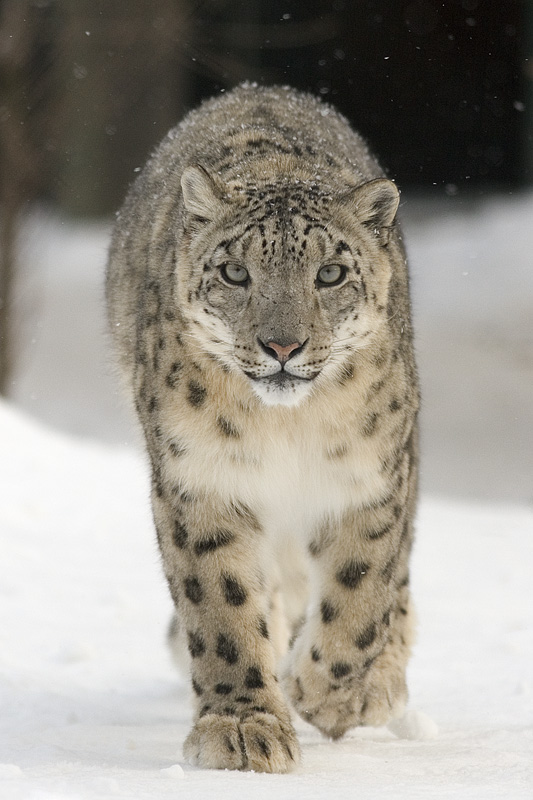 Snow LeopardPanthera uncia
-
 Cave LionPanthera spelaea
-
 European JaguarPanthera gombaszoegensis
-
 Longdan TigerPanthera zdanskyi
- CatFelis catus
Compare
Questions and answers
What is the scientific name of the Tiger?
The scientific name of the Tiger is Panthera tigris. Written with its author, the full name is Panthera tigris (Linnaeus, 1758).
Which family does the Tiger belong to?
Panthera tigris belongs to the family Felidae, in the order Carnivora and the class Mammalia.
Where is the Tiger found?
Checklists and occurrence records place Panthera tigris in 15 countries, including India, Nepal, Indonesia, China, Malaysia and Thailand.
What is the conservation status of the Tiger?
The IUCN Red List category recorded for Panthera tigris is Endangered (EN).
What scientific name is a tiger known by?
The scientific name of the Tiger is Panthera tigris (Linnaeus, 1758).[41][42]
What do Panthera tigris eat?
Tigers primarily prey on hoofed mammals, including spotted deer, wild boar, barking deer, sambar and gaur. They capture their prey through ambush.[21][22][26]
Can you describe the habitat of a tiger?
Tigers primarily inhabit forests, including temperate broadleaf and mixed forests, Korean pine forests, mangrove forests, lowland peat swamp forests and rugged montane forests. They have also been documented in temperate forests at elevations reaching 4,200 metres in Bhutan.[16][17][18][19][20]
Sources
Passages the profile rests on
- The tiger has an orange coat with white areas and distinctive black or dark brown stripes. Source passage: “It has an orange colouration that varies from yellowish to reddish. White fur covers the underside, from head to tail, along with the inner surface of the legs and parts of the face.” — English Wikipedia
- Each tiger has a unique pattern of dark stripes. Source passage: “The tiger is marked with distinctive black or dark brown stripes, which are uniquely patterned in each individual.” — English Wikipedia
- The tiger has a muscular body, large head, strong forelimbs, wide front paws and a long tail. Source passage: “The tiger has a typical felid morphology, with a muscular body, shortened legs, strong forelimbs with wide front paws, a large head and a tail that is about half the length of the rest of its body.” — English Wikipedia
- The tiger has rounded ears and eyes with round pupils. Source passage: “The ears are rounded and the eyes have a round pupil.” — English Wikipedia
- The tiger's snout ends in a triangular pink tip bearing small black dots. Source passage: “The snout ends in a triangular, pink tip with small black dots, the number of which increase with age.” — English Wikipedia
- The tiger has five digits on its front feet and four on its back feet, equipped with retractile claws. Source passage: “It has five digits, including a dewclaw, on the front feet and four on the back, all of which have retractile claws” — English Wikipedia
- The tiger's claws can reach 10 cm in length. Source passage: “can reach 10 cm (3.9 in) long.” — English Wikipedia
- The tiger's curved canine teeth measure between 6.4 and 7.6 centimetres. Source passage: “its somewhat curved canine teeth are the longest in the cat family at 6.4–7.6 cm (2.5–3.0 in).” — English Wikipedia
- The tiger's head-body length ranges from 1.4 to 2.8 metres. Source passage: “The tiger has a head-body length of 1.4–2.8 m (4 ft 7 in – 9 ft 2 in)” — English Wikipedia
- The tiger's tail measures between 0.6 and 1.1 metres. Source passage: “with a 0.6–1.1 m (2 ft 0 in – 3 ft 7 in) tail” — English Wikipedia
- The tiger stands between 0.8 and 1.1 metres at the shoulder. Source passage: “stands 0.8–1.1 m (2 ft 7 in – 3 ft 7 in) at the shoulder.” — English Wikipedia
- Male Bengal tigers weigh between 200 and 260 kilograms. Source passage: “Male Bengal tigers weigh 200–260 kg (440–570 lb)” — English Wikipedia
- Female Bengal tigers weigh between 100 and 160 kilograms. Source passage: “females weigh 100–160 kg (220–350 lb)” — English Wikipedia
- Male Sumatran tigers weigh between 100 and 140 kilograms. Source passage: “Male Sumatran tigers weigh 100–140 kg (220–310 lb)” — English Wikipedia
- Female Sumatran tigers weigh between 75 and 110 kilograms. Source passage: “females weigh 75–110 kg (165–243 lb).” — English Wikipedia
- Tigers primarily inhabit forest environments. Source passage: “The tiger mainly lives in forest habitats and is highly adaptable.” — English Wikipedia
- Tigers inhabit Korean pine and temperate broadleaf and mixed forests in the Amur-Ussuri region of Russia and China. Source passage: “In the Amur-Ussuri region of Russia and China, it inhabits Korean pine and temperate broadleaf and mixed forests” — English Wikipedia
- Tigers inhabit mangrove forests in the Sundarbans. Source passage: “and the mangrove forests of the Sundarbans.” — English Wikipedia
- Tigers in Sumatra occupy lowland peat swamp forests and rugged montane forests. Source passage: “In Sumatra, it inhabits lowland peat swamp forests and rugged montane forests.” — English Wikipedia
- Tigers have been documented in temperate forests at elevations reaching 4,200 metres in Bhutan. Source passage: “it was documented in temperate forest up to an elevation of 4,200 m (13,800 ft) in Bhutan” — English Wikipedia
- Tigers primarily prey on hoofed mammals, capturing them through ambush. Source passage: “The tiger is an apex predator and preys mainly on hooved mammals, which it takes by ambush.” — English Wikipedia
- Reported tiger prey species include spotted deer, wild boar, barking deer, sambar and gaur. Source passage: “such as spotted deer ( Axis axis ), wild boar ( Sus scrofa ), barking deer ( Muntiacus muntjak ), and large‐sized prey species (> 100 kg), such as sambar ( Rusa unicolor ), gaur ( Bos gaurus )” — pmc.ncbi.nlm.nih.gov
- Seven prey species were identified in the tiger diet analyzed in the Chitwan study. Source passage: “The study identified seven prey species in the tiger diet analyzed through DNA metabarcoding and microscopic hair analysis” — pmc.ncbi.nlm.nih.gov
- No livestock remains were detected in the tiger scats analyzed in the Chitwan study. Source passage: “No trace of livestock was detected in the scats analyzed.” — pmc.ncbi.nlm.nih.gov
- Tigers generally live alone and defend their home ranges against members of the same sex. Source passage: “It lives a mostly solitary life and defends its home range from individuals of the same sex.” — English Wikipedia
- Tigers are territorial hunters that capture prey through ambush. Source passage: “Tigers are territorial, solitary hunters, well‐equipped to ambush and capture prey” — pmc.ncbi.nlm.nih.gov
- Tigers in Chitwan National Park avoided locations frequently visited by people and were more active at night. Source passage: “Camera trap data show that tigers in Chitwan National Park avoided locations frequented by people and were more active at night than during day.” — English Wikipedia
- Radio-collared tigers in Sundarbans National Park were most active from dawn to early morning, reaching peak activity around 7 a.m. Source passage: “In Sundarbans National Park, six radio-collared tigers were most active from dawn to early morning and reached their zenith around 7:00 o'clock in the morning.” — English Wikipedia
- Male tiger home ranges overlap with those of multiple females with whom they mate. Source passage: “The range of a male tiger overlaps with that of multiple females with whom he mates.” — English Wikipedia
- Female tigers usually give birth to two or three cubs. Source passage: “Females give birth to usually two or three cubs” — English Wikipedia
- Tiger cubs remain with their mothers for approximately two years. Source passage: “that stay with their mother for about two years.” — English Wikipedia
- Young tigers establish their own home ranges after becoming independent. Source passage: “When becoming independent, they leave their mother's home range and establish their own.” — English Wikipedia
- The tiger is classified as Endangered on the IUCN Red List. Source passage: “It is listed as Endangered on the IUCN Red List” — English Wikipedia
- Tiger populations have lost at least 93 percent of their historical range since the early twentieth century. Source passage: “Since the early 20th century, tiger populations have lost at least 93% of their historic range” — English Wikipedia
- Habitat destruction and fragmentation caused by deforestation are major threats to tigers. Source passage: “Major threats to tigers are habitat destruction and fragmentation due to deforestation” — English Wikipedia
- Poaching for fur and illegal trade in tiger body parts for medicinal purposes threaten the species. Source passage: “poaching for fur and the illegal trade of body parts for medicinal purposes.” — English Wikipedia
- Tigers are legally protected in every country within their range. Source passage: “The tiger is legally protected in all range countries.” — English Wikipedia
- Conservation measures include action plans, anti-poaching patrols and population monitoring schemes. Source passage: “National conservation measures consist of action plans, anti-poaching patrols and schemes for monitoring tiger populations.” — English Wikipedia
- Wildlife corridors have been established in several countries where tigers occur. Source passage: “In several range countries, wildlife corridors have been established” — English Wikipedia
- Tigers have been kept in captivity since ancient times and trained for circus and entertainment performances. Source passage: “It has been kept in captivity since ancient times and has been trained to perform in circuses and other entertainment shows.” — English Wikipedia
- Carl Linnaeus described the tiger in 1758 using the scientific name Felis tigris. Source passage: “In 1758, Carl Linnaeus described the tiger in his work Systema Naturae and gave it the scientific name Felis tigris” — English Wikipedia
- The tiger was assigned to the genus Panthera by Reginald Innes Pocock in 1929. Source passage: “In 1929, Reginald Innes Pocock placed the species in the genus Panthera using the scientific name Panthera tigris.” — English Wikipedia
Data
- Catalogue of Life, 2026-10-16 XR cc by
- Global Biodiversity Information Facility CC BY 4.0
- Wikidata CC0
- GeoNames CC BY 4.0
- Wikimedia Commons per image; credit shown with each image
- Within the Catalogue of Life, this name comes from The Integrated Taxonomic Information System cc0
References
- Syst. Nat., 10th ed. vol.1 p.41 where the name was published
- Wilson, Don E., and DeeAnn M. Reeder, eds. (1993). Mammal Species of the World: A Taxonomic and Geographic Reference, 2nd Ed., 3rd Printing.
- Wilson, Don E., and F. Russell Cole. (2000). Common Names of Mammals of the World.
- Wilson, Don E., and DeeAnn M. Reeder, eds. (2005). Mammal Species of the World: A Taxonomic and Geographic Reference, 3rd Ed., Vols. 1 & 2.
- Sunquist, M. E. and F. C. Sunquist / Don E. Wilson and Russell A. Mittermeier, eds. (2009). Family Felidae (Cats). Handbook of the Mammals of the World. Vol. 1: Carnivores.
- Kitchener, A. C., C. Breitenmoser-Würsten, E. Eizirik, A. Gentry, L. Werdelin, A. Wilting, et al. (2017). A revised taxonomy of the Felidae. The final report of the Cat Classification Task Force of the IUCN/SSC Cat Specialist Group. Cat News Special Issue, Vol. 11.
This species in other databases
Page built on 24 November 2026. See how the catalog is made and all sources and licences.
Cite this page
ScientificNames.org. (2026). Panthera tigris (Tiger). Retrieved November 24, 2026, from https://scientificnames.org/species/panthera-tigris
“Panthera tigris (Tiger).” ScientificNames.org, 2026, scientificnames.org/species/panthera-tigris. Accessed 24 Nov. 2026.
ScientificNames.org. “Panthera tigris (Tiger).” Accessed November 24, 2026. https://scientificnames.org/species/panthera-tigris.
@misc{scientificnames_panthera_tigris_tiger,
  author = {{ScientificNames.org}},
  title = {Panthera tigris (Tiger)},
  year = {2026},
  url = {https://scientificnames.org/species/panthera-tigris},
  note = {Accessed 2026-11-24}
}