Species · Mammals
Lion Panthera leo
The scientific name of the Lion is Panthera leo. It is a species of mammal in the family Felidae (cats), order Carnivora. The name dates from 1758.
- Scientific name
- Panthera leo (Linnaeus, 1758)
- Common name
- Lion
- Genus
- Panthera
- Family
- Felidae (Cats)
- Order
- Carnivora
- Class
- Mammalia
- Red List category
- VU Vulnerable
- Recorded in
- 35 countries
- Name status
- accepted in the Catalogue of Life

Overview
The African Lion is the second-largest felid species after the tiger. African lions occur in scattered populations across sub-Saharan Africa. African lions are social animals that form groups called prides, generally consisting of related females and cubs alongside one or several adult males.
Written 24 November 2026 from the sources listed below. Each statement was checked against the passage it cites; statements that could not be supported were removed.
Appearance
Its fur ranges from light buff and silvery grey to yellowish red and dark brown, with undersides generally lighter than the rest of the body. Every lion has a tail ending in a dark, hairy tuft.[1][2][3]
Newborn lions have dark spots that fade as they mature, although faint spots can remain on their legs and undersides.[4]
African lions measure approximately 4.5 to 6.5 feet in head-and-body length, with tails measuring approximately 26.25 to 39.5 inches.[5][6]
Habitat
African lions inhabit grassy plains, savannahs, river-bordering scrub, and open woodlands with bushes. Lions generally inhabit grasslands, savannahs, and shrublands, and rarely enter closed forests.[7][8][9]
African lions can inhabit tropical moist forests in West Africa and montane forests in East Africa. Lions have been recorded at elevations of up to 3,600 metres on Mount Elgon.[10][11]
African lion habitats predominantly consist of savannahs receiving 300 to 1,500 millimetres of annual rainfall.[12]
Diet
Lions primarily prey on medium-sized and large hoofed mammals. Female lions commonly hunt antelopes, zebras, and wildebeest.[13][14]
Lions sometimes steal prey captured by hyenas or wild dogs.[15]
Behaviour
Lions are social animals that form groups called prides. Prides generally consist of related females and cubs alongside one or several adult males unrelated to the females.[16][17]
Female lions are the primary hunters and leaders within their prides. They usually hunt cooperatively and commonly raise their cubs cooperatively.[18][19][20]
Male lions defend pride territories by scent-marking, roaring, and chasing away intruding animals. Young males eventually leave their birth prides and establish their own prides by taking over groups led by other males.[21][22]
Lions are generally more active during daylight than other wild cats but can become nocturnal and crepuscular when persecuted. Young lions generally do not participate in hunting until approximately one year of age.[23][24]
Reproduction and life cycle
Female cubs typically remain with their birth pride as they mature. Male lions generally reach full mane development at approximately four years of age.[25][26]
The captive lifespan of African lions is approximately 16 years.[27]
Conservation
The lion has been classified as Vulnerable on the IUCN Red List since 1996. Lion populations in African countries declined by approximately 43 percent since the early 1990s, and African lions have disappeared from approximately 94 percent of their historical range.[28][29][30]
Habitat loss and conflicts with humans are major concerns contributing to lion population declines. Poaching also threatens lions because their bones and other body parts are valuable in illegal wildlife trade.[31][32]
Uses
Lions have been exhibited in zoological gardens since the late eighteenth century. They have also been widely depicted in sculptures, paintings, national flags, literature, and films.[33][34]
Classification of the Lion
| Kingdom | Animalia |
|---|---|
| Phylum | Chordata |
| Subphylum | Vertebrata |
| Infraphylum | Gnathostomata |
| Parvphylum | Osteichthyes |
| Megaclass | Tetrapoda |
| Class | Mammalia (Mammal) |
| Subclass | Theria |
| Infraclass | Eutheria |
| Order | Carnivora (Carnivores) |
| Suborder | Feliformia (Cat-like Carnivores) |
| Family | Felidae (Cats) |
| Subfamily | Pantherinae |
| Genus | Panthera (Roaring Cats) |
| Species | Panthera leo (Linnaeus, 1758) |
Where the Lion is found
Checklists and occurrence records place Panthera leo in 35 countries across Africa and Asia. GBIF holds 17,888 georeferenced records of it.
Countries
- Algeria 8
- Angola 132
- Benin 671
- Botswana 1,510
- Burkina Faso 50
- Cameroon 14
- Central African Republic 45
- Chad 86
- China 5
- Democratic Republic of the Congo 70
- Eswatini 27
- Ethiopia 34
- Gabon 7
- Guinea-Bissau 3
- India 248
- Ivory Coast 4
- Japan 3
- Kenya 3,651
- Malawi 130
- Morocco 4
- Mozambique 96
- Namibia 951
- Niger 193
- Nigeria 6
- Republic of the Congo 4
- Rwanda 47
- Senegal 17
- Somalia 7
- South Africa 5,228
- South Sudan 6
- Sudan 10
- Tanzania 3,366
- Uganda 435
- Zambia 550
- Zimbabwe 270
Regions and cities with the most records
- Mpumalanga, South Africa 2,368
- Narok County, Kenya 1,670
- Mara, Tanzania 1,171
- Arusha, Tanzania 1,049
- Limpopo, South Africa 984
- Simiyu, Tanzania 639
- Oshikoto Region, Namibia 628
- North-West, Botswana 617
- Chobe, Botswana 541
- KwaZulu-Natal, South Africa 454
- Eastern Cape, South Africa 443
- Atakora, Benin 358
- North West, South Africa 308
- Kajiado County, Kenya 279
- Northern Cape, South Africa 276
- Imara Daima Estate, Kenya 274
- Taita Taveta, Kenya 274
- Nairobi, Kenya 264
- Manyara, Tanzania 247
- Mlolongo, Kenya 246
- Alibori, Benin 227
- Gujarat, India 224
- Githunguri, Kenya 221
- Laikipia, Kenya 207
- Nairobi County, Kenya 207
- Nakuru County, Kenya 200
- Est, Burkina Faso 179
- Ongata Rongai, Kenya 169
- Kiambu, Kenya 158
- Matabeleland North, Zimbabwe 156
- Athi River, Kenya 147
- Western Cape, South Africa 140
- Kitengela, Kenya 138
- Nakuru, Kenya 133
- Muchinga, Zambia 132
- Ghanzi, Botswana 121
16 more countries have a few records outside this range
These countries hold a few records of Panthera leo but lie outside the range the checklists give for it. Such records are often zoo or garden specimens, museum material or vagrants, so the species is not counted as occurring there.
Range as the checklists state it
Southern Asia
Africa
A number beside a place is its count of GBIF occurrence records. A place without a number comes from a checklist alone. Records show where a species has been observed or collected, which can include escapes and vagrants.
Common names
English
- Lion
- African Lion
- Lioness
Names in 171 other languages
- Afrikaans
- Leeu, Leeuin, Vuilbaard
- Albanian
- Luani
- Arabic
- أسد, أسد (ʾĀsad), أَسَدٌ, حيدر, سبع, ليث, لَيْثٌ, وائل
- Armenian
- Առյուծ
- Asturian
- Lleón
- Azerbaijani
- Şir
- Basque
- Lehoi
- Belarusian
- Леў, Леў (Lew)
- Breton
- Loen
- Bulgarian
- Лъв, Лъв (Lăv)
- Burmese
- ခြင်္သေ့
- Catalan
- Lleó
- Chinese
- 獅
- Danish
- Løve
- Dutch
- Afrikaanse Leeuw, Leeuw
- Esperanto
- Leono
- Estonian
- Lõvi
- Faroese
- Leyva
- Finnish
- Leijona
- French
- Lion, Lionne
- Galician
- León-leoa
- Georgian
- ლომი
- German
- Afrikanischer Löwe
- Greek
- Λιοντάρι, Λιοντάρι (Liondári)
- Gujarati
- સિંહ
- Hawaiian
- Liona
- Hebrew
- אריה
- Hungarian
- Oroszlán
- Icelandic
- Ljón
- Italian
- Leone
- Japanese
- ライオン, ライオン (Raion)
- Kazakh
- Арыстан
- Korean
- 사자, 사자 (saja)
- Latin
- Leo
- Latvian
- Lauva
- Lithuanian
- Liūtas
- Luxembourgish
- Léiw
- Macedonian
- Лав (lav)
- Malayalam
- സിംഹം, സിംഹം (simham)
- Maltese
- Iljun
- Marathi
- शेर
- Mongolian
- Арслан
- Northern Sami
- Ledjon
- Pashto
- زمری
- Persian
- شیر, شیر (Šayr)
- Polish
- lew afrykański
- Portuguese
- Leao, Leão
- Punjabi
- ਬੱਬਰ ਸ਼ੇਰ
- Romanian
- Leu
- Samoan
- Leona
- Scottish Gaelic
- Leòmhann
- Serbian
- Лав
- Sinhala
- සිංහ ධේනුව, සිංහයා, සිංහයා/සිංහ ධේනුව
- Slovak
- Lev púšťový
- Slovenian
- Lev
- Sotho
- Tau
- Spanish
- León, León Africano
- Swahili
- Simba
- Swedish
- Lejon
- Tamil
- சிங்கம்
- Telugu
- సింహం
- Thai
- สิงโต
- Tswana
- Tao
- Turkish
- Aslan
- Ukrainian
- Лев, Лев (Lev)
- Uzbek
- Arslon
- Vietnamese
- Sư tử
- Welsh
- Llew
- Xhosa
- iNgwenyama
- Zulu
- Mbube, iBhubesi, iBubesi, iNgonyama, nGonyama
- abk
- Алым
- ady
- Аслъан
- aka
- Gyata
- amh
- Ambessa, አንበሳ
- arc
- ܐܪܝܐ
- arg
- Leyón
- asm
- সিংহ
- ava
- ГъалбацӀ
- azb
- آسلان
- bak
- Арыҫлан
- bam
- Waraba
- bar
- Léwe
- bod
- སེང་གེ
- bpy
- নংসা
- cdo
- Săi
- che
- Лоьм
- chr
- ᏢᏓᏥ ᎤᏃᏕᎾ
- chu
- Львъ
- chv
- Арăслан
- chy
- Péhpe'énanóse'hame
- ckb
- شێر
- cos
- Lionu
- csb
- Lew
- dag
- Gbuɣinli
- din
- Kör
- ewe
- Dzata
- ext
- Lión
- frr
- Lööw
- got
- 𐌻𐌹𐍅𐌰
- grn
- Leõ
- gsw
- Löwe
- hak
- Sṳ̂-é
- hat
- Lyon
- hau
- Zaki
- hbs
- Lav
- hif
- Ser
- hsb
- Law
- hyw
- Առիւծ
- ibo
- Odúm
- ina
- Leon
- inh
- Лом
- jav
- Singa
- jbo
- cinfo
- kab
- Izem
- kas
- پادَر سٕہہ
- kbd
- Хьэщ
- kbp
- Tɔɔyʋʋ
- kfl
- Tsau
- kin
- Intare
- kir
- Арстан, Арстан (arstan)
- kmb
- Hoji
- kon
- Nkosi
- lbe
- Аслан
- lch
- ndumba
- lim
- Liew
- lin
- Nkɔ́si
- ltg
- Ļovs
- luo
- Sibuor
- mdf
- Орксофта
- mni
- ꯅꯣꯡꯁꯥ
- mus
- Este-papv, Estepapv
- nan
- Sai
- nav
- Náshdóítsoh bitsiijįʼ daditłʼooígíí
- new
- सिंह
- nmx
- Games
- oji
- Mishibizhii
- ory
- ସିଂହ
- oss
- Цомахъ
- pnb
- ببر شیر
- que
- Liyun
- roh
- Liun
- sah
- Хахай
- san
- सिंहः पशुः
- sat
- ᱡᱟᱴᱟᱠᱩᱞ
- sbs
- undavu
- scn
- liuni
- sgs
- Liūts
- shi
- Agrzam
- shn
- သၢင်ႇသီႈ
- sna
- Shumba
- snd
- ببر شينهن
- som
- Libaax
- srd
- Lioni
- ssw
- Libubesi
- stq
- Leeuwe
- tat
- Арыслан
- tcy
- ಸಿಂಹ
- tgk
- Шер
- tir
- ኣንበሳ
- tso
- Nghala
- tum
- Nkhalamu
- uig
- شىر
- ven
- Ndau
- wol
- Gaynde
- xal
- Арслң
- xmf
- ნჯილო
- yid
- לייב
- yor
- Kìnìún
- yue
- 獅子
- zha
- Saeceij
- zza
- Şêr
Synonyms
2 other scientific names have been used for this species and are now treated as synonyms of Panthera leo.
- Felis leo Linnaeus, 1758
- Panthera leo nubica (de Blainville, 1843)
Subspecies and varieties
- Panthera leo leo (Atlas Lion) subspecies
- Panthera leo melanochaita (South African Cape Lion) subspecies
Related species
-
 TigerPanthera tigris
-
 JaguarPanthera onca
-
 LeopardPanthera pardus
-
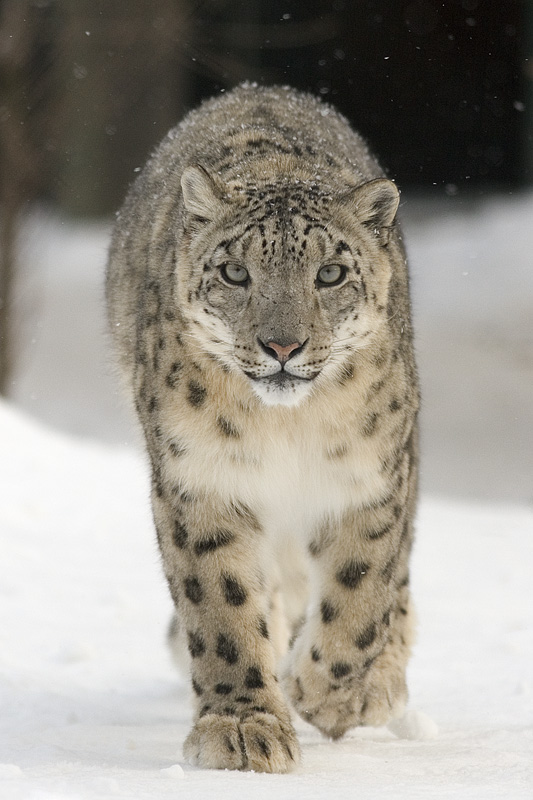 Snow LeopardPanthera uncia
-
 Cave LionPanthera spelaea
-
 European JaguarPanthera gombaszoegensis
-
 Longdan TigerPanthera zdanskyi
- CatFelis catus
Compare
Questions and answers
What is the scientific name of the Lion?
The scientific name of the Lion is Panthera leo. Written with its author, the full name is Panthera leo (Linnaeus, 1758).
Which family does the Lion belong to?
Panthera leo belongs to the family Felidae, in the order Carnivora and the class Mammalia.
Where is the Lion found?
Checklists and occurrence records place Panthera leo in 35 countries, including South Africa, Kenya, Tanzania, Botswana, Namibia and Benin.
What is the conservation status of the Lion?
The IUCN Red List category recorded for Panthera leo is Vulnerable (VU).
What other names does the Lion have?
Panthera leo is also known in English as African Lion and Lioness.
What is the habitat and diet of a lion?
African lions inhabit grassy plains, savannahs, river-bordering scrub, and open woodlands with bushes. They primarily prey on medium-sized and large hoofed mammals.[8][13]
Sources
Passages the profile rests on
- Lion fur ranges from light buff and silvery grey to yellowish red and dark brown. Source passage: “The fur varies in colour from light buff to silvery grey, yellowish red, and dark brown.” — English Wikipedia
- The undersides of lions are generally lighter in colour than the rest of their fur. Source passage: “The colours of the underparts are generally lighter.” — English Wikipedia
- Every lion has a tail ending in a dark, hairy tuft. Source passage: “The tail of all lions ends in a dark, hairy tuft” — English Wikipedia
- Newborn lions have dark spots that fade as they mature, although faint spots can remain on their legs and undersides. Source passage: “A newborn lion has dark spots, which fade as the cub reaches adulthood, although faint spots may still be seen on the legs and underparts.” — English Wikipedia
- African lions measure approximately 4.5 to 6.5 feet in head-and-body length. Source passage: “Head and body, 4.5 to 6.5 feet;” — nationalgeographic.com
- African lions have tails measuring approximately 26.25 to 39.5 inches. Source passage: “tail, 26.25 to 39.5 inches” — nationalgeographic.com
- Lions inhabit grasslands, savannahs, and shrublands. Source passage: “The lion inhabits grasslands, savannahs, and shrublands.” — English Wikipedia
- African lions prefer grassy plains, savannahs, river-bordering scrub, and open woodlands with bushes. Source passage: “The lion prefers grassy plains and savannahs, scrub bordering rivers, and open woodlands with bushes.” — English Wikipedia
- Lions rarely enter closed forests. Source passage: “It rarely enters closed forests.” — English Wikipedia
- African lions can inhabit tropical moist forests in West Africa and montane forests in East Africa. Source passage: “Still, remnant populations are also present in tropical moist forests in West Africa and montane forests in East Africa.” — English Wikipedia
- Lions have been recorded at elevations of up to 3,600 metres on Mount Elgon. Source passage: “On Mount Elgon, the lion has been recorded up to an elevation of 3,600 m (11,800 ft)” — English Wikipedia
- African lion habitats predominantly consist of savannahs receiving 300 to 1,500 millimetres of annual rainfall. Source passage: “Savannahs with an annual rainfall of 300 to 1,500 mm (12 to 59 in) make up the majority of lion habitat in Africa” — English Wikipedia
- Lions primarily prey on medium-sized and large hoofed mammals. Source passage: “preying mostly on medium-sized and large hooved mammals.” — English Wikipedia
- Female lions commonly hunt antelopes, zebras, and wildebeest. Source passage: “They often work together to prey upon antelopes, zebras, wildebeest, and other large animals of the open grasslands.” — nationalgeographic.com
- Lions sometimes steal prey captured by hyenas or wild dogs. Source passage: “Lions will hunt alone if the opportunity presents itself, and they also steal kills from hyenas or wild dogs.” — nationalgeographic.com
- Lions are social animals that form groups called prides. Source passage: “It is a social species, forming groups called prides.” — English Wikipedia
- Lion prides generally consist of related females and cubs alongside one or several adult males unrelated to the females. Source passage: “A lion pride consists of related females and cubs, and a few or one adult male who is unrelated to the females.” — English Wikipedia
- Female lions usually hunt cooperatively. Source passage: “Groups of female lions usually hunt together.” — English Wikipedia
- Female lions are the primary hunters and leaders within their prides. Source passage: “Female lions are the pride's primary hunters and leaders.” — nationalgeographic.com
- Female lions commonly raise their cubs cooperatively. Source passage: “Female lions also raise their cubs communally.” — nationalgeographic.com
- Male lions defend pride territories by scent-marking, roaring, and chasing away intruding animals. Source passage: “Males defend the pride's territory, marking the area with urine, roaring menacingly to warn intruders, and chasing off animals that encroach on their turf.” — nationalgeographic.com
- Young male lions eventually leave their birth prides and establish their own prides by taking over groups led by other males. Source passage: “Young males eventually leave and establish their own prides by taking over a group headed by another male.” — nationalgeographic.com
- Lions are generally more active during daylight than other wild cats but can become nocturnal and crepuscular when persecuted. Source passage: “It is usually more diurnal than other wild cats, but when persecuted, it adapts to being active at night and at twilight.” — English Wikipedia
- Young lions generally do not participate in hunting until approximately one year of age. Source passage: “Young lions do not help to hunt until they are about a year old.” — nationalgeographic.com
- Female cubs typically remain with their birth pride as they mature. Source passage: “female cubs typically stay with the group as they age.” — nationalgeographic.com
- Male lions generally reach full mane development at approximately four years of age. Source passage: “It starts growing when lions enter adolescence, when testosterone levels increase, and reach their full size at around four years old.” — English Wikipedia
- The captive lifespan of African lions is approximately 16 years. Source passage: “Captive Lifespan: Around 16 years ...” — capemaycountynj.gov
- The lion has been classified as Vulnerable on the IUCN Red List since 1996. Source passage: “It has been listed as Vulnerable on the IUCN Red List since 1996” — English Wikipedia
- Lion populations in African countries declined by approximately 43 percent since the early 1990s. Source passage: “because populations in African countries have declined by about 43% since the early 1990s.” — English Wikipedia
- African lions have disappeared from approximately 94 percent of their historical range. Source passage: “African lions have disappeared from 94 percent of its historic range” — nationalgeographic.com
- Habitat loss and conflicts with humans are major concerns contributing to lion population declines. Source passage: “habitat loss and conflicts with humans are the greatest causes for concern.” — English Wikipedia
- Poaching threatens lions because their bones and other body parts are valuable in illegal wildlife trade. Source passage: “Poachers target the species, too, as their bones and other body parts are valuable in the illegal wildlife trade.” — nationalgeographic.com
- Lions have been exhibited in zoological gardens since the late eighteenth century. Source passage: “have been a key species sought for exhibition in zoological gardens across the world since the late 18th century.” — English Wikipedia
- Lions have been widely depicted in sculptures, paintings, national flags, literature, and films. Source passage: “The lion has been extensively depicted in sculptures and paintings, on national flags, and in literature and films.” — English Wikipedia
- African lions occur in scattered populations across sub-Saharan Africa. Source passage: “African lions live in scattered populations across sub-Saharan Africa.” — English Wikipedia
Data
- Catalogue of Life, 2026-10-16 XR cc by
- Global Biodiversity Information Facility CC BY 4.0
- Wikidata CC0
- GeoNames CC BY 4.0
- Wikimedia Commons per image; credit shown with each image
- Within the Catalogue of Life, this name comes from The Integrated Taxonomic Information System cc0
References
- Syst. Nat., 10th ed. vol.1 p.41 where the name was published
- Wilson, Don E., and DeeAnn M. Reeder, eds. (1993). Mammal Species of the World: A Taxonomic and Geographic Reference, 2nd Ed., 3rd Printing.
- Wilson, Don E., and F. Russell Cole. (2000). Common Names of Mammals of the World.
- Haas, Sarah K., Virginia Hayssen, and Paul R. Krausman. (2005). Panthera leo. Mammalian Species, No. 762.
- Wilson, Don E., and DeeAnn M. Reeder, eds. (2005). Mammal Species of the World: A Taxonomic and Geographic Reference, 3rd Ed., Vols. 1 & 2.
- Sunquist, M. E. and F. C. Sunquist / Don E. Wilson and Russell A. Mittermeier, eds. (2009). Family Felidae (Cats). Handbook of the Mammals of the World. Vol. 1: Carnivores.
- Kitchener, A. C., C. Breitenmoser-Würsten, E. Eizirik, A. Gentry, L. Werdelin, A. Wilting, et al. (2017). A revised taxonomy of the Felidae. The final report of the Cat Classification Task Force of the IUCN/SSC Cat Specialist Group. Cat News Special Issue, Vol. 11.
This species in other databases
Page built on 24 November 2026. See how the catalog is made and all sources and licences.
Cite this page
ScientificNames.org. (2026). Panthera leo (Lion). Retrieved November 24, 2026, from https://scientificnames.org/species/panthera-leo
“Panthera leo (Lion).” ScientificNames.org, 2026, scientificnames.org/species/panthera-leo. Accessed 24 Nov. 2026.
ScientificNames.org. “Panthera leo (Lion).” Accessed November 24, 2026. https://scientificnames.org/species/panthera-leo.
@misc{scientificnames_panthera_leo_lion,
  author = {{ScientificNames.org}},
  title = {Panthera leo (Lion)},
  year = {2026},
  url = {https://scientificnames.org/species/panthera-leo},
  note = {Accessed 2026-11-24}
}