Species · Mammals
Leopard Panthera pardus
The scientific name of the Leopard is Panthera pardus. It is a species of mammal in the family Felidae (cats), order Carnivora. The name dates from 1758.
- Scientific name
- Panthera pardus (Linnaeus, 1758)
- Common name
- Leopard
- Genus
- Panthera
- Family
- Felidae (Cats)
- Order
- Carnivora
- Class
- Mammalia
- Red List category
- VU Vulnerable
- Recorded in
- 64 countries
- Name status
- accepted in the Catalogue of Life

Overview
Leopards inhabit a broad range of habitats across Africa and Asia. The Leopard has a coat covered with dark spots arranged in rosettes, with a unique pattern in each individual.
Written 24 November 2026 from the sources listed below. Each statement was checked against the passage it cites; statements that could not be supported were removed.
Appearance
The Leopard has pale yellowish to dark golden fur covered with dark spots arranged in rosettes. Its body is slender and muscular, with relatively short limbs, a broad head, a white underbelly and a ringed tail shorter than its body.[1][2][3]
Each Leopard has a unique rosette pattern that can help distinguish individuals. Rosettes are circular in East African populations and tend to be squarish in Southern African populations.[4][5]
Leopards living in forests and mountains generally have darker, deep golden coats than those in arid regions. Melanistic leopards are commonly called black panthers, and melanism is inherited as a recessive genetic trait.[6][7][8]
Leopard cubs have a smoky gray coat with indistinct rosettes. The species has a diploid chromosome number of 38.[9][10]
Habitat
Leopards inhabit habitats ranging from rainforests and steppes to arid and mountainous areas. Their habitats include savannas, rainforests, grasslands, woodlands and riparian forests.[11][12]
Leopards can inhabit urban environments where sufficient prey and vegetative shelter are available and persecution is absent.[13]
In Java, Leopards inhabit dense tropical rainforests and dry deciduous forests from sea level to 2,540 m elevation. In the Russian Far East, they inhabit temperate coniferous forests where winter temperatures can reach −25 °C.[14][15]
Behaviour
Leopards are solitary and territorial animals. They are mainly active between dusk and dawn and rest during much of the day.[16][17]
Leopards use their spotted coats as camouflage while stalking and ambushing prey. They mark their territories using urine, feces and claw marks.[18][19]
Leopards can climb trees skillfully and often rest on branches. They typically carry captured prey to secluded feeding locations, often in nearby trees.[20][21]
Leopards can run at speeds exceeding 58 km/h. They can leap more than 6 m horizontally and up to 3 m vertically.[22][23]
Leopards can swim and are comfortable in water.[24]
Reproduction and life cycle
Female Leopards usually give birth to two to four cubs per litter and typically give birth once every 15–24 months. Gestation lasts approximately 96 days.[25][26][27]
Male and female Leopards generally reach sexual maturity between two and two and a half years of age. Cubs are completely weaned by three months of age and become independent at just under 20 months of age.[28][29][30]
Conservation
The Leopard is classified as Vulnerable on the IUCN Red List. The Leopard population in West Africa has experienced an estimated range reduction of 95%, while the population in the Sahara Desert has experienced an estimated range reduction of 97%.[31][32][33]
Uses
Leopard skins are used in fashion.[34]
Classification of the Leopard
| Kingdom | Animalia |
|---|---|
| Phylum | Chordata |
| Subphylum | Vertebrata |
| Infraphylum | Gnathostomata |
| Parvphylum | Osteichthyes |
| Megaclass | Tetrapoda |
| Class | Mammalia (Mammal) |
| Subclass | Theria |
| Infraclass | Eutheria |
| Order | Carnivora (Carnivores) |
| Suborder | Feliformia (Cat-like Carnivores) |
| Family | Felidae (Cats) |
| Subfamily | Pantherinae |
| Genus | Panthera (Roaring Cats) |
| Species | Panthera pardus (Linnaeus, 1758) |
Where the Leopard is found
Checklists and occurrence records place Panthera pardus in 64 countries across Africa and Asia. GBIF holds 12,232 georeferenced records of it.
Countries
- Afghanistan 5
- Algeria 13
- Angola 97
- Bangladesh 3
- Benin 63
- Bhutan 8
- Botswana 596
- Burkina Faso 12
- Burundi 7
- Cambodia 61
- Cameroon 81
- Central African Republic 130
- Chad 20
- China 91
- Democratic Republic of the Congo 131
- Egypt 62
- Eritrea 6
- Eswatini 4
- Ethiopia 36
- Gabon 60
- Germany 320
- Ghana 5
- Guinea 3
- Guinea-Bissau 9
- India 1,316
- Indonesia 111
- Iran 69
- Iraq 3
- Israel 910
- Ivory Coast 32
- Japan 3
- Kenya 991
- Laos 3
- Liberia 42
- Malawi 27
- Malaysia 28
- Morocco 3
- Mozambique 21
- Myanmar 9
- Namibia 393
- Nepal 476
- Niger 8
- Nigeria 10
- Pakistan 76
- Palestinian Territory 25
- Republic of the Congo 15
- Rwanda 25
- Senegal 10
- Sierra Leone 13
- Somalia 16
- South Africa 3,036
- South Korea 4
- South Sudan 5
- Sri Lanka 570
- Sudan 15
- Syria 4
- Tanzania 998
- Thailand 84
- Turkey 5
- Uganda 177
- Vietnam 16
- Yemen 3
- Zambia 754
- Zimbabwe 103
Regions and cities with the most records
- Mpumalanga, South Africa 1,459
- West Bank, Palestinian Territory 696
- Limpopo, South Africa 695
- Mara, Tanzania 453
- Narok County, Kenya 417
- Tamil Nadu, India 344
- Western Cape, South Africa 321
- North-West, Botswana 311
- Valparai, India 297
- KwaZulu-Natal, South Africa 243
- Simiyu, Tanzania 239
- Southern District, Israel 232
- Rajasthan, India 219
- Chobe, Botswana 175
- Karnataka, India 139
- Muchinga, Zambia 132
- Otjozondjupa Region, Namibia 122
- Maharashtra, India 115
- Oshikoto Region, Namibia 115
- North West, South Africa 103
- Madhya Pradesh, India 96
- Arusha, Tanzania 94
- Matsulu, South Africa 86
- Manyara, Tanzania 84
- Mbomou, Central African Republic 82
- Samburu County, Kenya 82
- Jaipur, India 75
- Taita Taveta, Kenya 74
- Laikipia, Kenya 68
- Isiolo County, Kenya 67
- Northern Cape, South Africa 67
- Nakuru County, Kenya 61
- Gujarat, India 54
- Khomas Region, Namibia 54
- Atakora, Benin 51
- Eastern Province, Zambia 48
7 more countries have a few records outside this range
These countries hold a few records of Panthera pardus but lie outside the range the checklists give for it. Such records are often zoo or garden specimens, museum material or vagrants, so the species is not counted as occurring there.
Range as the checklists state it
Europe & Northern Asia (excluding China)
Southern Asia
Africa
A number beside a place is its count of GBIF occurrence records. A place without a number comes from a checklist alone. Records show where a species has been observed or collected, which can include escapes and vagrants.
Common names
English
- Leopard
- Black Leopard
- Common Leopard
- Panther
Names in 84 other languages
- Afrikaans
- Luiperd
- Albanian
- Leopardi
- Arabic
- Al nimr, نمر
- Armenian
- Ընձառյուծ
- Azerbaijani
- Bəbir
- Basque
- Lehoinabar, Lehoinabarra, Leopardoa
- Belarusian
- Леапард
- Bengali
- চিতাবাঘ
- Breton
- Banterenn, Loupard, Panterenn
- Bulgarian
- Леопард
- Burmese
- ကျားသစ်
- Catalan
- Lleopard
- Chinese
- Bao, 花豹, 豹, 金錢豹
- Czech
- Levhart, Levhart skvrnitý
- Dutch
- Luipaard, Panter, Tijger
- Finnish
- Pantteri
- French
- Leopard, Léopard, panthère
- Greek
- Λεοπάρδαλη, Πάνθηρας
- Gujarati
- દિપડો
- Hebrew
- נמר
- Hindi
- तेंदुआ, तेन्दुआ
- Hungarian
- leopárd, párduc
- Icelandic
- Hlébarði
- Indonesian
- Harimau dahan, Macan tutul, Macan-Tutul
- Italian
- Pardo
- Japanese
- ヒョウ
- Kazakh
- Барыс
- Khmer
- ខ្លារខិន
- Korean
- 표범
- Latvian
- Leopards
- Lithuanian
- Leopardas
- Malay
- Harimau Bintang
- Malayalam
- പുള്ളിപ്പുലി
- Marathi
- बिबट्या
- Mongolian
- Цоохор ирвэс
- Norwegian Bokmål
- Svart Panter
- Persian
- Palang, پلنگ
- Polish
- Lampart plamisty
- Punjabi
- ਲੈਪਰਡ
- Russian
- Барс
- Sinhala
- කොටියා
- Slovak
- Leopard škvrnitý
- Spanish
- Leopardo, pantera
- Swahili
- Chui
- Tamil
- சிறுத்தை புலி
- Telugu
- చిరుతపులి
- Thai
- เสือดาว
- Tswana
- leNgau, nKwe
- Turkish
- Pars
- Ukrainian
- Пантера, Пантера плямиста
- Urdu
- تیندوا
- Vietnamese
- Báo hoa mai
- amh
- ግሥላ
- arz
- فهد
- asm
- নাহৰফুটুকী বাঘ
- bar
- Leópard
- bem
- imbwili
- bnn
- kuknav
- chr
- ᏢᏓᏥ ᎤᏅᏣᏗ
- chu
- Лєопардъ
- ckb
- پڵینگ
- glv
- lion spottagh
- hak
- Pau-é
- hat
- Lewopa
- her
- ongue
- ibo
- Agwu
- kam
- ngo
- kcg
- Cyuo
- kck
- Ngwe
- kin
- Gwe, ikwe, ipungwe
- kmb
- Ongo
- kur
- Leopar
- luo
- Kwach
- luy
- Ingwe
- mus
- ue-kaccv
- oji
- Gichi-gidagaa-bizhiw
- ori
- କଲରାପତରିଆ ବାଘ
- que
- Misti hawar
- sbs
- unghwe
- scn
- Liupardu
- sun
- Maung totol
- tso
- yingwe
- uig
- قاپلان
- yua
- Chakmool
Synonyms
36 other scientific names have been used for this species and are now treated as synonyms of Panthera pardus.
- Felis fontanierii Milne-Edwards, 1867
- Felis grayi Trouessart, 1904
- Felis leopardus Schreber, 1775
- Felis leopardus melanotica Günther, 1885
- Felis panthera Schreber, 1775
- Felis pardus Linnaeus, 1758
- Felis pardus chinenesis Brass, 1904
- Felis pardus fontanieri Brass, 1904
- Felis pardus melania Gray, 1863
- Felis pardus melas de Pousargues, 1896
- Felis pardus orientalis Kuroda, 1938
- Felis pardus variegata Lydekker, 1914
- Felis pardus variegate G. M. Allen, 1912
- Felis villosa Bonhote, 1903
- Leopardus chinensis Gray, 1867
- Leopardus japanensis Lydekker, 1896
- Leopardus pardus Gray, 1867
- Leopardus pardus orientalis Satunin, 1914
- Leopardus perniger Gray, 1863
- Panthera hanensis Matschie, 1907
- Panthera orientalis Fitzinger, 1868
- Panthera pardus adersi Pocock, 1932
- Panthera pardus adusta Pocock, 1927
- Panthera pardus bedfordi Pocock, 1930
- Panthera pardus dathei Zukowsky, 1959
- Panthera pardus jarvisi Pocock, 1932
- Panthera pardus leopardus (Schreber, 1775)
- Panthera pardus melanotica (Günther, 1885)
- Panthera pardus nanopardus Thomas, 1904
- Panthera pardus orientalis Tate, 1947
- Panthera pardus panthera (Schreber, 1775)
- Panthera pardus pernigra Gray, 1863
- Panthera pardus reichenowi Cabrera, 1918
- Panthera pardus ruwenzori Camerano, 1906
- Panthera pardus sindica Pocock, 1930
- Panthera pardus suahelicus Neumann, 1900
Subspecies and varieties
- Panthera pardus burgtonnae subspecies
- Panthera pardus delacouri (Indochinese Leopard) subspecies
- Panthera pardus fusca (Indian Leopard) subspecies
- Panthera pardus kotiya (Kotiya) subspecies
- Panthera pardus melas (Javan Leopard) subspecies
- Panthera pardus nimr (Sinai Leopard) subspecies
- Panthera pardus orientalis subspecies
- Panthera pardus pardus (African Leopard) subspecies
- Panthera pardus tulliana (Persian Leopard) subspecies
Related species
-
 TigerPanthera tigris
-
 LionPanthera leo
-
 JaguarPanthera onca
-
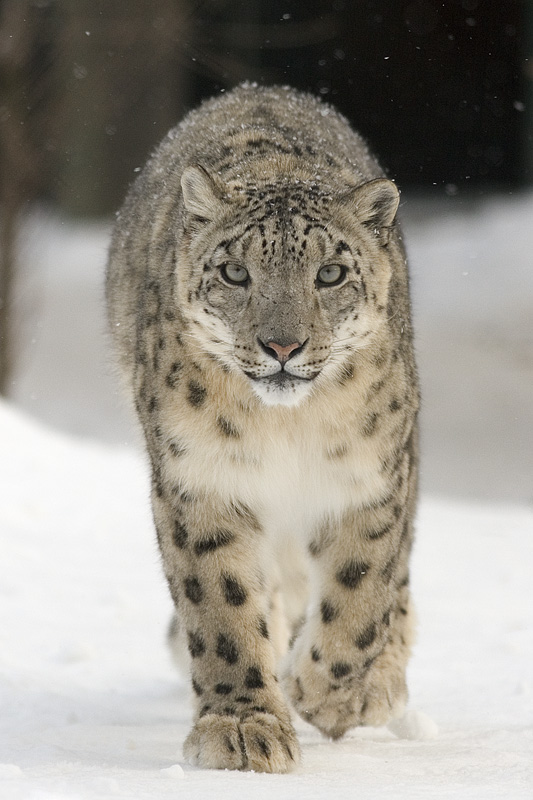 Snow LeopardPanthera uncia
-
 Cave LionPanthera spelaea
-
 European JaguarPanthera gombaszoegensis
-
 Longdan TigerPanthera zdanskyi
- CatFelis catus
Compare
Questions and answers
What is the scientific name of the Leopard?
The scientific name of the Leopard is Panthera pardus. Written with its author, the full name is Panthera pardus (Linnaeus, 1758).
Which family does the Leopard belong to?
Panthera pardus belongs to the family Felidae, in the order Carnivora and the class Mammalia.
Where is the Leopard found?
Checklists and occurrence records place Panthera pardus in 64 countries, including South Africa, India, Tanzania, Kenya, Israel and Zambia.
What is the conservation status of the Leopard?
The IUCN Red List category recorded for Panthera pardus is Vulnerable (VU).
What other names does the Leopard have?
Panthera pardus is also known in English as Black Leopard, Common Leopard and Panther.
What is another name for leopard?
Another name for the Leopard is Panther. Black panther is a common name for melanistic leopards.[7][35]
What is the main diet of a leopard?
Leopards primarily hunt hoofed mammals and primates. They are opportunistic predators.[36]
What kind of habitat do leopards live in?
Leopards live in habitats including savannas, rainforests, grasslands, woodlands, riparian forests, steppes, arid areas and mountainous regions.[11][12]
Is a leopard a carnivore, herbivore, or omnivore?
The Leopard belongs to the order Carnivora and is an opportunistic predator that primarily hunts hoofed mammals and primates.[36]
Sources
Passages the profile rests on
- The leopard has pale yellowish to dark golden fur covered with dark spots arranged in rosettes. Source passage: “Its skin colour varies between individuals from pale yellowish to dark golden with dark spots grouped in rosettes.” — English Wikipedia
- The leopard has a slender, muscular body, relatively short limbs and a broad head. Source passage: “The leopard is a slender and muscular cat, with relatively short limbs and a broad head.” — English Wikipedia
- The leopard has a white underbelly and a ringed tail that is shorter than its body. Source passage: “Its underbelly is white and its ringed tail is shorter than its body.” — English Wikipedia
- Each leopard has a unique rosette pattern that can help distinguish individuals. Source passage: “Rosette patterns are unique in each individual.” — English Wikipedia
- Leopard rosettes are circular in East African populations and tend to be squarish in Southern African populations. Source passage: “Rosettes are circular in East African leopard populations, and tend to be squarish in Southern African” — English Wikipedia
- Leopards living in forests and mountains generally have darker, deep golden coats than those in arid regions. Source passage: “those living in forests and mountains are much darker and deep golden.” — English Wikipedia
- Melanistic leopards are commonly called black panthers. Source passage: “Melanistic leopards are also known as black panthers.” — English Wikipedia
- Melanism in leopards is inherited as a recessive genetic trait. Source passage: “Melanism in leopards is caused by a recessive allele and is inherited as a recessive trait.” — English Wikipedia
- The leopard has a diploid chromosome number of 38. Source passage: “The leopard has a diploid chromosome number of 38.” — English Wikipedia
- Leopard cubs have a smoky gray coat with indistinct rosettes. Source passage: “Cubs have a smoky gray coat and their rosettes are not yet distinct.” — animaldiversity.org
- Leopards inhabit habitats ranging from rainforests and steppes to arid and mountainous areas. Source passage: “The leopard is adapted to a variety of habitats ranging from rainforest to steppe, including arid and montane areas.” — English Wikipedia
- Leopards inhabit savannas, rainforests, grasslands, woodlands and riparian forests. Source passage: “It inhabits savanna and rainforest, and grasslands, woodlands and riparian forests that remain largely undisturbed.” — English Wikipedia
- Leopards can inhabit urban environments where sufficient prey and vegetative shelter are available and persecution is absent. Source passage: “It inhabits urban environments, if it is not persecuted, has sufficient prey and patches of vegetation for shelter.” — English Wikipedia
- Leopards in Java inhabit dense tropical rainforests and dry deciduous forests from sea level to 2,540 m elevation. Source passage: “In Java, the leopard inhabits dense tropical rainforests and dry deciduous forests at elevations from sea level to 2,540 m (8,330 ft).” — English Wikipedia
- Leopards in the Russian Far East inhabit temperate coniferous forests where winter temperatures can reach −25 °C. Source passage: “In the Russian Far East, it inhabits temperate coniferous forests where winter temperatures reach a low of −25 °C (−13 °F).” — English Wikipedia
- Leopards are solitary and territorial animals. Source passage: “The leopard is a solitary and territorial animal.” — English Wikipedia
- Leopards are mainly active between dusk and dawn and rest during much of the day. Source passage: “Leopards are mainly active from dusk till dawn and will rest for most of the day” — English Wikipedia
- Leopards use their spotted coats as camouflage while stalking and ambushing prey. Source passage: “It relies on its spotted pattern for camouflage as it stalks and ambushes its prey” — English Wikipedia
- Leopards mark their territories using urine, feces and claw marks. Source passage: “They mark their territory with urine, feces, and claw marks” — animaldiversity.org
- Leopards can climb trees skillfully and often rest on branches. Source passage: “Leopards can climb trees quite skillfully, often resting on tree branches and descending headfirst.” — English Wikipedia
- Leopards typically carry captured prey to secluded feeding locations, often in nearby trees. Source passage: “carry the carcass to a secluded feeding location, typically in a nearby tree.” — animaldiversity.org
- Leopards can run at speeds exceeding 58 km/h. Source passage: “They can run at over 58 km/h (36 mph; 16 m/s)” — English Wikipedia
- Leopards can leap more than 6 m horizontally and up to 3 m vertically. Source passage: “leap over 6 m (20 ft) horizontally, and jump up to 3 m (9.8 ft) vertically.” — English Wikipedia
- Leopards can swim and are comfortable in water. Source passage: “They are comfortable in water and are adequate swimmers.” — animaldiversity.org
- Female leopards usually give birth to two to four cubs per litter. Source passage: “Females usually give birth to a litter of 2–4 cubs” — English Wikipedia
- Female leopards typically give birth once every 15–24 months. Source passage: “once in 15–24 months.” — English Wikipedia
- Leopard gestation lasts approximately 96 days. Source passage: “Gestation last 96 days” — animaldiversity.org
- Male and female leopards generally reach sexual maturity between two and two and a half years of age. Source passage: “Both male and female leopards typically reach sexual maturity at the age 2–2.5 years.” — English Wikipedia
- Leopard cubs are completely weaned by three months of age. Source passage: “Cubs are completely weaned by 3 months old” — animaldiversity.org
- Leopard cubs become independent at just under 20 months of age. Source passage: “independent at just under 20 months old.” — animaldiversity.org
- The leopard population in West Africa has experienced an estimated range reduction of 95%. Source passage: “The leopard's range in West Africa is estimated to have declined by 95%” — English Wikipedia
- The leopard population in the Sahara Desert has experienced an estimated range reduction of 97%. Source passage: “and in the Sahara desert by 97%.” — English Wikipedia
- The leopard is classified as Vulnerable on the IUCN Red List. Source passage: “leopards are classified as “Vulnerable” (Stein et al. 2024)” — pmc.ncbi.nlm.nih.gov
- Leopard skins are used in fashion. Source passage: “Leopard skins are popular in fashion.” — English Wikipedia
- Black panthers are melanistic leopards with recessive melanistic genes. Source passage: “Black panthers, which are most populous in humid forests, are leopards with recessive melanistic genes.” — animaldiversity.org
- Leopards are opportunistic predators that primarily hunt hoofed mammals and primates. Source passage: “It is an opportunistic predator, hunting mostly hooved mammals and primates.” — English Wikipedia
Data
- Catalogue of Life, 2026-10-16 XR cc by
- Global Biodiversity Information Facility CC BY 4.0
- Wikidata CC0
- GeoNames CC BY 4.0
- Wikimedia Commons per image; credit shown with each image
- Within the Catalogue of Life, this name comes from The Integrated Taxonomic Information System cc0
References
- Syst. Nat., 10th ed. vol.1 p.41 where the name was published
- Wilson, Don E., and DeeAnn M. Reeder, eds. (1993). Mammal Species of the World: A Taxonomic and Geographic Reference, 2nd Ed., 3rd Printing.
- Wilson, Don E., and F. Russell Cole. (2000). Common Names of Mammals of the World.
- Wilson, Don E., and DeeAnn M. Reeder, eds. (2005). Mammal Species of the World: A Taxonomic and Geographic Reference, 3rd Ed., Vols. 1 & 2.
- Sunquist, M. E. and F. C. Sunquist / Don E. Wilson and Russell A. Mittermeier, eds. (2009). Family Felidae (Cats). Handbook of the Mammals of the World. Vol. 1: Carnivores.
- Kitchener, A. C., C. Breitenmoser-Würsten, E. Eizirik, A. Gentry, L. Werdelin, A. Wilting, et al. (2017). A revised taxonomy of the Felidae. The final report of the Cat Classification Task Force of the IUCN/SSC Cat Specialist Group. Cat News Special Issue, Vol. 11.
This species in other databases
Page built on 24 November 2026. See how the catalog is made and all sources and licences.
Cite this page
ScientificNames.org. (2026). Panthera pardus (Leopard). Retrieved November 24, 2026, from https://scientificnames.org/species/panthera-pardus
“Panthera pardus (Leopard).” ScientificNames.org, 2026, scientificnames.org/species/panthera-pardus. Accessed 24 Nov. 2026.
ScientificNames.org. “Panthera pardus (Leopard).” Accessed November 24, 2026. https://scientificnames.org/species/panthera-pardus.
@misc{scientificnames_panthera_pardus_leopard,
  author = {{ScientificNames.org}},
  title = {Panthera pardus (Leopard)},
  year = {2026},
  url = {https://scientificnames.org/species/panthera-pardus},
  note = {Accessed 2026-11-24}
}