Species · Flowering plants
Small Pondweed Potamogeton pusillus
The scientific name of the Small Pondweed is Potamogeton pusillus. It is a species of flowering plant in the family Potamogetonaceae (pondweed family), order Alismatales.
- Scientific name
- Potamogeton pusillus L.
- Common name
- Small Pondweed
- Genus
- Potamogeton
- Family
- Potamogetonaceae (Pondweed Family)
- Order
- Alismatales
- Class
- Liliopsida
- Red List category
- LC Least Concern
- Recorded in
- 108 countries
- Name status
- accepted in the Catalogue of Life

Overview
Potamogeton pusillus inhabits standing and slow-flowing freshwater environments, including ponds, lakes, ditches, slow-moving streams and river backwaters. It has slender branching stems, narrow submerged leaves and produces turions that serve as propagation structures and an overwintering mechanism.
Written 26 November 2026 from the sources listed below. Each statement was checked against the passage it cites; statements that could not be supported were removed.
Appearance
Its leaves are narrow, linear, translucent and mid-green or olive-green. They are usually 20–50 mm long and 0.8–1.4 mm wide, but can rarely reach 100 mm in length and 1.9 mm in width.[1][2][3]
The species does not produce floating leaves. Its young stipules are tubular but tend to split as they age.[4][5]
Its inflorescence consists of a spike containing three to six flowers arranged in interrupted whorls.[6]
Habitat
Small pondweed inhabits standing and slow-flowing freshwater environments, including ponds, lakes, ditches, slow-moving streams and river backwaters.[7][8]
It grows in lowland waters and requires calcareous conditions. It shows a marked preference for water with high nutrient levels and tolerates turbid water.[9][10][11]
It can colonize temporary or disturbed aquatic habitats, including livestock drinking ponds, canals and ditches.[12]
Reproduction and life cycle
Small pondweed produces turions, often in large quantities. In early autumn, its entire plant body disintegrates into turions.[13][14]
Turions serve as propagation structures and an overwintering mechanism.[15]
Conservation
Small pondweed is globally classified as Least Concern. No evidence of local population declines is reported.[16][17]
The species is probably increasing in many parts of its range because of freshwater eutrophication.[18]
Uses
Small pondweed can be cultivated in garden ponds.[19]
Classification of the Small Pondweed
| Kingdom | Plantae |
|---|---|
| Subkingdom | Pteridobiotina |
| Phylum | Tracheophyta |
| Class | Liliopsida |
| Order | Alismatales |
| Family | Potamogetonaceae (Pondweed Family) |
| Genus | Potamogeton (Pondweed) |
| Species | Potamogeton pusillus L. |
Where the Small Pondweed is found
Checklists and occurrence records place Potamogeton pusillus in 108 countries across Africa, Asia, Europe, North America and South America. GBIF holds 80,570 georeferenced records of it.
Countries
- Afghanistan 18
- Aland Islands 49
- Albania 5
- Algeria 1
- Argentina 235
- Armenia 3
- Austria 374
- Azerbaijan 4
- Belarus 10
- Belgium 2,011
- Bolivia 29
- Bosnia and Herzegovina 3
- Botswana 3
- Brazil 266
- Bulgaria 4
- Cabo Verde 11
- Canada 885
- Chile 49
- China 337
- Colombia 22
- Costa Rica 35
- Croatia 5
- Cyprus
- Czechia 605
- Democratic Republic of the Congo 50
- Denmark 799
- Ecuador 32
- Egypt 3
- El Salvador 4
- Eritrea 13
- Estonia 145
- Eswatini 3
- Ethiopia 34
- Finland 5,306
- France 4,610
- Germany 3,153
- Greece 7
- Greenland 16
- Guatemala 5
- Haiti
- Honduras 8
- Hungary 9
- Iceland 230
- India 9
- Iran 17
- Iraq 14
- Ireland 150
- Isle of Man 3
- Italy 215
- Japan 518
- Kazakhstan 60
- Kenya 4
- Kyrgyzstan
- Latvia 33
- Lesotho 7
- Libya 1
- Liechtenstein 5
- Luxembourg 66
- Malawi 1
- Mauritania 3
- Mexico 393
- Mongolia 9
- Montenegro 11
- Morocco 16
- Mozambique 1
- Myanmar
- Namibia 4
- Nepal 8
- Nicaragua 19
- North Korea 12
- North Macedonia 4
- Norway 181
- Oman
- Pakistan 10
- Paraguay 4
- Peru 7
- Philippines 6
- Poland 589
- Portugal 227
- Republic of the Congo 9
- Romania 14
- Russia 899
- Rwanda
- Saudi Arabia 9
- Slovakia 156
- Somalia
- South Africa 321
- South Korea 110
- Spain 674
- Sudan 12
- Sweden 3,470
- Switzerland 7,964
- Taiwan 76
- Tajikistan 2
- Tanzania
- The Netherlands 26,558
- Turkey 27
- Turkmenistan 2
- Uganda 1
- Ukraine 25
- United Kingdom 13,736
- United States 4,452
- Uruguay 17
- Uzbekistan 1
- Venezuela 2
- Yemen 8
- Zambia 5
- Zimbabwe 22
Regions and cities with the most records
- England, United Kingdom 8,791
- Nunspeet, The Netherlands 4,538
- Elburg, The Netherlands 4,380
- Dronten, The Netherlands 4,304
- Harderwijk, The Netherlands 4,014
- Kampen, The Netherlands 3,865
- Weesp, The Netherlands 3,656
- Mijdrecht, The Netherlands 3,534
- Zeewolde, The Netherlands 3,467
- Amstelveen, The Netherlands 3,419
- Bussum, The Netherlands 3,395
- Naarden, The Netherlands 3,393
- Hilversum, The Netherlands 3,366
- Epe, The Netherlands 3,307
- Huizen, The Netherlands 3,268
- Diemen, The Netherlands 3,168
- Uithoorn, The Netherlands 3,150
- Baarn, The Netherlands 3,148
- Boskoop, The Netherlands 3,087
- Alphen aan den Rijn, The Netherlands 3,085
- Benthuizen, The Netherlands 3,079
- Maarssen, The Netherlands 3,070
- Zoetermeer, The Netherlands 2,896
- Amsterdam, The Netherlands 2,892
- Waddinxveen, The Netherlands 2,877
- Scotland, United Kingdom 2,802
- Putten, The Netherlands 2,752
- Woerden, The Netherlands 2,655
- Leiderdorp, The Netherlands 2,611
- Voorschoten, The Netherlands 2,511
- Bodegraven, The Netherlands 2,484
- Rotterdam, The Netherlands 2,464
- Bergschenhoek, The Netherlands 2,460
- Schiedam, The Netherlands 2,456
- Utrecht, The Netherlands 2,450
- Berkel en Rodenrijs, The Netherlands 2,444
A number beside a place is its count of GBIF occurrence records. A place without a number comes from a checklist alone. Records show where a species has been observed or collected, which can include escapes and vagrants.
Common names
English
- Small Pondweed
- Fine-Leaved Pondweed
- Slender Pondweed
- Baby Pondweed
- Lesser Pondweed
Names in 27 other languages
- Chinese
- 柳絲藻
- Czech
- rdest maličký
- Danish
- Spinkel vandaks
- Dutch
- Tenger fonteinkruid
- Estonian
- väike penikeel
- Faroese
- pinkutjarnaks
- Finnish
- hentovita
- French
- Potamot Fluet, Potamot de Palerme, potamot grêle, potamot nain
- German
- Gewöhnliches Zwerg-Laichkraut, Zwerg-Laichkraut
- Hungarian
- Apró békaszőlő
- Italian
- Brasca Palermitana, Lingua d'acqua esile
- Japanese
- ツツイトモ
- Korean
- 실말
- Lithuanian
- Smulkioji plūdė
- Northern Sami
- šiervvesvihti
- Norwegian Bokmål
- granntjernaks
- Norwegian Nynorsk
- granntjønnaks, granntjørnaks
- Polish
- rdestnica drobna
- Portuguese
- Limo-pequeno
- Russian
- Рдест маленький
- Slovak
- červenavec maličký
- Slovenian
- pritlikavi dristavec
- Spanish
- Espiga de agua, Hierba de estanque
- Swedish
- spädnate, veknate
- Ukrainian
- Рдесник маленький
- Welsh
- Dyfrllys Culddail, Dyfrllys Eiddil
- arn
- Kenewiñ
Synonyms
71 other scientific names have been used for this species and are now treated as synonyms of Potamogeton pusillus.
- Buccaferrea pusilla (L.) Bubani
- Potamogeton aschersonii A.Benn.
- Potamogeton aschersonii f. pusilloides Hagstr.
- Potamogeton badius Hagstr.
- Potamogeton berchtoldii x friesii
- Potamogeton berchtoldii x pusillus
- Potamogeton berchtoldii × friesii
- Potamogeton berchtoldii × pusillus
- Potamogeton berteroanus Phil.
- Potamogeton compressus var. elongatus Wahlenb.
- Potamogeton denticulatus Link
- Potamogeton dualis Hagstr.
- Potamogeton exiguus Hagstr.
- Potamogeton lateralis f. incompletus Hagstr.
- Potamogeton lateralis f. subcompletus Hagstr.
- Potamogeton millardii Hesl.-Harr.
- Potamogeton panoemitanus Biv.
- Potamogeton panomitanus Biv.
- Potamogeton panormitanus Biv.
- Potamogeton panormitanus var. major G.Fisch.
- Potamogeton panormitanus var. minor Biv. ex Guss.
- Potamogeton panormitanus var. minor Biv.
- Potamogeton perfoliatus var. gracilis Fr.
- Potamogeton pusilliformis Hagstr.
- Potamogeton pusillus prol. panormitanus (Biv.) Graebn.
- Potamogeton pusillus subsp. africanus A.Benn.
- Potamogeton pusillus subsp. argentinus A.Benn.
- Potamogeton pusillus subsp. panormitanus (Biv.) Schinz & R.Keller
- Potamogeton pusillus subsp. pusillus
- Potamogeton pusillus subsp. sturrockii A.Benn.
- Potamogeton pusillus subsp. sturrockii (A.Benn.) Hook.f.
- Potamogeton pusillus subvar. brevifolius (G.Mey.) Asch. & Graebn.
- Potamogeton pusillus subvar. elongatus (A.Benn.) Asch. & Graebn.
- Potamogeton pusillus subvar. interruptus J.W.Robbins
- Potamogeton pusillus var. africanus A.Benn.
- Potamogeton pusillus var. capillaris Gaudin
- Potamogeton pusillus var. capitatus A.Benn.
- Potamogeton pusillus var. elongatus A.Benn.
- Potamogeton pusillus var. gracilis Krok
- Potamogeton pusillus var. lacunatus Fernald
Showing 40 of 71.
Related species
-
 Curly PondweedPotamogeton crispus
-
 Floating PondweedPotamogeton natans
-
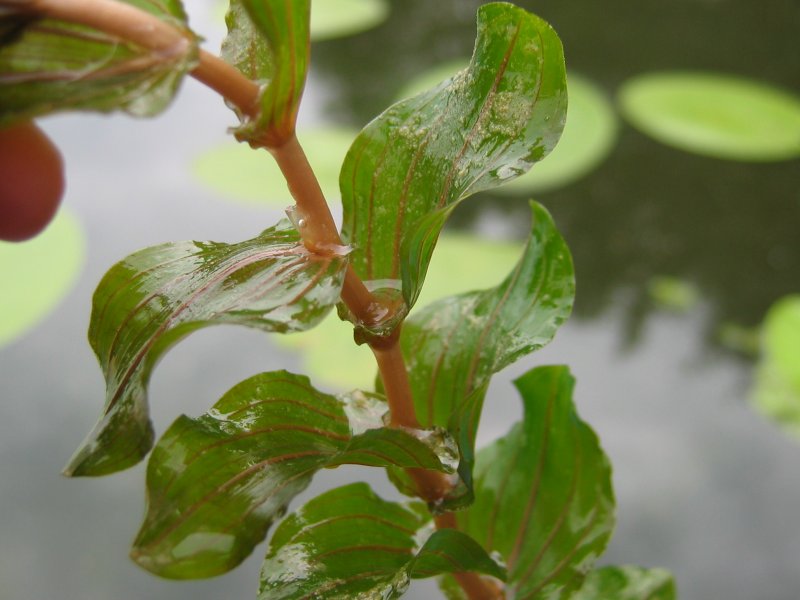 Clasping-leaf PondweedPotamogeton perfoliatus
-
 Shining PondweedPotamogeton lucens
-
 Longleaf PondweedPotamogeton nodosus
-
 Various-Leaved PondweedPotamogeton gramineus
-
 Bog PondweedPotamogeton polygonifolius
-
 Illinois PondweedPotamogeton illinoensis
Compare
Questions and answers
What is the scientific name of the Small Pondweed?
The scientific name of the Small Pondweed is Potamogeton pusillus. Written with its author, the full name is Potamogeton pusillus L..
Which family does the Small Pondweed belong to?
Potamogeton pusillus belongs to the family Potamogetonaceae, in the order Alismatales and the class Liliopsida.
Where is the Small Pondweed found?
Checklists and occurrence records place Potamogeton pusillus in 108 countries, including The Netherlands, United Kingdom, Switzerland, Finland, France and United States.
What is the conservation status of the Small Pondweed?
The IUCN Red List category recorded for Potamogeton pusillus is Least Concern (LC).
What other names does the Small Pondweed have?
Potamogeton pusillus is also known in English as Fine-Leaved Pondweed, Slender Pondweed, Baby Pondweed and Lesser Pondweed.
Sources
Passages the profile rests on
- Its leaves are narrow, linear, translucent, and mid-green or olive-green. Source passage: “The leaves are narrow and linear, translucent, mid or olive green” — English Wikipedia
- Its leaves are usually 20–50 mm long and 0.8–1.4 mm wide. Source passage: “usually 20–50 mm long × 0.8–1.4 mm wide” — English Wikipedia
- Its leaves can rarely reach 100 mm in length and 1.9 mm in width. Source passage: “but rarely up to 100 mm long and 1.9 mm wide.” — English Wikipedia
- The species does not produce floating leaves. Source passage: “There are no floating leaves.” — English Wikipedia
- Its young stipules are tubular but tend to split as they age. Source passage: “The stipules are tubular when young, but tend to split with age.” — English Wikipedia
- Its inflorescence consists of a spike containing three to six flowers arranged in interrupted whorls. Source passage: “The inflorescence is a spike of 3–6 flowers arranged in interrupted whorls.” — English Wikipedia
- The species inhabits standing and slow-flowing freshwater environments. Source passage: “It occurs in standing and slow-flowing freshwater habitats” — English Wikipedia
- Its habitats include ponds, lakes, ditches, slow-moving streams, and river backwaters. Source passage: “such as ponds, lakes, ditches, slow-moving streams, and river backwaters.” — English Wikipedia
- The species grows in lowland waters and requires calcareous conditions. Source passage: “It is a lowland plant and requires calcareous water” — English Wikipedia
- It shows a marked preference for water with high nutrient levels. Source passage: “with a marked preference for high nutrient levels” — English Wikipedia
- The species tolerates turbid water. Source passage: “It is tolerant of turbid water” — English Wikipedia
- It can colonize temporary or disturbed aquatic habitats, including livestock drinking ponds, canals, and ditches. Source passage: “often exploiting temporary or disturbed habitats such as livestock drinking ponds, canals and ditches.” — English Wikipedia
- The species produces turions, often in large quantities. Source passage: “Turions are produced, often in large quantities.” — English Wikipedia
- Its entire plant body disintegrates into turions in early autumn. Source passage: “In early autumn the entire plant disintegrates into a mass of turions” — English Wikipedia
- Turions serve as propagation structures and an overwintering mechanism. Source passage: “which act as a means of propagation and as an overwintering mechanism.” — English Wikipedia
- The species is globally classified as Least Concern. Source passage: “Globally, Potamogeton pusillus is listed as Least Concern.” — English Wikipedia
- The document reports no evidence of local population declines. Source passage: “There is no evidence of local declines” — English Wikipedia
- The species is probably increasing in many parts of its range because of freshwater eutrophication. Source passage: “in many areas it is probably increasing due to eutrophication of freshwater habitats.” — English Wikipedia
- The species can be cultivated in garden ponds. Source passage: “Lesser pondweed should not be difficult to grow in a garden pond” — English Wikipedia
Data
- Catalogue of Life, 2026-10-16 XR cc by
- Global Biodiversity Information Facility CC BY 4.0
- Wikidata CC0
- GeoNames CC BY 4.0
- Wikimedia Commons per image; credit shown with each image
- Within the Catalogue of Life, this name comes from The World Checklist of Vascular Plants (WCVP) cc by
References
- Sp. Pl.: 127 (1753) where the name was published
This species in other databases
- Catalogue of Life 4M3Y5
- Wikidata Q2714349
- iNaturalist 78714
- World Flora Online wfo-0000769966
- GRIN 400300
Page built on 27 November 2026. See how the catalog is made and all sources and licences.
Cite this page
ScientificNames.org. (2026). Potamogeton pusillus (Small Pondweed). Retrieved November 27, 2026, from https://scientificnames.org/species/potamogeton-pusillus
“Potamogeton pusillus (Small Pondweed).” ScientificNames.org, 2026, scientificnames.org/species/potamogeton-pusillus. Accessed 27 Nov. 2026.
ScientificNames.org. “Potamogeton pusillus (Small Pondweed).” Accessed November 27, 2026. https://scientificnames.org/species/potamogeton-pusillus.
@misc{scientificnames_potamogeton_pusillus_small_pondweed,
  author = {{ScientificNames.org}},
  title = {Potamogeton pusillus (Small Pondweed)},
  year = {2026},
  url = {https://scientificnames.org/species/potamogeton-pusillus},
  note = {Accessed 2026-11-27}
}