Species · Flowering plants
Cape Saffron Cassine peragua
The scientific name of the Cape Saffron is Cassine peragua. It is a species of flowering plant in the family Celastraceae (staff-tree family), order Celastrales.
- Scientific name
- Cassine peragua L.
- Common name
- Cape Saffron
- Genus
- Cassine
- Family
- Celastraceae (Staff-tree Family)
- Order
- Celastrales
- Class
- Magnoliopsida
- Red List category
- LC Least Concern
- Recorded in
- 4 countries
- Name status
- accepted in the Catalogue of Life

Overview
Cassine peragua occurs naturally across southern and eastern South Africa, including Eswatini, in habitats ranging from deep Afromontane forests to coastal dunes and rocky mountain slopes. It is distinguished by its saffron-coloured trunk, tough leathery leaves and often multicoloured foliage.
Written 26 November 2026 from the sources listed below. Each statement was checked against the passage it cites; statements that could not be supported were removed.
Appearance
Cape saffron is an evergreen tree with tough, round, leathery leaves. Its leaves are usually dark green but can also be copper, orange or scarlet depending on growth.[1][2]
The tree usually reaches a height of 2 to 5 metres but can grow up to 15 metres under favourable conditions. Its trunk develops an orange saffron colour as its grey bark flakes away.[3][4]
The tree develops an attractive domed shape with a saffron-coloured trunk and often multicoloured foliage. In exposed sunny or windy locations, it tends to develop a shorter, denser growth form.[5][6]
It produces bunches of small, bisexual flowers with a strong and pleasant fragrance.[7]
Habitat
Cape saffron occurs in habitats ranging from deep Afromontane forests to coastal dunes and rocky mountain slopes. It is naturally distributed across southern and eastern South Africa, including Eswatini.[8][9]
Behaviour
Cape saffron grows slowly but is resistant to wind and is generally tough.[10]
Its fruits attract large numbers of birds.[11]
Reproduction and life cycle
The fruits are berries that develop from green to purple and eventually black.[12]
Uses
Cape saffron has traditionally been harvested for its hard, yellowish-orange wood, which was valued for furniture. It is cultivated as an ornamental garden tree throughout South Africa.[13][14]
Classification of the Cape Saffron
| Kingdom | Plantae |
|---|---|
| Subkingdom | Pteridobiotina |
| Phylum | Tracheophyta |
| Class | Magnoliopsida |
| Order | Celastrales |
| Family | Celastraceae (Staff-tree Family) |
| Subfamily | Cassinoideae |
| Tribe | Cassineae |
| Genus | Cassine (Spoonwoods) |
| Species | Cassine peragua L. |
Where the Cape Saffron is found
Checklists and occurrence records place Cassine peragua in 4 countries across Africa. GBIF holds 1,826 georeferenced records of it.
Countries
Regions and cities with the most records
- Western Cape, South Africa 1,274
- Muizenberg, South Africa 493
- Retreat, South Africa 456
- Rondebosch, South Africa 346
- Cape Town, South Africa 281
- Eastern Cape, South Africa 205
- George, South Africa 79
- Hermanus, South Africa 63
- Knysna, South Africa 56
- Gansbaai, South Africa 49
- KwaZulu-Natal, South Africa 46
- Groot-Brakrivier, South Africa 45
- Grahamstown, South Africa 37
- Plettenberg Bay, South Africa 34
- Gqeberha, South Africa 30
- Grabouw, South Africa 30
- Somerset West, South Africa 29
- Humansdorp, South Africa 20
- Mossel Bay, South Africa 20
- Jeffreys Bay, South Africa 16
- Bredasdorp, South Africa 14
- Despatch, South Africa 12
- Motherwell, South Africa 11
- Caledon, South Africa 10
- Paarl, South Africa 10
- Wellington, South Africa 10
- Northern Cape, South Africa 8
- Kariega, South Africa 7
- Franschhoek, South Africa 5
- Kruisfontein, South Africa 5
- Le Roux, South Africa 5
- Riversdale, South Africa 4
- Stellenbosch, South Africa 4
- Hhohho Region, Eswatini 3
- Kuils River, South Africa 3
- Lobamba, Eswatini 3
1 more country has a few records outside this range
These countries hold a few records of Cassine peragua but lie outside the range the checklists give for it. Such records are often zoo or garden specimens, museum material or vagrants, so the species is not counted as occurring there.
A number beside a place is its count of GBIF occurrence records. A place without a number comes from a checklist alone. Records show where a species has been observed or collected, which can include escapes and vagrants.
Common names
English
- Cape Saffron
- Forest Spoonwood
Names in 3 other languages
- Afrikaans
- Bastersaffraan, boslepelhout, lepelhout
- Finnish
- sahramioliivikki
- Xhosa
- ikhukhuzi
Subspecies and varieties
- Cassine peragua subsp. affinis (Bastard Saffronwood) subspecies
- Cassine peragua subsp. barbara (Dune-Saffron) subspecies
- Cassine peragua subsp. peragua (Cape-Saffron) subspecies
Related species
- Mountain-SaffronCassine parvifolia
- Cassine burkeana
-
 BurningbushEuonymus alatus
-
 European Spindle-treeEuonymus europaeus
-
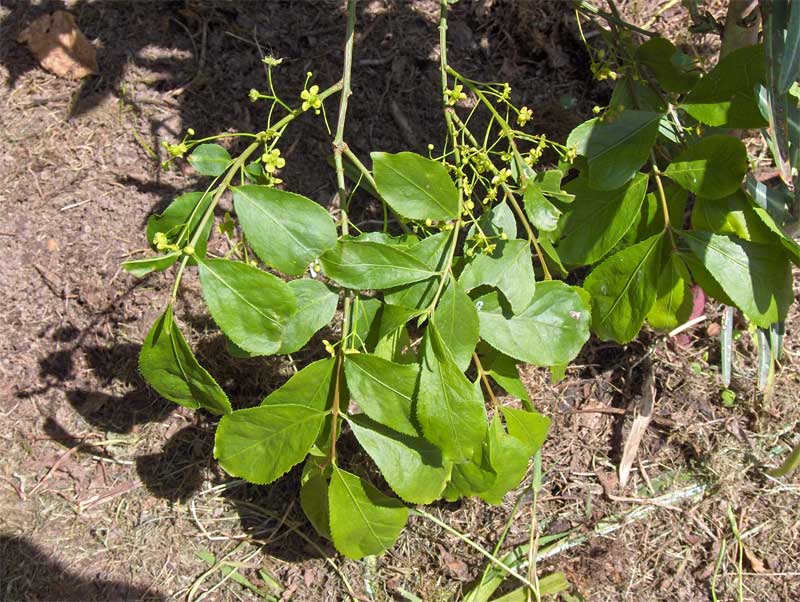 Japanese SpindleEuonymus japonicus
-
 Fortune's EuonymusEuonymus fortunei
-
 Asian BittersweetCelastrus orbiculatus
-
 American Strawberry BushEuonymus americanus
Compare
Questions and answers
What is the scientific name of the Cape Saffron?
The scientific name of the Cape Saffron is Cassine peragua. Written with its author, the full name is Cassine peragua L..
Which family does the Cape Saffron belong to?
Cassine peragua belongs to the family Celastraceae, in the order Celastrales and the class Magnoliopsida.
Where is the Cape Saffron found?
Checklists and occurrence records place Cassine peragua in 4 countries: South Africa, Uganda, Eswatini and Tanzania.
What is the conservation status of the Cape Saffron?
The IUCN Red List category recorded for Cassine peragua is Least Concern (LC).
What other names does the Cape Saffron have?
Cassine peragua is also known in English as Forest Spoonwood.
Sources
Passages the profile rests on
- Cassine peragua is an evergreen tree with tough, round, leathery leaves. Source passage: “Cape saffron is an evergreen tree” — English Wikipedia
- Its leaves are usually dark green but can also be copper, orange or scarlet depending on growth. Source passage: “The tough, round, leathery leaves are usually dark green, but can be copper, orange or scarlet coloured depending on growth.” — English Wikipedia
- The tree usually reaches a height of 2 to 5 metres but can grow up to 15 metres under favourable conditions. Source passage: “usually around 2 to 5 meters in height, but can sometimes grow to 15 meters in the right conditions.” — English Wikipedia
- The trunk develops an orange saffron colour as its grey bark flakes away. Source passage: “The trunk eventually assumes an orange saffron colour, as the grey bark flakes off exposing the orange under-layer.” — English Wikipedia
- In exposed sunny or windy locations, the tree tends to develop a shorter, denser growth form. Source passage: “In exposed positions, in direct sun or wind, it will tend to grow shorter, lower and denser.” — English Wikipedia
- The tree develops an attractive domed shape with a saffron-coloured trunk and often multicoloured foliage. Source passage: “It forms an attractive, domed shape, with a saffron-coloured trunk and often multi-coloured foliage.” — English Wikipedia
- The tree produces bunches of small, bisexual flowers with a strong and pleasant fragrance. Source passage: “The bunches of small, bisexual flowers have a strong, but pleasant fragrance” — English Wikipedia
- The species occurs in habitats ranging from deep Afromontane forests to coastal dunes and rocky mountain slopes. Source passage: “Here it grows in a wide variety of habitats, from deep Afromontane forest to coastal dunes and rocky mountain slopes.” — English Wikipedia
- Cassine peragua is naturally distributed across southern and eastern South Africa, including Eswatini. Source passage: “It is naturally distributed throughout the southern and eastern parts of South Africa, including Eswatini.” — English Wikipedia
- The tree grows slowly but is resistant to wind and is generally tough. Source passage: “It grows slowly, but is very tough and resistant to wind.” — English Wikipedia
- The fruits attract large numbers of birds. Source passage: “The fruits attract great numbers of birds” — English Wikipedia
- Its fruits are berries that develop from green to purple and eventually black. Source passage: “the fruits are berries that appear as green and then gradually darken to purple and black.” — English Wikipedia
- The species has traditionally been harvested for its hard, yellowish-orange wood, which was valued for furniture. Source passage: “Cape saffron has been used locally for centuries for its beautiful, hard wood, which assumes a yellowish-orange colour and was traditionally valued for furniture.” — English Wikipedia
- Cassine peragua is cultivated as an ornamental garden tree throughout South Africa. Source passage: “It is now cultivated as an ornamental garden tree throughout South Africa.” — English Wikipedia
Data
- Catalogue of Life, 2026-10-16 XR cc by
- Global Biodiversity Information Facility CC BY 4.0
- Wikidata CC0
- GeoNames CC BY 4.0
- Wikimedia Commons per image; credit shown with each image
- Within the Catalogue of Life, this name comes from Synonymic Checklists of the Vascular Plants of the World cc by
References
- L. where the name was published
This species in other databases
Page built on 29 November 2026. See how the catalog is made and all sources and licences.
Cite this page
ScientificNames.org. (2026). Cassine peragua (Cape Saffron). Retrieved November 29, 2026, from https://scientificnames.org/species/cassine-peragua
“Cassine peragua (Cape Saffron).” ScientificNames.org, 2026, scientificnames.org/species/cassine-peragua. Accessed 29 Nov. 2026.
ScientificNames.org. “Cassine peragua (Cape Saffron).” Accessed November 29, 2026. https://scientificnames.org/species/cassine-peragua.
@misc{scientificnames_cassine_peragua_cape_saffron,
  author = {{ScientificNames.org}},
  title = {Cassine peragua (Cape Saffron)},
  year = {2026},
  url = {https://scientificnames.org/species/cassine-peragua},
  note = {Accessed 2026-11-29}
}