Species · Reptiles
West Indian Leopard Gecko Eublepharis fuscus
The scientific name of the West Indian Leopard Gecko is Eublepharis fuscus. It is a species of reptile in the family Eublepharidae (eublepharid geckos), order Squamata. The name dates from 1974.
- Scientific name
- Eublepharis fuscus Börner, 1974
- Common name
- West Indian Leopard Gecko
- Genus
- Eublepharis
- Family
- Eublepharidae (Eublepharid Geckos)
- Order
- Squamata
- Class
- Reptilia
- Red List category
- LC Least Concern
- Recorded in
- 1 country
- Name status
- accepted in the Catalogue of Life

Overview
Eublepharis fuscus occurs in forested hill tracts, scrub and scrubland environments, and among boulders. It has a robust body, spotted yellow bands around its torso, and a smaller tail than the domestic leopard gecko.
Written 26 November 2026 from the sources listed below. Each statement was checked against the passage it cites; statements that could not be supported were removed.
Habitat
The West Indian Leopard Gecko inhabits forested hill tracts, scrub and scrubland environments. It can also be found among boulders.[1][2][3]
Behaviour
The West Indian Leopard Gecko is nocturnal and terrestrial.[4][5]
Appearance
The West Indian Leopard Gecko has a robust body shape. Its torso has spotted bands that vary from pale yellow with black spots to dark yellow with black spots.[6][7]
Its tail is smaller than that of the domestic leopard gecko. It can reach 252 mm in snout–vent length.[8][9]
The specific name fuscus means dark or dusky.[10]
Classification of the West Indian Leopard Gecko
| Kingdom | Animalia |
|---|---|
| Phylum | Chordata |
| Subphylum | Vertebrata |
| Infraphylum | Gnathostomata |
| Parvphylum | Osteichthyes |
| Megaclass | Tetrapoda |
| Class | Reptilia (Reptile) |
| Order | Squamata (Snakes) |
| Suborder | Gekkota |
| Family | Eublepharidae (Eublepharid Geckos) |
| Genus | Eublepharis (Southwest Asian Leopard Geckos) |
| Species | Eublepharis fuscus Börner, 1974 |
Where the West Indian Leopard Gecko is found
Checklists and occurrence records place Eublepharis fuscus in 1 country. GBIF holds 50 georeferenced records of it.
Countries
Regions and cities with the most records
- Maharashtra, India 36
- Sāsvad, India 8
- Gujarat, India 6
- Jasdan, India 3
- Pune, India 3
- Vagholi, India 3
Range as the checklists state it
W India (northern Karnataka, Maharashtra and Gujarat)
A number beside a place is its count of GBIF occurrence records. A place without a number comes from a checklist alone. Records show where a species has been observed or collected, which can include escapes and vagrants.
Common names
English
- West Indian Leopard Gecko
- Western Indian Leopard Gecko
Names in 4 other languages
- Chinese
- 西印度豹紋守宮
- Czech
- gekončík západoindický
- German
- Westindischer Leopardgecko
- Japanese
- ダイオウトカゲモドキ, ニシインドトカゲモドキ
Synonyms
One other scientific name has been used for this species and is now treated as a synonym of Eublepharis fuscus.
- Eublepharis macularius fuscus Börner, 1981
Related species
-
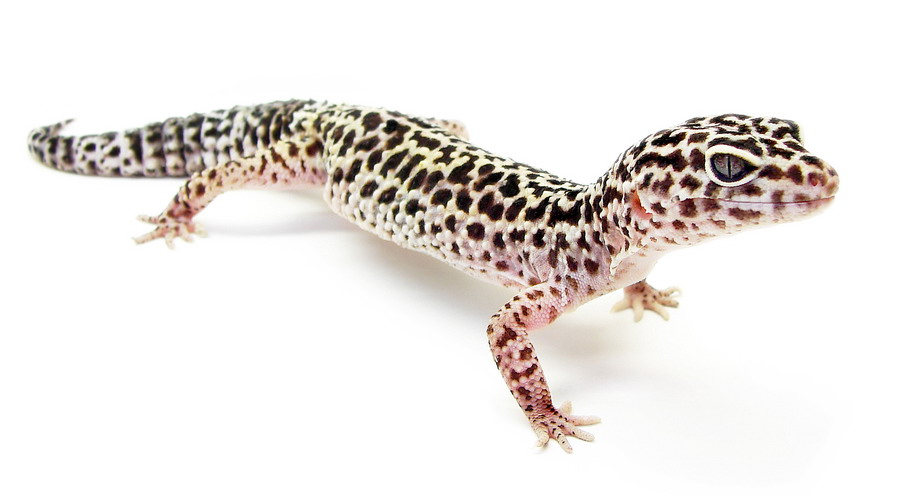 Leopard GeckoEublepharis macularius
-
 Iranian Fat Tailed GeckoEublepharis angramainyu
-
 Painted Leopard GeckoEublepharis pictus
-
 Satpura Leopard GeckoEublepharis satpuraensis
-
 East Indian Leopard GeckoEublepharis hardwickii
-
 Jhuma’s Leopard GeckoEublepharis jhuma
-
 Turkmenistan Eyelid GeckoEublepharis turcmenicus
-
 African Fat-tailed GeckoHemitheconyx caudicinctus
Compare
Questions and answers
What is the scientific name of the West Indian Leopard Gecko?
The scientific name of the West Indian Leopard Gecko is Eublepharis fuscus. Written with its author, the full name is Eublepharis fuscus Börner, 1974.
Which family does the West Indian Leopard Gecko belong to?
Eublepharis fuscus belongs to the family Eublepharidae, in the order Squamata and the class Reptilia.
Where is the West Indian Leopard Gecko found?
Checklists and occurrence records place Eublepharis fuscus in 1 country: India.
What is the conservation status of the West Indian Leopard Gecko?
The IUCN Red List category recorded for Eublepharis fuscus is Least Concern (LC).
What other names does the West Indian Leopard Gecko have?
Eublepharis fuscus is also known in English as Western Indian Leopard Gecko.
Sources
Passages the profile rests on
- The species occurs in forested hill tracts. Source passage: “It can be found in forested hill tracts” — English Wikipedia
- The species inhabits scrub and scrubland environments. Source passage: “scrub, boulders and scrubland.” — English Wikipedia
- The species can be found among boulders. Source passage: “boulders and scrubland.” — English Wikipedia
- The species is nocturnal. Source passage: “It is a nocturnal, terrestrial gecko” — English Wikipedia
- The species is terrestrial. Source passage: “It is a nocturnal, terrestrial gecko” — English Wikipedia
- The species has a robust body shape. Source passage: “It has a robust habitus” — English Wikipedia
- The species has spotted bands around its torso that vary between pale yellow with black spots and dark yellow with black spots. Source passage: “It also has spotted bands around the torso of its body, changing from pale yellow with black spots to dark yellow with black spots, or vice versa.” — English Wikipedia
- The species has a smaller tail than the domestic leopard gecko. Source passage: “It has a smaller tail than that of the domestic leopard gecko.” — English Wikipedia
- The species can reach 252 mm in snout–vent length. Source passage: “can reach 252 mm (9.9 in) in snout–vent length.” — English Wikipedia
- The specific name fuscus means dark or dusky. Source passage: “The specific name "fuscus" means dark or dusky.” — English Wikipedia
Data
- Catalogue of Life, 2026-10-16 XR cc by
- Global Biodiversity Information Facility CC BY 4.0
- Wikidata CC0
- GeoNames CC BY 4.0
- Wikimedia Commons per image; credit shown with each image
- Within the Catalogue of Life, this name comes from The Reptile Database cc by
References
- Börner, A. R. (1974). Ein neuer Lidgecko der Gattung Eublepharis Gray 1827. Miscellaneous Articles in Saurology (4):7-14.
- Börner, A. R. (1981). Third contribution to the systematics of the southwest Asian lizards of the geckonid genus Eublepharis Gray 1827: Further materials from the Indian subcontinent. Saurologica (3): 1-7.
- Das, I. (1997). Resolution of the systematic status of Eublepharis macularius fuscus Boerner, 1981 (Eublepharidae: Sauria: Squamata). Hamadryad 22 (1): 13-20.
- Rösler, H. (2000). Kommentierte Liste der rezent, subrezent und fossil bekannten Geckotaxa (Reptilia: Gekkonomorpha). Gekkota 2: 28-153.
- Seufer, H.; Y. Kaverkin & A. Kirschner (eds.). (2005). Die Lidgeckos. Kirschner Und Seufer Verlag, 238 Pp.
- Vyas, & Raju. (2007). Present conservation scenario of reptile fauna in Gujarat State, India. Indian Forester, Oct 2007: 1381-1394.
- Henkel, F. W., & Schmidt, W. (2009). Leopardgeckos. Natur Und Tier Verlag (Münster),156 Pp.
- Mirza, Z., & Upadhye, R. (2010). Zur Verbreitung und Lebensweise des in Indien endemischen Lidgeckos Eublepharis fuscus BÖRNER 1981. Sauria 32 (3): 15-23.
- Venugopal, P. D. (2010). Addendum to An updated and annotated list of Indian lizards (Reptilia: Sauria) based on a review of distribution records and checklists of Indian reptiles. Journal of Threatened Taxa 2 (4): 848.
- Mirza, Zeeshan A.; Rajesh V. Sanap, David Raju, Atish Gawai, and Prathamesh Ghadekar. (2014). A new species of lizard of the genus Eublepharis (Squamata: Eublepharidae) from India. Phyllomedusa 13 (2): 75-90.
- Patel, H., & and Raju Vyas. (2019). Reptiles of Gujarat, India: Updated Checklist, Distribution, and Conservation Status. Herpetology Notes 12: 765-777.
- Cornejo-Páramo, P., Lira-Noriega, A., Ramírez-Suástegui, C. et al. (2020). Sex determination systems in reptiles are related to ambient temperature but not to the level of climatic fluctuation. BMC Evol Biol 20: 103.
- Agarwal, I., Bauer, A. M., Gamble, T., Giri, V. B., Jablonski, D., Khandekar, A., ... & Ramakrishnan, U. (2022). The evolutionary history of an accidental model organism, the leopard gecko Eublepharis macularius (Squamata: Eublepharidae). Molecular Phylogenetics and Evolution, 107414.
This species in other databases
Page built on 27 November 2026. See how the catalog is made and all sources and licences.
Cite this page
ScientificNames.org. (2026). Eublepharis fuscus (West Indian Leopard Gecko). Retrieved November 27, 2026, from https://scientificnames.org/species/eublepharis-fuscus
“Eublepharis fuscus (West Indian Leopard Gecko).” ScientificNames.org, 2026, scientificnames.org/species/eublepharis-fuscus. Accessed 27 Nov. 2026.
ScientificNames.org. “Eublepharis fuscus (West Indian Leopard Gecko).” Accessed November 27, 2026. https://scientificnames.org/species/eublepharis-fuscus.
@misc{scientificnames_eublepharis_fuscus_west_indian_leopard_gecko,
  author = {{ScientificNames.org}},
  title = {Eublepharis fuscus (West Indian Leopard Gecko)},
  year = {2026},
  url = {https://scientificnames.org/species/eublepharis-fuscus},
  note = {Accessed 2026-11-27}
}