Species · Reptiles
Painted Leopard Gecko Eublepharis pictus
The scientific name of the Painted Leopard Gecko is Eublepharis pictus. It is a species of reptile in the family Eublepharidae (eublepharid geckos), order Squamata. The name dates from 2022.
- Scientific name
- Eublepharis pictus Mirza & Gnaneswar, 2022
- Common name
- Painted Leopard Gecko
- Genus
- Eublepharis
- Family
- Eublepharidae (Eublepharid Geckos)
- Order
- Squamata
- Class
- Reptilia
- Recorded in
- 1 country
- Name status
- accepted in the Catalogue of Life

Overview
The species occurs in Andhra Pradesh and Odisha, India, where it inhabits dry evergreen forests interspersed with scrub and meadows. It is distinguished by 23–26 rows of large, flat, keeled tubercle-like dorsal scales and one pale band between the nuchal loop and the caudal constriction.
Written 26 November 2026 from the sources listed below. Each statement was checked against the passage it cites; statements that could not be supported were removed.
Habitat
The Painted leopard gecko inhabits dry evergreen forests interspersed with scrub and meadows. It is reported to be widespread in its forest habitat.[1][2]
The species occurs in Andhra Pradesh and Odisha, India.[3]
Behaviour
The Painted leopard gecko is nocturnal. It has been observed foraging along trails after dusk and licking surfaces with its tongue for sensory information.[4][5]
Appearance
The species reaches a maximum snout–vent length of 117 mm. Geckos in the genus Eublepharis are described as sturdily built, with tails shorter than their snouts.[6][7][8]
The dorsal surface has 23–26 rows of large, flat, keeled tubercle-like scales interspersed with smaller scales. The species has one pale band between the nuchal loop and the caudal constriction.[9][10]
The fourth digit of the hind foot has 19 smooth subdigital lamellae. There are 17–18 precloacal pores arranged in an angular series without a diastema.[11][12]
Conservation
The Painted leopard gecko may be near threatened because of wildlife trade and illegal smuggling.[13]
Classification of the Painted Leopard Gecko
| Kingdom | Animalia |
|---|---|
| Phylum | Chordata |
| Subphylum | Vertebrata |
| Infraphylum | Gnathostomata |
| Parvphylum | Osteichthyes |
| Megaclass | Tetrapoda |
| Class | Reptilia (Reptile) |
| Order | Squamata (Snakes) |
| Suborder | Gekkota |
| Family | Eublepharidae (Eublepharid Geckos) |
| Genus | Eublepharis (Southwest Asian Leopard Geckos) |
| Species | Eublepharis pictus Mirza & Gnaneswar, 2022 |
Origin of the name. Etymology. The specific epithet ' pictus ' is a Latin word that means ' painted' referring to the colouration of the species in life. Suggested common name ' Painted leopard gecko'.
Where the Painted Leopard Gecko is found
Checklists and occurrence records place Eublepharis pictus in 1 country across Asia. GBIF holds 30 georeferenced records of it.
Countries
Regions and cities with the most records
- Odisha, India 16
- Andhra Pradesh, India 13
- Gajuwaka, India 13
- Rasapūdipalem, India 13
- Vepagunta, India 13
- Visakhapatnam, India 12
- Bhawānipatna, India 5
- Bhīmunipatnam, India 3
Range as the checklists state it
India (Andhra Pradesh)
A number beside a place is its count of GBIF occurrence records. A place without a number comes from a checklist alone. Records show where a species has been observed or collected, which can include escapes and vagrants.
Common names
English
- Painted Leopard Gecko
Names in 1 other language
- Chinese
- 圖紋豹紋守宮
Synonyms
One other scientific name has been used for this species and is now treated as a synonym of Eublepharis pictus.
- Eublepharis hardwickii Mirza & Gnaneswar, 2022
Related species
-
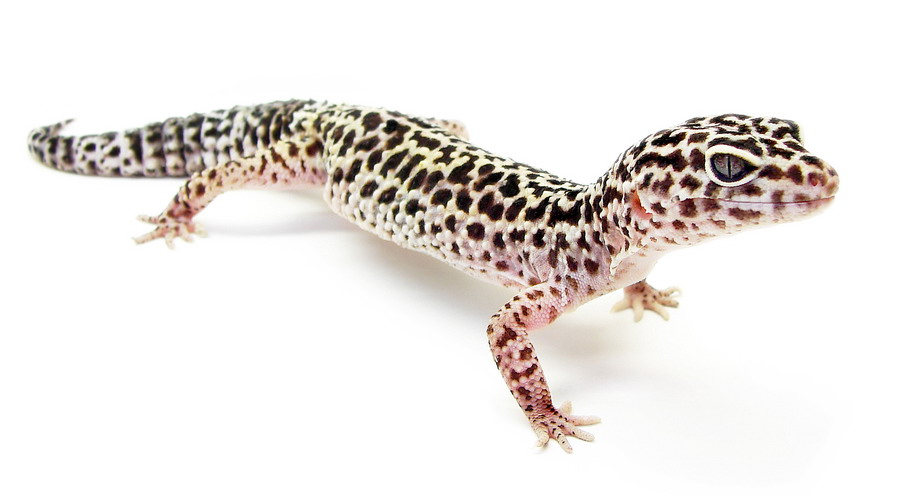 Leopard GeckoEublepharis macularius
-
 Iranian Fat Tailed GeckoEublepharis angramainyu
-
 West Indian Leopard GeckoEublepharis fuscus
-
 Satpura Leopard GeckoEublepharis satpuraensis
-
 East Indian Leopard GeckoEublepharis hardwickii
-
 Jhuma’s Leopard GeckoEublepharis jhuma
-
 Turkmenistan Eyelid GeckoEublepharis turcmenicus
-
 African Fat-tailed GeckoHemitheconyx caudicinctus
Compare
Questions and answers
What is the scientific name of the Painted Leopard Gecko?
The scientific name of the Painted Leopard Gecko is Eublepharis pictus. Written with its author, the full name is Eublepharis pictus Mirza & Gnaneswar, 2022.
Which family does the Painted Leopard Gecko belong to?
Eublepharis pictus belongs to the family Eublepharidae, in the order Squamata and the class Reptilia.
Where is the Painted Leopard Gecko found?
Checklists and occurrence records place Eublepharis pictus in 1 country: India.
What type of habitat do leopard geckos live in?
The Painted leopard gecko inhabits dry evergreen forests interspersed with scrub and meadows.[1]
Sources
Passages the profile rests on
- The species inhabits dry evergreen forests interspersed with scrub and meadows. Source passage: “The species lives in dry evergreen forest mixed in with scrubs and meadows.” — English Wikipedia
- The species is reported to be widespread in its forest habitat. Source passage: “The species is widespread in the forest” — English Wikipedia
- The species occurs in Andhra Pradesh and Odisha, India. Source passage: “It lives in Andhra Pradesh and Odisha, in India.” — English Wikipedia
- The species is nocturnal. Source passage: “Eublepharis pictus is nocturnal” — English Wikipedia
- The species has been observed foraging along trails after dusk and licking surfaces with its tongue for sensory information. Source passage: “has been observed foraging along trails after dusk using its tongue as a sensory organ by licking surfaces.” — English Wikipedia
- The species reaches a maximum snout–vent length of 117 mm. Source passage: “It can grow to 117 mm (4.6 in) in snout–vent length.” — English Wikipedia
- Geckos in the genus Eublepharis are described as sturdily built. Source passage: “These geckos are sturdily built.” — inaturalist.org
- Geckos in the genus Eublepharis have tails shorter than their snouts. Source passage: “Their tail is shorter than their snout” — inaturalist.org
- The dorsal surface has 23–26 rows of large, flat, keeled tubercle-like scales interspersed with smaller scales. Source passage: “23 to 26 rows of large flat tubercle-like keeled scales across the dorsum intermixed with smaller scales.” — English Wikipedia
- The species has one pale band between the nuchal loop and the caudal constriction. Source passage: “A single pale band between the nuchal loop and the caudal constriction.” — English Wikipedia
- The fourth digit of the hind foot has 19 smooth subdigital lamellae. Source passage: “Smooth subdigital lamellae on digital IV of pes 19;” — English Wikipedia
- The species has 17–18 precloacal pores arranged in an angular series without a diastema. Source passage: “17–18 precloacal pores in an angulate series lacking a diastema.” — English Wikipedia
- The species may be near threatened because of wildlife trade and illegal smuggling. Source passage: “may be near threatened due to wildlife trade and the illegal smuggling of Eublepharis pictus.” — English Wikipedia
Data
- Catalogue of Life, 2026-10-16 XR cc by
- Global Biodiversity Information Facility CC BY 4.0
- Wikidata CC0
- GeoNames CC BY 4.0
- Wikimedia Commons per image; credit shown with each image
- Within the Catalogue of Life, this name comes from The Reptile Database cc by
References
- Description of a new species of leopard geckos, Eublepharis Gray, 1827 from Eastern Ghats, India with notes on Eublepharis hardwickii Gray, 1827. (2022). Evolutionary Systematics, 6(1), 77–88. https://doi.org/10.3897/evolsyst.6.83290 Link where the name was published
- Mirza, Z. A., & Gnaneswar, C. (2022). Description of a new species of leopard geckos, Eublepharis Gray, 1827 from Eastern Ghats, India with notes on Eublepharis hardwickii Gray, 1827. Evolutionary Systematics, 6: 77-88.
- Kwet, A. (2023). Liste der im Jahr 2022 neu beschriebenen Reptilien. Elaphe 2023 (3): 48-73.
This species in other databases
Page built on 29 November 2026. See how the catalog is made and all sources and licences.
Cite this page
ScientificNames.org. (2026). Eublepharis pictus (Painted Leopard Gecko). Retrieved November 29, 2026, from https://scientificnames.org/species/eublepharis-pictus
“Eublepharis pictus (Painted Leopard Gecko).” ScientificNames.org, 2026, scientificnames.org/species/eublepharis-pictus. Accessed 29 Nov. 2026.
ScientificNames.org. “Eublepharis pictus (Painted Leopard Gecko).” Accessed November 29, 2026. https://scientificnames.org/species/eublepharis-pictus.
@misc{scientificnames_eublepharis_pictus_painted_leopard_gecko,
  author = {{ScientificNames.org}},
  title = {Eublepharis pictus (Painted Leopard Gecko)},
  year = {2026},
  url = {https://scientificnames.org/species/eublepharis-pictus},
  note = {Accessed 2026-11-29}
}