Species · Reptiles
Turkmenistan Eyelid Gecko Eublepharis turcmenicus
The scientific name of the Turkmenistan Eyelid Gecko is Eublepharis turcmenicus. It is a species of reptile in the family Eublepharidae (eublepharid geckos), order Squamata. The name dates from 1977.
- Scientific name
- Eublepharis turcmenicus Darevsky, 1977
- Common name
- Turkmenistan Eyelid Gecko
- Genus
- Eublepharis
- Family
- Eublepharidae (Eublepharid Geckos)
- Order
- Squamata
- Class
- Reptilia
- Red List category
- LC Least Concern
- Recorded in
- 3 countries
- Name status
- accepted in the Catalogue of Life

Overview
The Turkmenistan Eyelid Gecko is a ground-dwelling lizard. It is native to Turkmenistan and northern Iran. It can shed its tail through autotomy.
Written 27 November 2026 from the sources listed below. Each statement was checked against the passage it cites; statements that could not be supported were removed.
Habitat
The Turkmenistan Eyelid Gecko inhabits rocky and stony foothills and slopes. It occurs at elevations of up to 1,000 m above sea level.[1][2]
Diet
The Turkmenistan Eyelid Gecko is mainly insectivorous. It may also consume smaller vertebrates.[3][4]
Behaviour
The Turkmenistan Eyelid Gecko can shed its tail through autotomy.[5]
Reproduction and life cycle
The Turkmenistan Eyelid Gecko typically lays clutches containing two eggs.[6]
Classification of the Turkmenistan Eyelid Gecko
| Kingdom | Animalia |
|---|---|
| Phylum | Chordata |
| Subphylum | Vertebrata |
| Infraphylum | Gnathostomata |
| Parvphylum | Osteichthyes |
| Megaclass | Tetrapoda |
| Class | Reptilia (Reptile) |
| Order | Squamata (Snakes) |
| Suborder | Gekkota |
| Family | Eublepharidae (Eublepharid Geckos) |
| Genus | Eublepharis (Southwest Asian Leopard Geckos) |
| Species | Eublepharis turcmenicus Darevsky, 1977 |
Where the Turkmenistan Eyelid Gecko is found
Checklists and occurrence records place Eublepharis turcmenicus in 3 countries across Asia. GBIF holds 6 georeferenced records of it.
Countries
Range as the checklists state it
former USSR (Province Turkman Kopetdag), Kyrgyzstan,
A number beside a place is its count of GBIF occurrence records. A place without a number comes from a checklist alone. Records show where a species has been observed or collected, which can include escapes and vagrants.
Common names
English
- Turkmenistan Eyelid Gecko
- Turkmenistan (or Turkmenian) Eyelid Gecko
- Turkmenistan Leopard Gecko
Names in 5 other languages
- Chinese
- 土庫曼豹紋守宮
- Czech
- gekončík turkmenský
- German
- Turkmenischer Leopardgecko
- Japanese
- トルクメニスタントカゲモドキ
- Russian
- Туркменский эублефар
Synonyms
2 other scientific names have been used for this species and are now treated as synonyms of Eublepharis turcmenicus.
- Eublepharis turkmenicus Darevsky, 1978
- Cyrtodactylus macularius Blyth, 1854 ambiguous synonym
Related species
-
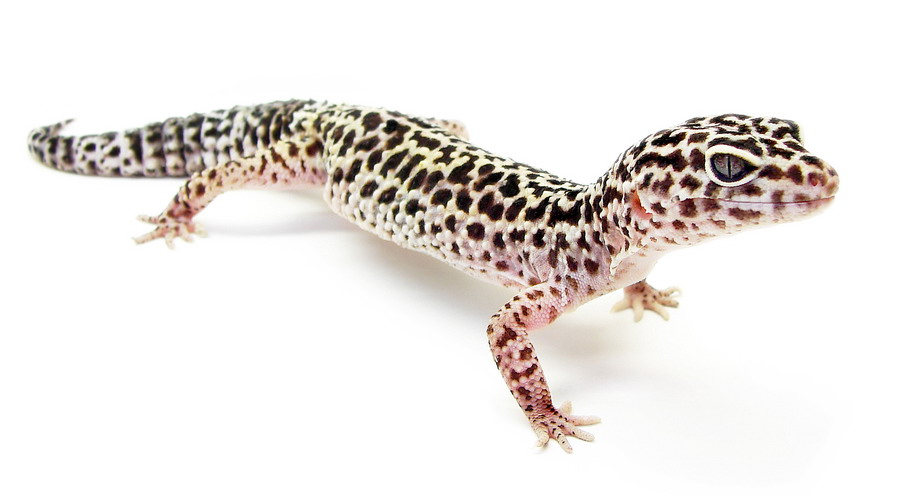 Leopard GeckoEublepharis macularius
-
 Iranian Fat Tailed GeckoEublepharis angramainyu
-
 West Indian Leopard GeckoEublepharis fuscus
-
 Painted Leopard GeckoEublepharis pictus
-
 Satpura Leopard GeckoEublepharis satpuraensis
-
 East Indian Leopard GeckoEublepharis hardwickii
-
 Jhuma’s Leopard GeckoEublepharis jhuma
-
 African Fat-tailed GeckoHemitheconyx caudicinctus
Compare
Questions and answers
What is the scientific name of the Turkmenistan Eyelid Gecko?
The scientific name of the Turkmenistan Eyelid Gecko is Eublepharis turcmenicus. Written with its author, the full name is Eublepharis turcmenicus Darevsky, 1977.
Which family does the Turkmenistan Eyelid Gecko belong to?
Eublepharis turcmenicus belongs to the family Eublepharidae, in the order Squamata and the class Reptilia.
Where is the Turkmenistan Eyelid Gecko found?
Checklists and occurrence records place Eublepharis turcmenicus in 3 countries: Iran, Turkmenistan and Kyrgyzstan.
What is the conservation status of the Turkmenistan Eyelid Gecko?
The IUCN Red List category recorded for Eublepharis turcmenicus is Least Concern (LC).
What other names does the Turkmenistan Eyelid Gecko have?
Eublepharis turcmenicus is also known in English as Turkmenistan (or Turkmenian) Eyelid Gecko and Turkmenistan Leopard Gecko.
Sources
Passages the profile rests on
- The species inhabits rocky and stony foothills and slopes. Source passage: “It inhabits rocky and stony foothills and slopes” — English Wikipedia
- The species occurs at elevations of up to 1,000 m above sea level. Source passage: “at elevations up to 1,000 m (3,300 ft) above sea level.” — English Wikipedia
- The species is mainly insectivorous. Source passage: “Mainly insectivorous” — English Wikipedia
- The species may also consume smaller vertebrates. Source passage: “it may also eat smaller vertebrates.” — English Wikipedia
- The species can shed its tail through autotomy. Source passage: “Like many other lizards has the ability to shed its tail (autotomy).” — English Wikipedia
- The species typically lays clutches containing two eggs. Source passage: “typically laying clutches of two eggs.” — English Wikipedia
Data
- Catalogue of Life, 2026-10-16 XR cc by
- Global Biodiversity Information Facility CC BY 4.0
- Wikidata CC0
- GeoNames CC BY 4.0
- Wikimedia Commons per image; credit shown with each image
- Within the Catalogue of Life, this name comes from The Reptile Database cc by
References
- Darevsky, I. S. (1977) Eublepharis turcmenicus. In: Bannikov, A. G., Darevsky, I. S., Ishchenko, V. G., Rustamov, A. K., & Shcherbak, N. N. (Eds.), Guide to the amphibian and reptilian fauna of the USSR. Prosveshchenie, Moscow, pp. 83 - 84. [in Russian] where the name was published
- Darevsky, l. S. (1977). Eublepharis turcmenicus. Pp. 83-84. In Bannikov, A. G., l. S. Darevsky, V. G. Ishchenko, A. K. Rustamov, and N. N. Shcherbak. Guide to the amphibian and reptilian fauna of the USSR [in Russian]. Prosveshchenie, Moscow.
- Darevsky, l. S. (1978). About the gecko genus Eublepharis occuring in Middle Asia [in Russian]. Proceedings of the Zoological Institute, Academia of Science, USSR, 61:204—209.
- Grismer, L. L. (1991). Cladistic relationships of the lizard Eublepharis turcmenicus (Squamata: Eublepharidae). Journal of Herpetology 25 (2): 251-253.
- Rösler, H. & N. N. Szczerbak. (1992). Die Jugendentwicklung von Eublepharis turcmenicus DAREWSKIJ, 1978 im Terrarium. Salamandra 28 (3-4): 275-278.
- Kaverkin, Y. I., & Orlov, N. L. (1996). Experience of Captive Breeding of Eublepharis turcmenicus. Russ. J. Herpetol. 3 (1): 97-99.
- Shcherbak, N. N. [= Szczerbak], and M. L. Golubev. (1996). Gecko fauna of the USSR and contiguous regions. SSAR [Russian Original Published in 1986]. [Book Review in Salamandra 36 (2): 138].
- Rösler, & Herbert. (1997). Paläarktische Geckos (Reptilia: Gekkota) Teil I: Historischer Überblick, Geographie und Klima, Verbreitung. Sauria 19 (1): 17-28.
- Anderson, & Steven C. (1999). The lizards of Iran. Contributions to Herpetology Volume 15, Society for the Study of Amphibians and Reptiles, Saint Louis, Missouri: I-Vii, 1-442 [Review in Copeia 2000 (4): 1144].
- Rösler, H. (1999). Paläarktische Geckos (Reptilia: Gekkota). Teil II: Eublepharis turcmenicus DAREVSKY 1978. Sauria 21 (3): 21-26.
- Rösler, H. (2000). Kommentierte Liste der rezent, subrezent und fossil bekannten Geckotaxa (Reptilia: Gekkonomorpha). Gekkota 2: 28-153.
- Szczerbak, N. N. (2003). Guide to the Reptiles of the Eastern Palearctic. Krieger, Malabar, FL, 260 Pp.
- Seufer, H.; Y. Kaverkin & A. Kirschner (eds.). (2005). Die Lidgeckos. Kirschner Und Seufer Verlag, 238 Pp.
- Ananjeva, N., & Orlov, N. (2005). Lizards of North Eurasia. Reptilia (GB) (38): 54-63.
- Ananjeva, NB, Orlov NL; Khalikov RG; Darevsky IS; Ryabov IS & Barabanov AV. (2006). The Reptiles of North Eurasia. Taxonomic Diversity, Distribution, Conservation Status [this comprises the territory of the former Soviet Union and Mongolia]. Pensoft Series Faunistica 47, 250 Pp.
- Sindaco, R., & Jeremcenko, V. K. (2008). The reptiles of the Western Palearctic. Edizioni Belvedere, Latina (Italy), 579 Pp.
- Auer, M., & Susann Richter and Ali Khani. (2008). A new record of the Turkmenian Fat-Tailed Gecko, Eublepharis turcmenicus Darevsky, 1978, from north-eastern Iran (Squamata: Gekkonidae). Zoology in the Middle East 45:
- RASTEGAR-POUYANI, NASRULLAH; HAJI GHOLI KAMI, MEHDI RAJABZADEH, SOHEILA SHAFIEI AND STEVEN CLEMENT ANDERSON. (2008). Annotated Checklist of Amphibians and Reptiles of Iran. Iranian Journal of Animal Biosystematics 4 (1): 7-30.
- Henkel, F. W., & Schmidt, W. (2009). Leopardgeckos. Natur Und Tier Verlag (Münster),156 Pp.
- ŠMÍD, JIŘÍ; JIŘÍ MORAVEC, PETR KODYM, LUKÁŠ KRATOCHVÍL, SEYYED SAEED HOSSEINIAN YOUSEFKHANI, ESKANDAR RASTEGAR-POUYANI & DANIEL FRYNTA. (2014). Annotated checklist and distribution of the lizards of Iran. Zootaxa 3855 (1): 001–097.
- Davletbakov, A. T.; L. A. Kustareva, D. A. Milko, A. N. Ostastshenko, S. S. Sagymbaev, S. A. Toropov, N. V. Trotchenko. (2015). Genetical Fund Cadastre of Kyrgyz Republic. Vol. IV. Phylum Chordata (chordates). Bishkek, 128 P. + XXXVI Color Tables.
- NASRABADI, REZA; NASRULLAH RASTEGAR-POUYANI, ESKANDAR RASTEGAR-POUYANI, AHMAD GHARZI. (2017). A revised key to the lizards of Iran (Reptilia: Squamata: Lacertilia). Zootaxa 4227 (3): 431–443.
- Kami, & Reza Babaei Savasari. (2018). New Records of the Turkmenian Fat- Tailed Gecko, Eublepharis turcmenicus Darevsky, 1978, From Razavi Khorasan province, Iran (Squamata: Eublepharidae). Iranian Journal of Animal Biosystematics.
- Kamali, & Kamran. (2020). A Field Guide to the Reptiles and Amphibians of Iran. Edition Chimaira, Frankfurt Am Main, Germany (www.chimaira.de). 574 Pp.
- Hosseinian Yousefkhani, SEYYED SAEED & HOSSEIN NABIZADEH. (2022). Response to the future climate change effect of two leopard geckos’ distribution (Sauria: Eublepharidae) in Iran. Journal of Asia-Pacific Biodiversity 15(3): 354-358.
This species in other databases
Page built on 27 November 2026. See how the catalog is made and all sources and licences.
Cite this page
ScientificNames.org. (2026). Eublepharis turcmenicus (Turkmenistan Eyelid Gecko). Retrieved November 27, 2026, from https://scientificnames.org/species/eublepharis-turcmenicus
“Eublepharis turcmenicus (Turkmenistan Eyelid Gecko).” ScientificNames.org, 2026, scientificnames.org/species/eublepharis-turcmenicus. Accessed 27 Nov. 2026.
ScientificNames.org. “Eublepharis turcmenicus (Turkmenistan Eyelid Gecko).” Accessed November 27, 2026. https://scientificnames.org/species/eublepharis-turcmenicus.
@misc{scientificnames_eublepharis_turcmenicus_turkmenistan_eyelid_gecko,
  author = {{ScientificNames.org}},
  title = {Eublepharis turcmenicus (Turkmenistan Eyelid Gecko)},
  year = {2026},
  url = {https://scientificnames.org/species/eublepharis-turcmenicus},
  note = {Accessed 2026-11-27}
}