Species · Flowering plants
Sulphur Pea Lathyrus sulphureus
The scientific name of the Sulphur Pea is Lathyrus sulphureus. It is a species of flowering plant in the family Fabaceae (bean), order Fabales.
- Scientific name
- Lathyrus sulphureus W.H.Brewer ex A.Gray
- Common name
- Sulphur Pea
- Genus
- Lathyrus
- Family
- Fabaceae (Bean)
- Order
- Fabales
- Class
- Magnoliopsida
- Recorded in
- 2 countries
- Name status
- accepted in the Catalogue of Life

Overview
Sulphur pea is a hairless perennial herb. It produces dense clusters of up to 15 flowers ranging from light yellow to deep orange.
Written 27 November 2026 from the sources listed below. Each statement was checked against the passage it cites; statements that could not be supported were removed.
Appearance
Sulphur pea has leaves consisting of numerous oval-shaped leaflets that can reach 4 centimeters in length. Its leaves terminate in branching, coiled tendrils, and its stipules can exceed 2 centimeters in length.[1][2][3][4]
The plant produces dense clusters containing up to 15 pea flowers, often arranged in a row along one side of the stem. The flowers range from light yellow to deep orange and are broad, with deeply folded faces.[5][6][7][8]
Its fruit is a hairless legume pod that splits open when mature.[9]
Habitat
Sulphur pea grows in forest and woodland habitats.[10]
Classification of the Sulphur Pea
| Kingdom | Plantae |
|---|---|
| Subkingdom | Pteridobiotina |
| Phylum | Tracheophyta |
| Class | Magnoliopsida |
| Order | Fabales |
| Family | Fabaceae (Bean) |
| Genus | Lathyrus (Pea) |
| Species | Lathyrus sulphureus W.H.Brewer ex A.Gray |
Where the Sulphur Pea is found
Checklists and occurrence records place Lathyrus sulphureus in 2 countries across North America. GBIF holds 1,896 georeferenced records of it.
Countries
Regions and cities with the most records
- California, United States 1,243
- Paradise, United States 123
- Chico, United States 71
- Cameron Park, United States 55
- Redding, United States 46
- Granite Bay, United States 43
- El Dorado Hills, United States 35
- Rocklin, United States 25
- Folsom, United States 24
- Oregon, United States 21
- Oroville, United States 19
- Orangevale, United States 17
- Lincoln, United States 16
- South Yuba City, United States 13
- Yuba City, United States 13
- Citrus Heights, United States 6
- Roseville, United States 6
- Antelope, United States 5
- Fair Oaks, United States 5
- Foothill Farms, United States 5
- North Highlands, United States 4
- Carmichael, United States 3
- Clearlake, United States 3
- Rancho Cordova, United States 3
A number beside a place is its count of GBIF occurrence records. A place without a number comes from a checklist alone. Records show where a species has been observed or collected, which can include escapes and vagrants.
Common names
English
- Sulphur Pea
- Snub Pea
Subspecies and varieties
Related species
-
 Sweet PeaLathyrus odoratus
-
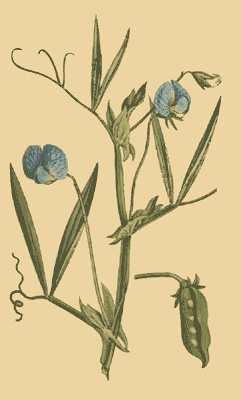 Indian PeaLathyrus sativus
-
 Perennial PeaLathyrus latifolius
-
 Tuberous PeaLathyrus tuberosus
-
 Beach PeaLathyrus japonicus
-
 Yellow VetchlingLathyrus aphaca
-
 Bitter VetchLathyrus linifolius
-
 Spanish VetchlingLathyrus clymenum
Compare
Questions and answers
What is the scientific name of the Sulphur Pea?
The scientific name of the Sulphur Pea is Lathyrus sulphureus. Written with its author, the full name is Lathyrus sulphureus W.H.Brewer ex A.Gray.
Which family does the Sulphur Pea belong to?
Lathyrus sulphureus belongs to the family Fabaceae, in the order Fabales and the class Magnoliopsida.
Where is the Sulphur Pea found?
Checklists and occurrence records place Lathyrus sulphureus in 2 countries: United States and Canada.
What other names does the Sulphur Pea have?
Lathyrus sulphureus is also known in English as Snub Pea.
Sources
Passages the profile rests on
- Its leaves consist of numerous oval-shaped leaflets. Source passage: “leaves made up of many oval-shaped leaflets” — English Wikipedia
- Its leaflets can reach 4 centimeters in length. Source passage: “each up to 4 centimeters long” — English Wikipedia
- Its leaves terminate in branching, coiled tendrils. Source passage: “The leaves are tipped with branching, coiled tendrils” — English Wikipedia
- Its stipules can exceed 2 centimeters in length. Source passage: “the large stipules may be over 2 centimeters long.” — English Wikipedia
- The plant produces dense clusters containing up to 15 pea flowers. Source passage: “a dense inflorescence of up to 15 pea flowers” — English Wikipedia
- Its flowers are often arranged in a row along one side of the stem. Source passage: “often arranged in a line down one side of the stem.” — English Wikipedia
- Its flowers range in color from light yellow to deep orange. Source passage: “The flowers are light yellow to deep orange” — English Wikipedia
- Its flowers are broad and have deeply folded faces. Source passage: “They are wide and have deeply folded faces.” — English Wikipedia
- Its fruit is a hairless legume pod that splits open when mature. Source passage: “The fruit is a hairless dehiscent legume pod.” — English Wikipedia
- The species grows in forest and woodland habitats. Source passage: “where it grows in forest and woodland.” — English Wikipedia
Data
- Catalogue of Life, 2026-10-16 XR cc by
- Global Biodiversity Information Facility CC BY 4.0
- Wikidata CC0
- GeoNames CC BY 4.0
- Wikimedia Commons per image; credit shown with each image
- Within the Catalogue of Life, this name comes from The World Checklist of Vascular Plants (WCVP): Fabaceae cc by
References
- Proc. Amer. Acad. Arts 7: 399 (1868) where the name was published
This species in other databases
- Catalogue of Life VLRFV
- Wikidata Q6496017
- iNaturalist 77646
- World Flora Online wfo-0000173694
- GRIN 21618
Page built on 27 November 2026. See how the catalog is made and all sources and licences.
Cite this page
ScientificNames.org. (2026). Lathyrus sulphureus (Sulphur Pea). Retrieved November 27, 2026, from https://scientificnames.org/species/lathyrus-sulphureus
“Lathyrus sulphureus (Sulphur Pea).” ScientificNames.org, 2026, scientificnames.org/species/lathyrus-sulphureus. Accessed 27 Nov. 2026.
ScientificNames.org. “Lathyrus sulphureus (Sulphur Pea).” Accessed November 27, 2026. https://scientificnames.org/species/lathyrus-sulphureus.
@misc{scientificnames_lathyrus_sulphureus_sulphur_pea,
  author = {{ScientificNames.org}},
  title = {Lathyrus sulphureus (Sulphur Pea)},
  year = {2026},
  url = {https://scientificnames.org/species/lathyrus-sulphureus},
  note = {Accessed 2026-11-27}
}