Species · Fishes
Smallmouth Bass Micropterus dolomieu
The scientific name of the Smallmouth Bass is Micropterus dolomieu. It is a species of fish in the family Centrarchidae (sunfishes), order Centrarchiformes. The name dates from 1802.
- Scientific name
- Micropterus dolomieu Lacepède, 1802
- Common name
- Smallmouth Bass
- Genus
- Micropterus
- Family
- Centrarchidae (Sunfishes)
- Order
- Centrarchiformes
- Class
- Teleostei
- Red List category
- LC Least Concern
- Environment
- freshwater
- Recorded in
- 6 countries
- Name status
- accepted in the Catalogue of Life

Overview
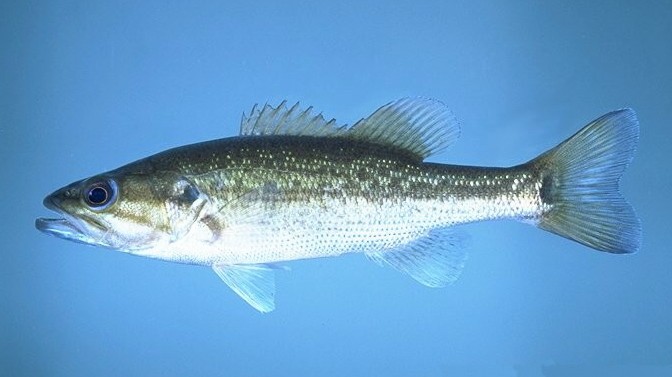
The native range includes the upper and middle Mississippi River basin, the Saint Lawrence River–Great Lakes system, the Champlain Valley, and the Hudson Bay basin. It has a slender, muscular body, golden-olive to dark brown dorsal coloration, and dark brown vertical body bars or blotches.
Written 26 November 2026 from the sources listed below. Each statement was checked against the passage it cites; statements that could not be supported were removed.
Uses
Smallmouth Bass is an important sport fish throughout its native range. It is also used as a food fish, although anglers frequently catch and release it rather than retain it for consumption.[1][2][3]
Similar species
The largemouth bass (Micropterus salmoides), spotted bass (Micropterus punctulatus), and Coosa bass (Micropterus coosae) are identified as similar species.[4]
Appearance
Smallmouth Bass has a slender, muscular, elongated body adapted for powerful swimming. Its dorsal coloration ranges from golden-olive to dark brown and fades to yellowish white on the underside.[5][6]
The body typically has dark brown vertical bars or blotches, while the head has dark brown horizontal bars. Its sides have golden flecks on most scales, and the vertical bars may be broken or vary in visibility.[7][8]
The protruding jaw generally does not extend behind the eyes, which are red or brown. The fish has two dorsal fins separated by a shallow notch, with 9–11 spiny rays in the front fin and 13–15 soft rays in the rear fin; the fins appear joined together as one fin.[9][10][11]
Its body colour becomes darker with more pronounced contrasting markings in clear water and lighter with less distinct markings in cloudy water.[12]
The maximum recorded body length is approximately 69 cm, and the maximum recorded weight is approximately 5.4 kg. Average adult length ranges from 30 to 50 cm.[13][14][15]
Males generally weigh around two pounds, whereas females typically weigh between three and six pounds.[16]
Habitat
Smallmouth Bass typically inhabits cool, clear rivers and lakes with rocky or sandy substrates. It prefers cool water and commonly occupies shoals, submerged logs, and moderately shallow rocky or sandy areas.[17][18]
In streams, it typically occupies areas with relatively swift currents. In lakes, it uses structures such as logs, rocky outcroppings, and pier posts as habitat.[19][20]
The species is seldom found in dense aquatic vegetation.[21]
Diet
The diet includes crayfish, amphibians, insects, and smaller fish. Smallmouth Bass also consumes tadpoles, frogs, and plant material.[22][23]
Fry and juveniles primarily feed on zooplankton and insect larvae. Adults sometimes consume the young of other parents belonging to their species.[24][25]
Behaviour
Smallmouth Bass are highly visual predators that actively seek clear water. Individual fish may occupy territories extending several hundred yards and containing multiple large structures used as cover.[26][27]
When water temperatures fall below 16 °C, Smallmouth Bass often migrate towards deeper pools and enter a semi-hibernation state. During this period, they move sluggishly and feed very little.[28][29]
Individual Smallmouth Bass may travel 12 miles in a single day in a stream, creek, or river.[30]
Reproduction and life cycle
Smallmouth Bass generally begin spawning in spring or early summer when water temperatures reach 15–18 °C. Successful spawning requires a clean substrate consisting of stone, rock, or gravel.[31][32]
Males excavate and guard small, round nests. Females can lay as many as 21,100 eggs, and they lay more than 2,000 eggs during each spawning event.[33][34][35]
Females may deposit eggs in the nests of several different males, while several females may also spawn in one male's nest. Males guard the eggs and fry and are solely responsible for parental care.[36][37]
Smallmouth Bass eggs typically hatch within four to six days. Newly hatched fry remain in the nest for approximately two weeks before dispersing.[38][39]
Conservation
Smallmouth Bass is not considered a conservation concern.[40]
Accidental introductions through live-bait use and unauthorized transfers between waterbodies contribute to the species' recent spread.[41]
Classification of the Smallmouth Bass
| Kingdom | Animalia |
|---|---|
| Phylum | Chordata |
| Subphylum | Vertebrata |
| Infraphylum | Gnathostomata |
| Parvphylum | Osteichthyes |
| Gigaclass | Actinopterygii |
| Superclass | Actinopteri |
| Class | Teleostei (Teleost) |
| Order | Centrarchiformes |
| Family | Centrarchidae (Sunfishes) |
| Genus | Micropterus (Black Basses) |
| Species | Micropterus dolomieu Lacepède, 1802 |
Where the Smallmouth Bass is found
Checklists and occurrence records place Micropterus dolomieu in 6 countries. GBIF holds 94,103 georeferenced records of it.
Countries
Regions and cities with the most records
- Nova Scotia, Canada 23,691
- Pennsylvania, United States 23,150
- New York, United States 4,234
- Minnesota, United States 3,830
- Ontario, Canada 3,407
- Wisconsin, United States 3,203
- Michigan, United States 2,953
- Tennessee, United States 1,918
- Ohio, United States 1,791
- Iowa, United States 1,503
- Illinois, United States 1,419
- Maryland, United States 1,351
- Texas, United States 1,292
- Reading, United States 1,224
- Arkansas, United States 1,191
- New Jersey, United States 1,157
- Oklahoma, United States 1,046
- Springfield, United States 1,014
- Maine, United States 999
- State College, United States 964
- West Virginia, United States 937
- Kentucky, United States 880
- North Carolina, United States 866
- Virginia, United States 855
- Harrisburg, United States 803
- Missouri, United States 695
- Georgia, United States 686
- New Hampshire, United States 653
- Quebec, Canada 613
- Montana, United States 602
- Back Mountain, United States 581
- Oregon, United States 560
- Vermont, United States 514
- Carlisle, United States 500
- Western Cape, South Africa 495
- Hermitage, United States 470
6 more countries have a few records outside this range
These countries hold a few records of Micropterus dolomieu but lie outside the range the checklists give for it. Such records are often zoo or garden specimens, museum material or vagrants, so the species is not counted as occurring there.
A number beside a place is its count of GBIF occurrence records. A place without a number comes from a checklist alone. Records show where a species has been observed or collected, which can include escapes and vagrants.
Common names
English
- Smallmouth Bass
- Bareback Bass
- Bass
- Bronzeback
- Brown Bass
- Gold Bass
- Green Bass
- Jumper
- Redeye
- Small-mouth Black Bass
- Smallie
- Smallmouth
- Smallmouth Black Bass
- Streak-cheeked River Bass
- Swago Bass
- Trout Bass
- White Trout
Names in 19 other languages
- Afrikaans
- Kleinbek-baars
- Czech
- okounek černý
- Danish
- Småmundet black bass, Småmundet ørredaborre
- Dutch
- Kleinbekbaars, Zwartbaars, zwarte baars
- Estonian
- Väikesuu-forellahven
- Finnish
- pikkubassi
- French
- Black-bass à petite bouche, Perche d'Amérique à petite bouche, Perche noire, achigan à petite bouche
- German
- Großer Schwarzbarsch, Schwarzbarsch, kleinmäuliger Schwarzbarsch
- Japanese
- Kokuchibasu, コクチバス
- Latvian
- Mazmutes melnasaris
- Mandarin Chinese
- 小口黑鱸
- Norwegian Bokmål
- småmunnet lakseabbor, svart lakseabbor
- Polish
- bass małogębowy
- Portuguese
- Achigã-boca-pequena
- Romanian
- Biban cu gura mica
- Russian
- Malorotyi chernyi okun', Малоротый окунь
- Slovak
- Ostracka cierna
- Spanish
- Lobina de boca pequeña, lobina boca chica
- Swedish
- svartabborre
Synonyms
17 other scientific names have been used for this species and are now treated as synonyms of Micropterus dolomieu.
- Bodianus achigan Rafinesque, 1817
- Centrarchus fasciatus (Lesueur, 1822)
- Centrarchus obscurus DeKay, 1842
- Cichla fasciata Lesueur, 1822
- Cichla minima Lesueur, 1822
- Cichla ohioensis Lesueur, 1822
- Dioplites variabilis Vaillant & Bocourt, 1874
- Etheostoma calliura Rafinesque, 1820
- Lepomis flexuolaris Rafinesque, 1820
- Lepomis notata Rafinesque, 1820
- Lepomis salmonea Rafinesque, 1820
- Lepomis trifasciata Rafinesque, 1820
- Micropterus dolomieu dolomieu Lacepède, 1802
- Micropterus dolomieu velox Hubbs & Bailey, 1940
- Micropterus dolomieui Lacepède, 1802
- Micropterus dolomieui dolomieui (Lacepède, 1802)
- Micropterus punctulatus wichitae Hubbs & Bailey, 1940 ambiguous synonym
Related species
-
 Largemouth BassMicropterus salmoides
-
 Guadalupe BassMicropterus treculii
-
 Spotted BassMicropterus punctulatus
-
 Florida BassMicropterus floridanus
-
 Redeye BassMicropterus coosae
-
 Shoal BassMicropterus cataractae
- Alabama BassMicropterus henshalli
-
 Suwannee BassMicropterus notius
Compare
Questions and answers
What is the scientific name of the Smallmouth Bass?
The scientific name of the Smallmouth Bass is Micropterus dolomieu. Written with its author, the full name is Micropterus dolomieu Lacepède, 1802.
Which family does the Smallmouth Bass belong to?
Micropterus dolomieu belongs to the family Centrarchidae, in the order Centrarchiformes and the class Teleostei.
Where is the Smallmouth Bass found?
Checklists and occurrence records place Micropterus dolomieu in 6 countries: United States, Canada, Japan, South Africa, Mexico and Belize.
What is the conservation status of the Smallmouth Bass?
The IUCN Red List category recorded for Micropterus dolomieu is Least Concern (LC).
What other names does the Smallmouth Bass have?
Micropterus dolomieu is also known in English as Bareback Bass, Bass, Bronzeback, Brown Bass, Gold Bass and Green Bass.
How rare is a 5 pound smallmouth bass?
The maximum recorded weight is approximately 5.4 kg. Males generally weigh around two pounds, while females typically weigh between three and six pounds.[14][16]
How old is a 4 lb smallmouth bass?
Its average lifespan is between six and fourteen years. A specific age for a 4 lb fish cannot be determined from the recorded information.[42]
What is the habitat of a smallmouth bass?
It typically inhabits cool, clear rivers and lakes with rocky or sandy substrates. Common habitats include shoals, submerged logs, moderately shallow rocky or sandy areas, swift stream currents, and lake structures such as rocky outcroppings and pier posts.[17][18][19][20]
Sources
Passages the profile rests on
- Smallmouth bass is an important sport fish throughout its native range. Source passage: “An important sport fish throughout its range, the smallmouth is almost as popular as the largemouth bass .” — animaldiversity.org
- Smallmouth bass is also used as a food fish. Source passage: “It is also a popular food fish (Scott and Crossman 1973).” — animaldiversity.org
- The species is frequently caught and released rather than retained for consumption by anglers. Source passage: “Smallmouth bass are not usually taken for the table, but rather are caught and released by most anglers.” — English Wikipedia
- The largemouth bass (Micropterus salmoides), spotted bass (Micropterus punctulatus), and Coosa bass (Micropterus coosae) are identified as similar species. Source passage: “Similar species include M. salmoides , M. punculatus , and M. coosae (Page and Burr, 1998).” — animaldiversity.org
- The smallmouth bass has a slender, muscular, elongated body adapted for powerful swimming. Source passage: “Smallmouth have a slender but muscular fusiform body shape making them powerful swimmers.” — English Wikipedia
- Its dorsal coloration ranges from golden-olive to dark brown and fades to yellowish white on the underside. Source passage: “The coloration of the smallmouth bass's ctenoid scales range from golden-olive to dark brown dorsally which fades to a yellowish white ventrally” — English Wikipedia
- Its body typically has dark brown vertical bars or blotches, while its head has dark brown horizontal bars. Source passage: “with dark brown vertical bars or blotches along the body and dark brown horizontal bars on the head.” — English Wikipedia
- Its sides have golden flecks on most scales and vertical bars that may be broken or vary in visibility. Source passage: “sides that have golden flecks on most scales sides that have vertical bars that are sometimes broken (ranging from very visible to slightly visible)” — dfo-mpo.gc.ca
- The protruding jaw generally does not extend behind the eyes, which are red or brown. Source passage: “Generally, the protruding jaw of the smallmouth does not extend back beyond the eyes which are red or brown.” — English Wikipedia
- The fish has two dorsal fins separated by a shallow notch, with 9–11 spiny rays in the front fin and 13–15 soft rays in the rear fin. Source passage: “They have two dorsal fins which are separated by a shallow interdorsal notch. The front dorsal has 9–11 spiney rays and the back dorsal has 13–15 soft rays.” — English Wikipedia
- Its dorsal fins appear joined together as one fin. Source passage: “joined dorsal fins that appear as one (unlike the Largemouth Bass, which has a more obvious separation between dorsal fins)” — dfo-mpo.gc.ca
- Its body colour becomes darker with more pronounced contrasting markings in clear water and lighter with less distinct markings in cloudy water. Source passage: “The body colour of Smallmouth Bass changes with size, condition and habitat. It will be darker with pronounced, contrasting markings in clear water and lighter, with blurry markings in cloudy water.” — dfo-mpo.gc.ca
- The maximum recorded body length is approximately 69 cm. Source passage: “The maximum recorded size is approximately 27 inches (69 cm) and 12 pounds (5.4 kg).” — English Wikipedia
- The maximum recorded weight is approximately 5.4 kg. Source passage: “The maximum recorded size is approximately 27 inches (69 cm) and 12 pounds (5.4 kg).” — English Wikipedia
- Average adult length ranges from 30 to 50 cm. Source passage: “Average adult length ranges from 30-50 cm (15-20 in) (Mettee et al., 1996).” — animaldiversity.org
- Males generally weigh around two pounds, whereas females typically weigh between three and six pounds. Source passage: “The males tend to range around two pounds, while females can range from three to six pounds.” — English Wikipedia
- The species typically inhabits cool, clear rivers and lakes with rocky or sandy substrates. Source passage: “M. dolomieu typically is found in cooler rivers and lakes, with rocky or sandy substrates (Berra, 2001).” — animaldiversity.org
- It prefers cool water and commonly occupies shoals, submerged logs, and moderately shallow rocky or sandy areas. Source passage: “Smallmouth Bass prefer cool water and are usually found near shoals or submerged logs and in moderately shallow, rocky and sandy areas.” — dfo-mpo.gc.ca
- In streams, the species typically occupies areas with relatively swift currents. Source passage: “When present in stream ecosystems, they are typically found in areas with a relatively swift current (Probst et al., 1984).” — animaldiversity.org
- In lakes, it uses structures such as logs, rocky outcroppings, and pier posts as habitat. Source passage: “In lakes, smallmouth seek out structures, such as logs, rocky outcroppings, or pier posts (Etnier and Starnes, 1993).” — animaldiversity.org
- The species is seldom found in dense aquatic vegetation. Source passage: “It is seldom found in dense aquatic vegetation (which are favoured by Largemouth Bass).” — dfo-mpo.gc.ca
- Its diet includes crayfish, amphibians, insects, and smaller fish. Source passage: “Carnivorous, its diet comprises crayfish, amphibians, insects, and smaller fish” — English Wikipedia
- Smallmouth bass also consume tadpoles, frogs, and plant material. Source passage: “including insects, crayfishes, fishes, tadpoles, frogs and plant material.” — dfo-mpo.gc.ca
- Fry and juveniles primarily feed on zooplankton and insect larvae. Source passage: “Fry and juvenile diets consist primarily of zooplankton and insect larvae.” — animaldiversity.org
- Adults sometimes consume the young of other parents belonging to their species. Source passage: “Adults also cannibalize young of other parents (Scott and Crossman, 1973).” — animaldiversity.org
- Smallmouth bass are highly visual predators that actively seek clear water. Source passage: “As visual predators, smallmouth bass actively seek out clear waters (Sweka and Hartman, 2002).” — animaldiversity.org
- Individual fish may occupy territories extending several hundred yards and containing multiple large structures used as cover. Source passage: “Smallmouth bass may have a range that extends for a few hundred yards. This will typically contain several large structures they will use as cover” — animaldiversity.org
- When water temperatures fall below 16 °C, smallmouth bass often migrate towards deeper pools and enter a semi-hibernation state. Source passage: “When the weather gets colder, and the water temperature drops below 16 °C (60 °F), smallmouth will often migrate in search of deeper pools in which they enter a semi-hibernation state” — English Wikipedia
- During cold-weather semi-hibernation, the fish move sluggishly and feed very little. Source passage: “moving sluggishly and feeding very little until the warm season returns.” — English Wikipedia
- Individual smallmouth bass may travel 12 miles in a single day in a stream, creek, or river. Source passage: “it is not unusual for a smallmouth to travel 12 miles in a single day in a stream, creek or river.” — English Wikipedia
- Smallmouth bass generally begin spawning in spring or early summer when water temperatures reach 15–18 °C. Source passage: “Smallmouth generally begin spawning patterns in spring or early summer when water temperatures are between 15–18 °C (59.0–64.4 °F)” — English Wikipedia
- Successful spawning requires a clean substrate consisting of stone, rock, or gravel. Source passage: “Smallmouth require clean stone, rock, or gravel substrate for a successful spawn.” — English Wikipedia
- Females can lay as many as 21,100 eggs, which males guard in their nests. Source passage: “The female can lay up to 21,100 eggs, which are guarded by the male in his nest.” — English Wikipedia
- Males excavate and guard small, round nests. Source passage: “the male will excavate and guard a small, round nest.” — animaldiversity.org
- Females lay more than 2,000 eggs during each spawning event. Source passage: “Females lay upwards of 2,000 eggs at each spawning (Smith, 1979).” — animaldiversity.org
- Females may deposit eggs in the nests of several different males, while several females may also spawn in one male's nest. Source passage: “Several females may spawn in the nest of one male (Etnier and Starnes, 1993). Individual females may also spawn in the nests of several males.” — animaldiversity.org
- Male smallmouth bass are solely responsible for parental care and guard both eggs and fry. Source passage: “Parental care in M. dolomieu is the sole responsibility of the male, who guards the eggs and fry for an extended length of time (Cooke et al., 2003a)” — animaldiversity.org
- Smallmouth bass eggs typically hatch within four to six days. Source passage: “The eggs hatch in 4-6 days” — animaldiversity.org
- Newly hatched fry remain in the nest for approximately two weeks before dispersing. Source passage: “the fry remain in the nest for approximately two weeks before dispersing (Neves, 1975; Scott and Crossman, 1998).” — animaldiversity.org
- Smallmouth bass is not considered a conservation concern. Source passage: “Micropterus dolomieu is not a conservation concern.” — animaldiversity.org
- Accidental introductions through live-bait use and unauthorized transfers between waterbodies contribute to the species' recent spread. Source passage: “Recent spread is a result of accidental introductions when used as live bait and unauthorized transfers between waterbodies for recreational fishing.” — dfo-mpo.gc.ca
- The average lifespan of smallmouth bass is between six and fourteen years. Source passage: “Average life span is between 6 and 14 years (Carlander, 1977).” — animaldiversity.org
Data
- Catalogue of Life, 2026-10-16 XR cc by
- Global Biodiversity Information Facility CC BY 4.0
- Wikidata CC0
- GeoNames CC BY 4.0
- Wikimedia Commons per image; credit shown with each image
- Within the Catalogue of Life, this name comes from World Register of Marine Species cc by
References
- Lacepède, B. G. E. (1802). Histoire naturelle des poissons: IV. Chez Plassan: Paris, France, v. 4: i–xliv + 1–728, Pl. 1–16. where the name was published
This species in other databases
- Catalogue of Life 43539
- Wikidata Q536224
- iNaturalist 49590
- WoRMS urn:lsid:marinespecies.org:taxname:151296
- ITIS 550562
Page built on 26 November 2026. See how the catalog is made and all sources and licences.
Cite this page
ScientificNames.org. (2026). Micropterus dolomieu (Smallmouth Bass). Retrieved November 26, 2026, from https://scientificnames.org/species/micropterus-dolomieu
“Micropterus dolomieu (Smallmouth Bass).” ScientificNames.org, 2026, scientificnames.org/species/micropterus-dolomieu. Accessed 26 Nov. 2026.
ScientificNames.org. “Micropterus dolomieu (Smallmouth Bass).” Accessed November 26, 2026. https://scientificnames.org/species/micropterus-dolomieu.
@misc{scientificnames_micropterus_dolomieu_smallmouth_bass,
  author = {{ScientificNames.org}},
  title = {Micropterus dolomieu (Smallmouth Bass)},
  year = {2026},
  url = {https://scientificnames.org/species/micropterus-dolomieu},
  note = {Accessed 2026-11-26}
}