Species · Fishes
Spotted Bass Micropterus punctulatus
The scientific name of the Spotted Bass is Micropterus punctulatus. It is a species of fish in the family Centrarchidae (sunfishes), order Centrarchiformes. The name dates from 1819.
- Scientific name
- Micropterus punctulatus (Rafinesque, 1819)
- Common name
- Spotted Bass
- Genus
- Micropterus
- Family
- Centrarchidae (Sunfishes)
- Order
- Centrarchiformes
- Class
- Teleostei
- Red List category
- LC Least Concern
- Environment
- freshwater
- Recorded in
- 2 countries
- Name status
- accepted in the Catalogue of Life
Overview
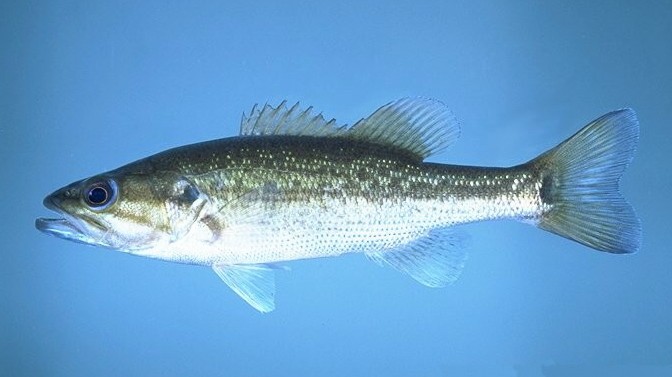
Micropterus punctulatus is native to the Mississippi River basin and Gulf states from central Texas to the Florida panhandle, with a native range extending into the western Mid-Atlantic states. It has prominent rows of dark spots below its lateral line and scales on the base portion of its second dorsal fin.
Written 26 November 2026 from the sources listed below. Each statement was checked against the passage it cites; statements that could not be supported were removed.
Appearance
The Spotted Bass has prominent rows of small dark spots below its lateral line. Dark blotches, often connected, extend across the midline of its body.[1][2][3]
Its first and second dorsal fins are clearly connected, and scales are present on the base portion of the second dorsal fin. Its upper jaw bone does not extend back to or beyond the rear edge of the eyes, and its maxilla does not extend beyond the eye when the mouth is fully closed.[4][5][6][7]
The Spotted Bass lacks the vertical body bars characteristic of smallmouth bass. It has a smaller mouth than the largemouth bass and a small patch of teeth on its tongue.[8][9][10]
Juvenile Spotted Bass can have an orange band at the base of the tail, followed by a black band and a white edge.[11]
The Spotted Bass can reach an overall length of almost 64 cm and weigh up to 5.2 kg. In Virginia, it typically grows to approximately 15 inches in length.[12][13][14]
Habitat
The Spotted Bass prefers cool and warm mountain streams and reservoirs with rocky bottoms. It commonly occupies flowing streams, rivers, and reservoirs with aquatic vegetation, submerged logs, and rocky or riprap walls.[15][16]
It generally inhabits waters with more current than those preferred by largemouth bass. It occupies water that is too warm for smallmouth bass but generally swifter-moving than water preferred by largemouth bass.[17][18]
The Spotted Bass can inhabit water as deep as 30 metres. It prefers cover provided by large woody debris, undercut banks, trees, rocks, and submerged aquatic vegetation.[19][20]
Diet
The Spotted Bass feeds on insects, crustaceans, frogs, annelid worms, and smaller fish. It commonly consumes small fishes, crayfish, and aquatic insects.[21][22]
Young Spotted Bass initially consume copepods and other small crustaceans before beginning to eat insects. Spotted Bass in Virginia feed heavily on other fish, amphibians, crayfish, and insects.[23][24]
The Spotted Bass consumes approximately half as much fish as the largemouth bass.[25]
Behaviour
The Spotted Bass captures prey by opening its mouth and generating negative pressure to draw prey inside. It is described as an aggressive feeder that opportunistically consumes catchable prey that fits in its mouth.[26][27]
Reproduction and life cycle
Spotted Bass spawning occurs between April and May. Males construct nests in gravel or other substrate.[28][29]
Male Spotted Bass guard the eggs until they disperse.[30]
Conservation
The Spotted Bass has become established as an invasive species in some isolated waters of southern Africa. It was held responsible for declines in native fiery redfin and Cape galaxias abundance in South Africa.[31][32]
Uses
The Spotted Bass is regularly fished as a popular game fish and is considered suitable for human consumption.[33][34]
Similar species
The Spotted Bass is frequently mistaken for the largemouth bass because of their similar coloration. It is also frequently confused with the smallmouth bass.[35][36]
The Spotted Bass is known to hybridize with the smallmouth bass.[37]
Classification of the Spotted Bass
| Kingdom | Animalia |
|---|---|
| Phylum | Chordata |
| Subphylum | Vertebrata |
| Infraphylum | Gnathostomata |
| Parvphylum | Osteichthyes |
| Gigaclass | Actinopterygii |
| Superclass | Actinopteri |
| Class | Teleostei (Teleost) |
| Order | Centrarchiformes |
| Family | Centrarchidae (Sunfishes) |
| Genus | Micropterus (Black Basses) |
| Species | Micropterus punctulatus (Rafinesque, 1819) |
Where the Spotted Bass is found
Checklists and occurrence records place Micropterus punctulatus in 2 countries. GBIF holds 22,384 georeferenced records of it.
Countries
Regions and cities with the most records
- Georgia, United States 5,016
- Texas, United States 3,378
- Oklahoma, United States 2,499
- Alabama, United States 2,026
- Kentucky, United States 1,030
- Mississippi, United States 1,024
- Arkansas, United States 782
- Louisiana, United States 703
- Tennessee, United States 647
- Ohio, United States 626
- Illinois, United States 521
- Florida, United States 510
- New Mexico, United States 509
- North Carolina, United States 447
- LaGrange, United States 444
- Acworth, United States 425
- Woodstock, United States 425
- Kennesaw, United States 396
- Missouri, United States 388
- Gainesville, United States 362
- Cartersville, United States 332
- Kansas, United States 252
- Western Cape, South Africa 242
- Canton, United States 234
- Springfield, United States 232
- Indiana, United States 220
- West Virginia, United States 209
- Phenix City, United States 189
- Columbus, United States 151
- Sugar Hill, United States 141
- San Antonio, United States 130
- Pennsylvania, United States 119
- Tahlequah, United States 106
- Fayetteville, United States 102
- Austin, United States 95
- Millbrook, United States 91
A number beside a place is its count of GBIF occurrence records. A place without a number comes from a checklist alone. Records show where a species has been observed or collected, which can include escapes and vagrants.
Common names
English
- Spotted Bass
Synonyms
3 other scientific names have been used for this species and are now treated as synonyms of Micropterus punctulatus.
- Calliurus punctulatus Rafinesque, 1819
- Micropterus pseudaplites Hubbs, 1927
- Micropterus punctulatus wichitae Hubbs & Bailey, 1940 ambiguous synonym
Related species
-
 Largemouth BassMicropterus salmoides
-
 Smallmouth BassMicropterus dolomieu
-
 Guadalupe BassMicropterus treculii
-
 Florida BassMicropterus floridanus
-
 Redeye BassMicropterus coosae
-
 Shoal BassMicropterus cataractae
- Alabama BassMicropterus henshalli
-
 Suwannee BassMicropterus notius
Compare
Questions and answers
What is the scientific name of the Spotted Bass?
The scientific name of the Spotted Bass is Micropterus punctulatus. Written with its author, the full name is Micropterus punctulatus (Rafinesque, 1819).
Which family does the Spotted Bass belong to?
Micropterus punctulatus belongs to the family Centrarchidae, in the order Centrarchiformes and the class Teleostei.
Where is the Spotted Bass found?
Checklists and occurrence records place Micropterus punctulatus in 2 countries: United States and South Africa.
What is the conservation status of the Spotted Bass?
The IUCN Red List category recorded for Micropterus punctulatus is Least Concern (LC).
Are spotted bass and largemouth the same?
No. The Spotted Bass and largemouth bass are distinguished by their coloration and mouth size. The Spotted Bass has a smaller mouth and small black spots below the lateral line that are absent in largemouth bass.[2][9][35]
Sources
Passages the profile rests on
- The spotted bass has prominent rows of dark spots below its lateral line. Source passage: “It is noted for the rows of dark spots below the lateral line, which give it its common name.” — English Wikipedia
- The spotted bass has small black spots below the lateral line that are absent in largemouth and smallmouth bass. Source passage: “The spotted bass also has small black spots below the lateral line unlike either the large or smallmouth bass.” — English Wikipedia
- Dark blotches, often connected, extend across the midline of the body. Source passage: “Dark blotches, often connected, span the midline” — dwr.virginia.gov
- The spotted bass has scales on the base portion of its second dorsal fin. Source passage: “The spotted bass, like all black basses except the largemouth, has scales on the base portion of the second dorsal fin” — English Wikipedia
- Its first and second dorsal fins are clearly connected. Source passage: “its first and second dorsal fin are clearly connected” — English Wikipedia
- Its upper jaw bone does not extend back to or beyond the rear edge of the eyes. Source passage: “its upper jaw bone does not extend back to or beyond the rear edge of the eyes.” — English Wikipedia
- The maxilla does not extend beyond the eye when the mouth is fully closed. Source passage: “Maxilla (jaw bone) does not extend beyond the eye when the mouth is fully closed” — dwr.virginia.gov
- The spotted bass lacks the vertical body bars characteristic of smallmouth bass. Source passage: “but it lacks the vertical bars that are present on the sides of a smallmouth's body.” — English Wikipedia
- The spotted bass has a smaller mouth than the largemouth bass. Source passage: “A spotted bass will resemble a largemouth bass in coloration but will have a smaller mouth.” — English Wikipedia
- The spotted bass has a small patch of teeth on its tongue. Source passage: “A small patch of teeth are present on the tongue” — dwr.virginia.gov
- Juvenile spotted bass can have an orange band at the base of the tail followed by a black band and a white edge. Source passage: “Juveniles often resemble the young smallmouth bass in having a broad band of orange at the base of the tail, followed by a broad black band and white edge.” — English Wikipedia
- The spotted bass can reach an overall length of almost 64 cm. Source passage: “Spotted bass can reach an overall length of almost 64 cm (25 in)” — English Wikipedia
- The spotted bass can weigh up to 5.2 kg. Source passage: “and can weigh up to 5.2 kg (11 lb).” — English Wikipedia
- Spotted bass in Virginia typically grow to approximately 15 inches in length. Source passage: “Spotted Bass in Virginia typically grow to lengths around 15 inches” — dwr.virginia.gov
- The spotted bass prefers cool and warm mountain streams and reservoirs with rocky bottoms. Source passage: “Preferring cool and warm mountain streams and reservoirs with rocky bottoms” — English Wikipedia
- The spotted bass commonly occupies flowing streams, rivers, and reservoirs with aquatic vegetation, submerged logs, and rocky or riprap walls. Source passage: “They usually occur around aquatic vegetation, submerged logs, and rock or riprap walls in small to large flowing streams, rivers, and reservoirs.” — English Wikipedia
- The spotted bass generally inhabits waters with more current than those preferred by largemouth bass. Source passage: “They tend to be found in areas with more water current than the largemouth” — English Wikipedia
- The spotted bass occupies water that is too warm for smallmouth bass but generally swifter-moving than water preferred by largemouth bass. Source passage: “Spotted Bass do well in areas where the water is too warm for Smallmouth Bass, but swifter moving than areas preferred by Largemouth Bass.” — dwr.virginia.gov
- The spotted bass can inhabit water as deep as 30 metres. Source passage: “Spotted bass can be found in deeper water than smallmouth bass, at depths up to 100 ft (30 m).” — English Wikipedia
- The spotted bass prefers cover provided by large woody debris, undercut banks, trees, rocks, and submerged aquatic vegetation. Source passage: “Spotted Bass prefer to inhabit areas with adequate cover in the form of large woody debris, undercut banks, trees, rocks, and submerged aquatic vegetation.” — dwr.virginia.gov
- The spotted bass feeds on insects, crustaceans, frogs, annelid worms, and smaller fish. Source passage: “the spotted bass feeds on insects, crustaceans, frogs, annelid worms and smaller fish.” — English Wikipedia
- The spotted bass commonly consumes small fishes, crayfish, and aquatic insects. Source passage: “Spotted bass usually feed on small fishes, crayfish and aquatic insects.” — English Wikipedia
- Young spotted bass initially consume copepods and other small crustaceans before beginning to eat insects. Source passage: “The young begin with copepods and other small crustaceans and soon begin to eat insects.” — English Wikipedia
- Spotted bass in Virginia feed heavily on other fish, amphibians, crayfish, and insects. Source passage: “they are known to feed heavily on other fish, amphibians, crayfish, and insects.” — dwr.virginia.gov
- The spotted bass consumes approximately half as much fish as the largemouth bass. Source passage: “It isn't nearly as predatory as the largemouth and only consumes about half the amount of the fish.” — English Wikipedia
- The spotted bass captures prey by opening its mouth and generating negative pressure to draw prey inside. Source passage: “Like all bass the spotted bass feeds by opening its mouth and creating a negative pressure that sucks in the prey.” — English Wikipedia
- Spotted bass are described as aggressive feeders that opportunistically consume catchable prey that fits in their mouths. Source passage: “Spotted Bass are aggressive feeders that will opportunistically consume anything they can catch and fit in their mouth.” — dwr.virginia.gov
- Spotted bass spawning occurs between April and May. Source passage: “Spawning occurs from April to May in habitat similar to that used by smallmouth.” — English Wikipedia
- Male spotted bass construct nests in gravel or other substrate. Source passage: “The males build their nest in gravel or other substrate” — English Wikipedia
- Male spotted bass guard the eggs until they disperse. Source passage: “The males guard the eggs until they disperse.” — English Wikipedia
- The spotted bass has become established as an invasive species in some isolated waters of southern Africa. Source passage: “It has also been introduced to southern Africa, where it has become established in some isolated waters as an invasive species.” — English Wikipedia
- The spotted bass was held responsible for declines in native fiery redfin and Cape galaxias abundance in South Africa. Source passage: “The spotted bass was held responsible for a decline in abundance of native fiery redfin (Pseudobarbus phlegethon Barnard, 1938) and Cape galaxias (Galaxias zebratus Castelnau, 1861).” — English Wikipedia
- The spotted bass is regularly fished as a popular game fish. Source passage: “The spotted bass is a popular game fish that is fished regularly.” — English Wikipedia
- The spotted bass is considered suitable for human consumption. Source passage: “In this context spotted bass is a good food fish for human consumption.” — English Wikipedia
- The spotted bass is frequently mistaken for the largemouth bass because of their similar coloration. Source passage: “Many anglers who catch a spotted bass mistake it for a largemouth bass due to the coloration, although there are subtle differences.” — English Wikipedia
- The spotted bass is also frequently confused with the smallmouth bass. Source passage: “The spotted bass is also often confused with a smallmouth bass (or "smally" for short)” — English Wikipedia
- The spotted bass is known to hybridize with the smallmouth bass. Source passage: “The spotted bass is known to hybridize with the smallmouth” — English Wikipedia
- The spotted bass is native to the Mississippi River basin and Gulf states from central Texas to the Florida panhandle. Source passage: “It is native to the Mississippi River basin and across the Gulf states, from central Texas through the Florida panhandle.” — English Wikipedia
- The native range of the spotted bass extends into the western Mid-Atlantic states. Source passage: “Its native range extends into the western Mid-Atlantic states” — English Wikipedia
- The spotted bass has been introduced into western North Carolina and Virginia. Source passage: “and it has been introduced into western North Carolina and Virginia.” — English Wikipedia
Data
- Catalogue of Life, 2026-10-16 XR cc by
- Global Biodiversity Information Facility CC BY 4.0
- Wikidata CC0
- GeoNames CC BY 4.0
- Wikimedia Commons per image; credit shown with each image
- Within the Catalogue of Life, this name comes from World Register of Marine Species cc by
References
- Rafinesque, Constantine S. 1819. Prodrome de 70 nouveaux genres d’animaux découverts dans l’intérieur des États-Unis d’Amérique, durant l’année 1818. Journal de Physique, de Chimie, d'Histoire Naturelle et des Arts, Paris 88: 417-429. where the name was published
This species in other databases
Page built on 26 November 2026. See how the catalog is made and all sources and licences.
Cite this page
ScientificNames.org. (2026). Micropterus punctulatus (Spotted Bass). Retrieved November 26, 2026, from https://scientificnames.org/species/micropterus-punctulatus
“Micropterus punctulatus (Spotted Bass).” ScientificNames.org, 2026, scientificnames.org/species/micropterus-punctulatus. Accessed 26 Nov. 2026.
ScientificNames.org. “Micropterus punctulatus (Spotted Bass).” Accessed November 26, 2026. https://scientificnames.org/species/micropterus-punctulatus.
@misc{scientificnames_micropterus_punctulatus_spotted_bass,
  author = {{ScientificNames.org}},
  title = {Micropterus punctulatus (Spotted Bass)},
  year = {2026},
  url = {https://scientificnames.org/species/micropterus-punctulatus},
  note = {Accessed 2026-11-26}
}