Species · Flowering plants
Japanese Wax Tree Toxicodendron succedaneum
The scientific name of the Japanese Wax Tree is Toxicodendron succedaneum. It is a species of flowering plant in the family Anacardiaceae (sumac family), order Sapindales.
- Scientific name
- Toxicodendron succedaneum (L.) Kuntze
- Common name
- Japanese Wax Tree
- Genus
- Toxicodendron
- Family
- Anacardiaceae (Sumac Family)
- Order
- Sapindales
- Class
- Magnoliopsida
- Red List category
- LC Least Concern
- Recorded in
- 19 countries
- Name status
- accepted in the Catalogue of Life

Overview
Japanese wax tree is a large shrub or tree.
Written 26 November 2026 from the sources listed below. Each statement was checked against the passage it cites; statements that could not be supported were removed.
Habitat
The species occurs in Asia and has also been planted in other regions, particularly Australia and New Zealand.[1][2]
Diet
The fruits are edible, although eating them is not recommended because the plant is generally toxic.[3]
Larvae of five moth species feed on Japanese wax tree.[4]
Conservation
Japanese wax tree is officially classified as a noxious weed in Australia and New Zealand.[5]
Uses
The species is cultivated as an ornamental plant because of its autumn foliage. It is also used as a source of lacquer.[6][7]
In Vietnam, resin from the species is used to produce lacquer paintings called sơn mài.[8]
The crushed fruits have traditionally been used to produce candle fuel in East Asia, particularly Japan.[9]
The stems are commercially used as a source of fisetin extracted in China. The species is also used as a medicinal plant in India.[10][11]
Japan wax derived from the species is a fat rather than a true wax. It contains 10–15% palmitin, stearin, and olein, together with approximately 1% japanic acid.[12]
Japan wax obtained from the species is extracted using expression, heat, or solvents.[13]
Classification of the Japanese Wax Tree
| Kingdom | Plantae |
|---|---|
| Subkingdom | Pteridobiotina |
| Phylum | Tracheophyta |
| Class | Magnoliopsida |
| Order | Sapindales |
| Family | Anacardiaceae (Sumac Family) |
| Tribe | Rhoeae |
| Genus | Toxicodendron (Poison Ivy) |
| Species | Toxicodendron succedaneum (L.) Kuntze |
Where the Japanese Wax Tree is found
Checklists and occurrence records place Toxicodendron succedaneum in 19 countries across Asia and Oceania. GBIF holds 5,254 georeferenced records of it.
Countries where it is native or its origin is not stated
- Bangladesh
- Bhutan 4
- Cambodia 10
- China 1,972
- Hong Kong 198
- India 75
- Indonesia 16
- Japan 1,522
- Laos 6
- Macao 43
- Malaysia 16
- Myanmar 7
- Nepal 50
- Pakistan 8
- South Korea 139
- Taiwan 1,006
- Thailand 36
- Vietnam 54
Countries where it has been introduced
Regions and cities with the most records
- Taiwan, Taiwan 627
- Yunnan, China 273
- Okinawa, Japan 248
- Sichuan, China 247
- Banqiao, Taiwan 193
- Guangdong, China 186
- New Taipei City, Taiwan 175
- Taipei, Taiwan 171
- Shulin, Taiwan 162
- Danshui, Taiwan 147
- Guangxi, China 146
- Keng Hau, Hong Kong 140
- San Tin, Hong Kong 140
- Sun Tin Wai, Hong Kong 140
- Tai Wai, Hong Kong 140
- Daxi, Taiwan 139
- Fo Tan, Hong Kong 139
- Pok Hong, Hong Kong 139
- Shui Chuen O, Hong Kong 139
- Tsz Wan Shan, Hong Kong 139
- Sha Tin, Hong Kong 138
- Wo Che, Hong Kong 138
- City One, Hong Kong 137
- Sha Tin Wai, Hong Kong 137
- Siu Lek Yuen, Hong Kong 137
- Tai Shui Hang, Hong Kong 137
- Tsz Ching Estate, Hong Kong 136
- Shek Lei, Hong Kong 135
- Kwai Chung, Hong Kong 134
- Ma On Shan, Hong Kong 133
- Wong Tai Sin, Hong Kong 133
- Choi Hung Estate, Hong Kong 132
- Chuk Yuen, Hong Kong 132
- Chuk Yuen North Estate, Hong Kong 132
- Discovery Park, Hong Kong 132
- Tsuen Wan, Hong Kong 132
7 more countries have a few records outside this range
These countries hold a few records of Toxicodendron succedaneum but lie outside the range the checklists give for it. Such records are often zoo or garden specimens, museum material or vagrants, so the species is not counted as occurring there.
Range as the checklists state it
China (Guangdong, Hainan, Guangxi, Yunnan, Sichuan, Guizhou, Hunan, Hubei, Jiangxi, Fujian, Zhejiang, Jiangsu, Anhui, Henan, Hebei, Shandong, Shanxi, Shaanxi, Ningxia, Gansu, Qinghai); SE-Tibet; South Korea; Japan (Honshu, Shikoku, Kyushu); Ryukyu Isl.; Ogasawara Isl. [I] (Chichijima [I]); Taiwan; Nepal; Bhutan; India (Arunachal Pradesh, Himachal Pradesh, Jammu & Kashmir, Manipur, Meghalaya, Mizoram. Nagaland, Sikkim, Uttarakhand, Uttar Pradesh, West Bengal); Bangladesh; Myanmar (Kachin); N-Thailand; Laos; Cambodia; Vietnam; peninsular Malaysia (Fraser's Hill & Cameron Highlands, Pahang); N-Sumatera; Jawa; New Zealand [I]; Fed. States of Micronesia [I] (Pohnpei [I])
A number beside a place is its count of GBIF occurrence records. A place without a number comes from a checklist alone. Records show where a species has been observed or collected, which can include escapes and vagrants.
Common names
English
- Japanese Wax Tree
- Japanese Waxtree
- Red-lac
- Rhustree
- Scarlet Rhus
Names in 12 other languages
- Afrikaans
- wasboom
- Chinese
- 山漆, 木蠟樹, 漆木, 野漆, 野漆树, 野漆树根, 野漆樹
- Czech
- škumpa vosková
- French
- arbre à cire
- Hungarian
- japánlakkfa, viaszfa, viaszszömörce
- Japanese
- ハゼノキ, 櫨の木
- Korean
- gomyangochnamu, 검양옻나무
- Portuguese
- Árvore-de-cera
- Slovak
- sumachovec voskový
- Spanish
- Rhus
- Swedish
- vaxsumak
- Vietnamese
- Sơn
Synonyms
18 other scientific names have been used for this species and are now treated as synonyms of Toxicodendron succedaneum.
- Augia sinensis Lour.
- Connarus juglandifolius Hook. & Arn.
- Rhus erosus Radlk.
- Rhus fraxinifolia Salisb.
- Rhus pubigera Blume
- Rhus succedanea L.
- Rhus succedanea f. dumoutieri Pierre
- Rhus succedanea var. discolor Hassk.
- Rhus succedanea var. dumoutieri (Pierre) Kudô & Matsum.
- Rhus succedanea var. japonica Engl.
- Rhus succedanea var. sikkimensis Hook.fil.
- Rhus succedanea var. sphaerocarpa Hook.fil.
- Toxicodendron succedanea (L.) Moldenke
- Toxicodendron succedaneum var. discolor Hassk.
- Toxicodendron succedaneum var. dumoutieri (Pierre & Matsum.) F.Y.Lu & C.H.Ou
- Toxicodendron succedaneum var. kiangsiense C.Y.Wu
- Toxicodendron succedaneum var. microphyllum C.Y.Wu & T.L.Ming
- Toxicodendron succedaneum var. trichorachis Z.F.Chen
Subspecies and varieties
Related species
-
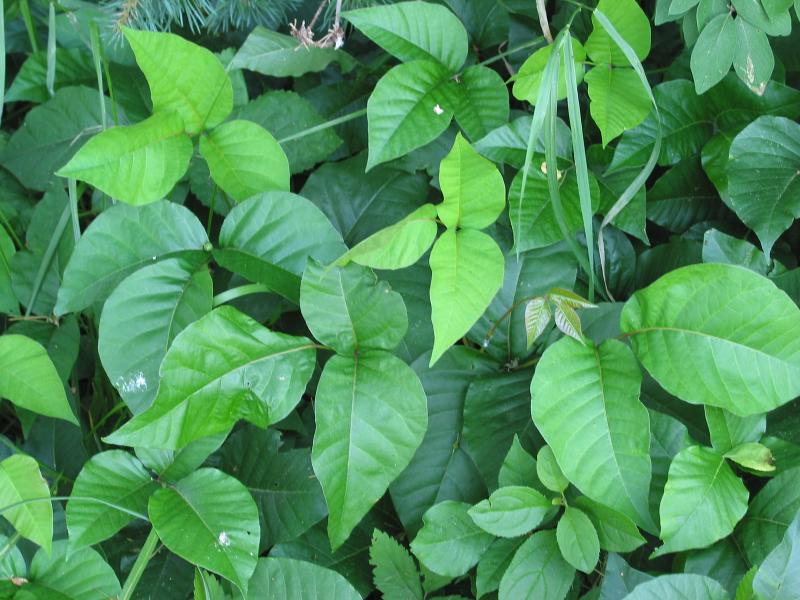 Poison IvyToxicodendron radicans
-
 Poison SumacToxicodendron vernix
-
 Chinese LacquertreeToxicodendron vernicifluum
-
 Atlantic Poison OakToxicodendron pubescens
-
 Pacific Poison-oakToxicodendron diversilobum
-
 Western Poison IvyToxicodendron rydbergii
-
 Asian Poison IvyToxicodendron orientale
-
 Western Poison IvyToxicodendron striatum
Compare
Questions and answers
What is the scientific name of the Japanese Wax Tree?
The scientific name of the Japanese Wax Tree is Toxicodendron succedaneum. Written with its author, the full name is Toxicodendron succedaneum (L.) Kuntze.
Which family does the Japanese Wax Tree belong to?
Toxicodendron succedaneum belongs to the family Anacardiaceae, in the order Sapindales and the class Magnoliopsida.
Where is the Japanese Wax Tree found?
Checklists and occurrence records place Toxicodendron succedaneum in 19 countries, including China, Japan, Taiwan, Hong Kong, South Korea and India.
What is the conservation status of the Japanese Wax Tree?
The IUCN Red List category recorded for Toxicodendron succedaneum is Least Concern (LC).
What other names does the Japanese Wax Tree have?
Toxicodendron succedaneum is also known in English as Japanese Waxtree, Red-lac, Rhustree and Scarlet Rhus.
Sources
Passages the profile rests on
- The species occurs in Asia and has also been planted in other regions, particularly Australia and New Zealand. Source passage: “found in Asia, although it has been planted elsewhere, most notably Australia and New Zealand.” — English Wikipedia
- The species is native to Asia and has been introduced through planting in Australia and New Zealand. Source passage: “found in Asia, although it has been planted elsewhere, most notably Australia and New Zealand.” — English Wikipedia
- The fruits of the species are edible, although eating them is not recommended because the plant is generally toxic. Source passage: “The fruits are edible, though their consumption is not recommended because of the general toxicity of the plant.” — English Wikipedia
- Larvae of five moth species feed on Toxicodendron succedaneum. Source passage: “The larvae of the moths Eteoryctis deversa, Caloptilia aurifasciata, Caloptilia protiella, Caloptilia rhois, and Callidrepana patrana feed on T. succedaneum.” — English Wikipedia
- Toxicodendron succedaneum is officially classified as a noxious weed in Australia and New Zealand. Source passage: “It is now officially classified as a noxious weed in Australia and New Zealand.” — English Wikipedia
- The species is cultivated as an ornamental plant because of its autumn foliage. Source passage: “Because of its beautiful autumn foliage, it has been planted outside Asia as an ornamental plant” — English Wikipedia
- The species is used as a source of lacquer. Source passage: “It is used to produce lacquer.” — English Wikipedia
- In Vietnam, resin from the species is used to produce lacquer paintings called sơn mài. Source passage: “In Vietnam, lacquer is used to produce lacquer paintings, known as sơn mài, from resin of the tree.” — English Wikipedia
- The crushed fruits of the species have traditionally been used to produce candle fuel in East Asia, particularly Japan. Source passage: “In East Asia, in particular in Japan, traditional candle fuel (also called Japan wax) was produced, among other sumac plants, from Toxicodendron succedaneum crushed fruits rather than beeswax or animal fats.” — English Wikipedia
- The stems of the species are commercially used as a source of fisetin extracted in China. Source passage: “Its stems are also a commercial source of fisetin, extracted in China.” — English Wikipedia
- The species is used as a medicinal plant in India. Source passage: “It is used as a medicinal plant in India.” — English Wikipedia
- Japan wax derived from the species is a fat rather than a true wax and contains 10–15% palmitin, stearin, and olein, together with approximately 1% japanic acid. Source passage: “It is not a true wax but a fat that contains 10–15% palmitin, stearin, and olein with about 1% japanic acid (1,21-heneicosanedioic acid).” — English Wikipedia
- Japan wax obtained from the species is extracted using expression, heat, or solvents. Source passage: “It is extracted by expression, heat, or the action of solvents.” — English Wikipedia
Data
- Catalogue of Life, 2026-10-16 XR cc by
- Global Biodiversity Information Facility CC BY 4.0
- Wikidata CC0
- GeoNames CC BY 4.0
- Wikimedia Commons per image; credit shown with each image
- iNaturalist per image; credit shown with each image
- Within the Catalogue of Life, this name comes from Synonymic Checklists of the Vascular Plants of the World cc by
References
- Kuntze. (1891). Revis. Gen. Pl. 1: 154 (1891). where the name was published
This species in other databases
- Catalogue of Life 57LJG
- Wikidata Q130143
- iNaturalist 362794
- World Flora Online wfo-0001052331
- GRIN 101867
Page built on 27 November 2026. See how the catalog is made and all sources and licences.
Cite this page
ScientificNames.org. (2026). Toxicodendron succedaneum (Japanese Wax Tree). Retrieved November 27, 2026, from https://scientificnames.org/species/toxicodendron-succedaneum
“Toxicodendron succedaneum (Japanese Wax Tree).” ScientificNames.org, 2026, scientificnames.org/species/toxicodendron-succedaneum. Accessed 27 Nov. 2026.
ScientificNames.org. “Toxicodendron succedaneum (Japanese Wax Tree).” Accessed November 27, 2026. https://scientificnames.org/species/toxicodendron-succedaneum.
@misc{scientificnames_toxicodendron_succedaneum_japanese_wax_tree,
  author = {{ScientificNames.org}},
  title = {Toxicodendron succedaneum (Japanese Wax Tree)},
  year = {2026},
  url = {https://scientificnames.org/species/toxicodendron-succedaneum},
  note = {Accessed 2026-11-27}
}