Species · Reptiles
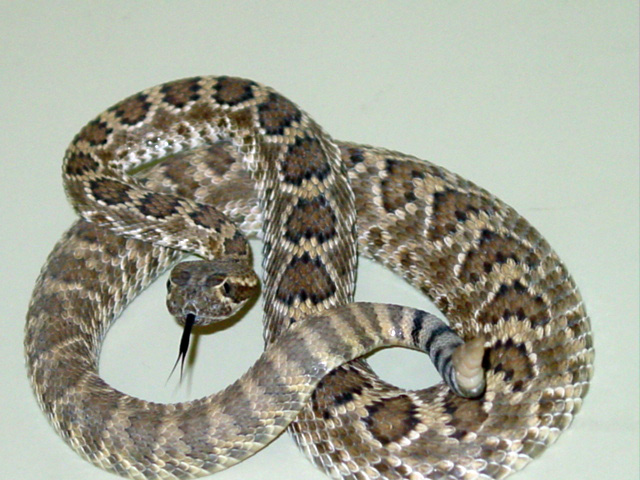
Mexican Lancehead Rattlesnake Crotalus polystictus
The scientific name of the Mexican Lancehead Rattlesnake is Crotalus polystictus. It is a species of reptile in the family Viperidae (viper), order Squamata. The name dates from 1865.
- Scientific name
- Crotalus polystictus (Cope, 1865)
- Common name
- Mexican Lancehead Rattlesnake
- Genus
- Crotalus
- Family
- Viperidae (Viper)
- Order
- Squamata
- Class
- Reptilia
- Red List category
- LC Least Concern
- Recorded in
- 2 countries
- Name status
- accepted in the Catalogue of Life

Overview
The Mexican lance-headed rattlesnake or lance-headed rattlesnake (Crotalus polystictus) is a venomous pit viper species found in central Mexico. No subspecies is currently recognized.
Classification of the Mexican Lancehead Rattlesnake
| Kingdom | Animalia |
|---|---|
| Phylum | Chordata |
| Subphylum | Vertebrata |
| Infraphylum | Gnathostomata |
| Parvphylum | Osteichthyes |
| Megaclass | Tetrapoda |
| Class | Reptilia (Reptile) |
| Order | Squamata (Snakes) |
| Suborder | Serpentes (Snakes) |
| Infraorder | Alethinophidia |
| Family | Viperidae (Viper) |
| Subfamily | Crotalinae |
| Genus | Crotalus (Rattlesnakes) |
| Species | Crotalus polystictus (Cope, 1865) |
Where the Mexican Lancehead Rattlesnake is found
Checklists and occurrence records place Crotalus polystictus in 2 countries. GBIF holds 425 georeferenced records of it.
Countries
Regions and cities with the most records
- Jalisco, Mexico 97
- Iztacalco, Mexico 65
- Iztapalapa, Mexico 65
- Xochimilco, Mexico 65
- Coyoacán, Mexico 64
- Los Reyes Acaquilpan, Mexico 64
- Tlalpan, Mexico 64
- Ciudad Nezahualcoyotl, Mexico 63
- Tláhuac, Mexico 63
- Benito Juarez, Mexico 61
- Xico, Mexico 58
- Magdalena Contreras, Mexico 56
- Michoacán, Mexico 55
- Mexico City, Mexico 49
- Cuauhtémoc, Mexico 43
- Miguel Hidalgo, Mexico 34
- México, Mexico 30
- Chalco de Díaz Covarrubias, Mexico 29
- Morelia, Mexico 26
- Ixtapaluca, Mexico 20
- San Buenaventura, Mexico 15
- Santa María Chimalhuacán, Mexico 14
- Guanajuato, Mexico 12
- Zacatecas, Mexico 12
- Delegación Cuajimalpa de Morelos, Mexico 11
- Aguascalientes, Mexico 9
- Azcapotzalco, Mexico 9
- Naucalpan de Juárez, Mexico 9
- Ciudad López Mateos, Mexico 8
- Gustavo Adolfo Madero, Mexico 8
- Tlalnepantla, Mexico 8
- Buenavista, Mexico 7
- Querétaro, Mexico 7
- Santiago de Querétaro, Mexico 7
- Chicoloapan de Juárez, Mexico 6
- Cuautitlán Izcalli, Mexico 6
Range as the checklists state it
C Mexico (from S Zacatecas and NE Colima to EC Veracruz, Aguascalientes, Morelos, Jalisco, Querétaro). Elevation: 1450-2600 m.
A number beside a place is its count of GBIF occurrence records. A place without a number comes from a checklist alone. Records show where a species has been observed or collected, which can include escapes and vagrants.
Common names
English
- Mexican Lancehead Rattlesnake
- Mexican Lance-headed Rattlesnake
Names in 6 other languages
- Chinese
- 多斑響尾蛇
- German
- Mexikanische Lanzenkopfklapperschlange
- Italian
- Crotalo del Messico, Crotalo testa di lancia messicano, Serpente a sonagli del Messico, Serpente a sonagli testa di lancia messicano
- Portuguese
- Cascavel-ocelada
- Russian
- Мексиканский гремучник
- Spanish
- Cascabel ocelada, Hocico de Puerco, Víbora-cascabel ocelada
Synonyms
3 other scientific names have been used for this species and are now treated as synonyms of Crotalus polystictus.
- Caudisona polysticta Cope, 1865
- Crotalus jimenezii Dugés, 1877
- Crotalus ximenesii Dugés, 1877
Related species
-
 Timber RattlesnakeCrotalus horridus
-
 Western Diamondback RattlesnakeCrotalus atrox
-
 SidewinderCrotalus cerastes
-
 Mojave RattlesnakeCrotalus scutulatus
-
 Hopi RattlesnakeCrotalus viridis
-
 Western RattlesnakeCrotalus oreganus
-
 Tiger RattlesnakeCrotalus tigris
-
 Black-tailed RattlesnakeCrotalus molossus
Compare
Questions and answers
What is the scientific name of the Mexican Lancehead Rattlesnake?
The scientific name of the Mexican Lancehead Rattlesnake is Crotalus polystictus. Written with its author, the full name is Crotalus polystictus (Cope, 1865).
Which family does the Mexican Lancehead Rattlesnake belong to?
Crotalus polystictus belongs to the family Viperidae, in the order Squamata and the class Reptilia.
Where is the Mexican Lancehead Rattlesnake found?
Checklists and occurrence records place Crotalus polystictus in 2 countries: Mexico and United States.
What is the conservation status of the Mexican Lancehead Rattlesnake?
The IUCN Red List category recorded for Crotalus polystictus is Least Concern (LC).
What other names does the Mexican Lancehead Rattlesnake have?
Crotalus polystictus is also known in English as Mexican Lance-headed Rattlesnake.
Sources
Data
- Catalogue of Life, 2026-10-16 XR cc by
- Global Biodiversity Information Facility CC BY 4.0
- Wikidata CC0
- English Wikipedia CC BY-SA 4.0
- GeoNames CC BY 4.0
- Wikimedia Commons per image; credit shown with each image
- Within the Catalogue of Life, this name comes from The Reptile Database cc by
References
- Cope, E. D. (1866). Third contribution to the herpetology of tropical America. Proc. Acad. Nat. Sci. Philadelphia 17: 185-198 [1865].
- Dugès, A. (1877). Apuntes para la monografía de los crótalos de México. La Naturaleza, 4: 1–29.
- Cope, E. D. (1885). Twelfth contribution to the herpetology of tropical America. Proc. Amer. Philos. Soc. 22: 167-194 [1884].
- Cope, E. D. (1900). The crocodilians, lizards and snakes of North America. Ann. Rep. U.S. Natl. Mus. 1898: 153-1270.
- Klauber, Laurence M. (1952). Taxonomic studies on rattlesnakes of Mainland Mexico. Bulletins of the Zoological Society of San Diego (26): 1-143.
- McCranie, James R. (1976). Crotalus polystictus. Catalogue of American Amphibians and Reptiles (180): 1-2.
- Wilson, Larry David;McCranie, James R. (1979). Notes on the herpetofauna of two mountain ranges in Mexico (Sierra Fria, Aguascalientes, and Sierra Morones, Zacatecas. Journal of Herpetology 13 (3): 271-278.
- Stille, B. (1987). Dorsal scale microdermatoglyphics and rattlesnake (Crotalus and Sistrurus) phylogeny (Reptilia: Viperidae: Crotalinae). Herpetologica 43: 98-104.
- Campbell, J. A., & Lamar, W. W. (1989). The Venomous Reptiles of Latin America. Comstock Publishing/Cornell University Press, Ithaca.
- Castro-Franco, Rubén, & María Guasalupe Bustos-Zagal. (1994). List of reptiles of Morelos, Mexico, and their distribution in relation to vegetation types. Southwestern Naturalist 39 (2): 171-175.
- McDiarmid, R.W.; Campbell, J.A. & Touré,T.A. (1999). Snake species of the world. Vol. 1. [type catalogue]. Herpetologists’ League, 511 Pp.
- McCranie, J. R., & Wilson, L. D. (2001). The herpetofauna of the Mexican State of Aguascalientes. Courier Forschungsinstitut Senckenberg 230: 1-57.
- Vázquez Díaz, Joel;Quintero Díaz, Gustavo E. (2005). Anfibios y Reptiles de Aguascalientes [2nd ed.]. CONABIO, CIEMA, 318 Pp.
- Bryson, R.W., Jr. & D. Hartman. (2005). An additional observation of aquatic behavior in the Mexican lance-headed rattlesnake (Crotalus polystictus). Bull. Maryland Herpetol. Soc., 41(2): 51-52.
- Beaman, K. R., & Hayes, W. K. (2008). Rattlesnakes: Research Trends and Annotated Checklist. In: Hayes et al. (eds), The biology of rattlesnakes. Loma Linda University Press, Pp. 5-16.
- Cundall, D. (2009). Viper Fangs: Functional Limitations of Extreme Teeth. Physiological and Biochemical Zoology: Ecological and Evolutionary Approaches, 82(1), 63–79.
- Meik, & Jesse M and André Pires-daSilva. (2009). Evolutionary morphology of the rattlesnake style. BMC Evolutionary Biology 2009, 9:35.
- Hoser, R. (2009). A reclassification of the rattlesnakes; species formerly exclusively referred to the genera Crotalus and Sistrurus. Australasian J. Herpetol. 3: 1-21 (Dubious Journal).
- Jadin, Robert C.; Jacobo Reyes Velasco and Eric N. Smith. (2010). Hemipenes of the long-tailed rattlesnakes (Serpentes: Viperidae) from Mexico. Phyllomedusa 9 (1): 69-74.
- Wüster, W., & Bérnils, R. S. (2011). On the generic classification of the rattlesnakes, with special reference to the Neotropical Crotalus durissus complex (Squamata: Viperidae). Zoologia 28 (4): 417–419.
- Meik, Jesse M.; Jeffrey W. Streicher, Estrella Mociño-Deloya, Kirk Setser, and David Lazcano. (2012). Shallow phylogeographic structure in the declining Mexican Lance-headed Rattlesnake, Crotalus polystictus (Serpentes: Viperidae). Phyllomedusa 11 (1): 3-12.
- Hoser, R. (2012). A classification of the rattlesnakes; species formerly exclusively referred to the genera Crotalus and Sistrurus and a division of the Elapid genus Micrurus. Australasian J. Herpetol. 11: 2-24 (Dubious Journal).
- Wallach, Van; Kenneth L. Williams, Jeff Boundy. (2014). Snakes of the World: A Catalogue of Living and Extinct Species. [type catalogue]. Taylor and Francis, CRC Press, 1237 Pp.
- Leyte-Manrique, Adrian; Efrén M. Hernández Navarro y Luis A. Escobedo-Morales. (2015). Herpetofauna de Guanajuato: Un análisis histórico y contemporáneo de su conocimiento. Revista Mexicana de Herpetología 1(1): 1–14.
- Bañuelos-Alamillo, Jorge A., Rubén Alonso Carbajal-Márquez and Miguel Angel Olvera-Rivera. (2016). Distribution Notes. Crotalus polystictus (Cope, 1865). Mesoamerican Herpetology 3 (1): 207.
This species in other databases
Page built on 25 November 2026. See how the catalog is made and all sources and licences.
Cite this page
ScientificNames.org. (2026). Crotalus polystictus (Mexican Lancehead Rattlesnake). Retrieved November 25, 2026, from https://scientificnames.org/species/crotalus-polystictus
“Crotalus polystictus (Mexican Lancehead Rattlesnake).” ScientificNames.org, 2026, scientificnames.org/species/crotalus-polystictus. Accessed 25 Nov. 2026.
ScientificNames.org. “Crotalus polystictus (Mexican Lancehead Rattlesnake).” Accessed November 25, 2026. https://scientificnames.org/species/crotalus-polystictus.
@misc{scientificnames_crotalus_polystictus_mexican_lancehead_rattlesnake,
  author = {{ScientificNames.org}},
  title = {Crotalus polystictus (Mexican Lancehead Rattlesnake)},
  year = {2026},
  url = {https://scientificnames.org/species/crotalus-polystictus},
  note = {Accessed 2026-11-25}
}