Species · Flowering plants
Kearney's Sumac Rhus kearneyi
The scientific name of the Kearney's Sumac is Rhus kearneyi. It is a species of flowering plant in the family Anacardiaceae (sumac family), order Sapindales.
- Scientific name
- Rhus kearneyi F.A.Barkley
- Common name
- Kearney's Sumac
- Genus
- Rhus
- Family
- Anacardiaceae (Sumac Family)
- Order
- Sapindales
- Class
- Magnoliopsida
- Red List category
- LC Least Concern
- Recorded in
- 2 countries
- Name status
- accepted in the Catalogue of Life

Overview
Kearney's Sumac is a flowering plant in the family Anacardiaceae. It occurs in Arizona, United States, and Baja California, Mexico. It is a shrub or small tree that can grow up to 4 meters tall, with red twigs and petioles and leathery leaves.
Written 27 November 2026 from the sources listed below. Each statement was checked against the passage it cites; statements that could not be supported were removed.
Appearance
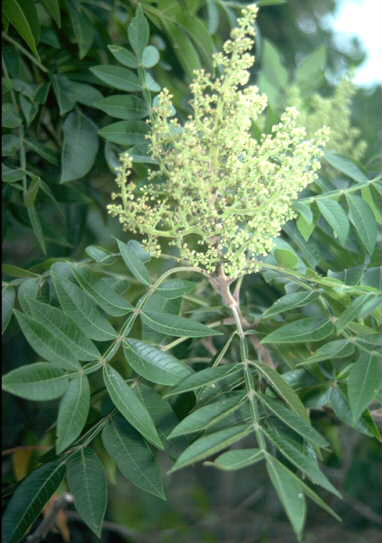
Kearney's Sumac is a shrub or small tree that can grow up to 4 meters tall. Its twigs and petioles are red.[1][2][3]
Its leaves are oval or oblong and may be three-lobed or divided into three leaflets. They are leathery and range in color from shiny green to waxy bluish, with white veining.[4][5]
Its flowers are cream or pink. Its fruit measures approximately one centimeter in length.[6][7]
Reproduction and life cycle
Its inflorescences contain numerous crowded flowers.[8]
Habitat
Kearney's Sumac is native to western North America. It occurs in Arizona, United States, and Baja California, Mexico.[9][10]
The subspecies Rhus kearneyi ssp. kearneyi occurs in Yuma County, Arizona. It is documented from a single population on the Barry Goldwater Bombing Range.[11][12]
Similar species
Kearney's Sumac is listed among the other common species in a Forest Service document discussing yellow paloverde.[13]
Classification of the Kearney's Sumac
| Kingdom | Plantae |
|---|---|
| Subkingdom | Pteridobiotina |
| Phylum | Tracheophyta |
| Class | Magnoliopsida |
| Order | Sapindales |
| Family | Anacardiaceae (Sumac Family) |
| Tribe | Rhoeae |
| Genus | Rhus (Sumac) |
| Species | Rhus kearneyi F.A.Barkley |
Where the Kearney's Sumac is found
Checklists and occurrence records place Rhus kearneyi in 2 countries across North America. GBIF holds 331 georeferenced records of it.
Countries
Regions and cities with the most records
- Baja California, Mexico 123
- Baja California Sur, Mexico 76
- Arizona, United States 69
- Sonora, Mexico 9
- Fortuna Foothills, United States 7
- Ciudad Constitución, Mexico 3
A number beside a place is its count of GBIF occurrence records. A place without a number comes from a checklist alone. Records show where a species has been observed or collected, which can include escapes and vagrants.
Common names
English
- Kearney's Sumac
Subspecies and varieties
- Rhus kearneyi subsp. kearneyi subspecies
- Rhus kearneyi subsp. virginum subspecies
Related species
-
 Staghorn SumacRhus typhina
-
 SumacRhus coriaria
-
 Smooth SumacRhus glabra
-
 Fragrant SumacRhus aromatica
-
 Shining SumacRhus copallina
-
 LemonadeberryRhus integrifolia
-
 Chinese SumacRhus chinensis
-
 Skunkbush SumacRhus trilobata
Compare
Questions and answers
What is the scientific name of the Kearney's Sumac?
The scientific name of the Kearney's Sumac is Rhus kearneyi. Written with its author, the full name is Rhus kearneyi F.A.Barkley.
Which family does the Kearney's Sumac belong to?
Rhus kearneyi belongs to the family Anacardiaceae, in the order Sapindales and the class Magnoliopsida.
Where is the Kearney's Sumac found?
Checklists and occurrence records place Rhus kearneyi in 2 countries: Mexico and United States.
What is the conservation status of the Kearney's Sumac?
The IUCN Red List category recorded for Rhus kearneyi is Least Concern (LC).
Sources
Passages the profile rests on
- The species is a shrub or small tree. Source passage: “This species is a shrub or small tree up to 4 meters tall.” — English Wikipedia
- The species can grow up to 4 meters tall. Source passage: “This species is a shrub or small tree up to 4 meters tall.” — English Wikipedia
- Its twigs and petioles are red. Source passage: “The twigs and petioles are red.” — English Wikipedia
- Its leaves are oval or oblong and may be three-lobed or divided into three leaflets. Source passage: “The leaves are oval or oblong in shape, sometimes three-lobed or divided into three leaflets.” — English Wikipedia
- Its leaves are leathery and range in color from shiny green to waxy bluish, with white veining. Source passage: “They are leathery and a shiny green to a waxy bluish in color with white veining.” — English Wikipedia
- Its flowers are cream or pink. Source passage: “The inflorescence contains many crowded cream or pink flowers.” — English Wikipedia
- Its fruit measures approximately one centimeter in length. Source passage: “The fruit is about a centimeter long.” — English Wikipedia
- Its inflorescences contain numerous crowded flowers. Source passage: “The inflorescence contains many crowded cream or pink flowers.” — English Wikipedia
- The species is native to western North America. Source passage: “It is native to western North America, where it can be found in Arizona in the United States and Baja California in Mexico.” — English Wikipedia
- The species occurs in Arizona, United States, and Baja California, Mexico. Source passage: “It is native to western North America, where it can be found in Arizona in the United States and Baja California in Mexico.” — English Wikipedia
- The subspecies Rhus kearneyi ssp. kearneyi occurs in Yuma County, Arizona. Source passage: “The ssp. kearneyi occurs in Yuma County, Arizona.” — English Wikipedia
- The subspecies Rhus kearneyi ssp. kearneyi is documented from a single population on the Barry Goldwater Bombing Range. Source passage: “There is only one population, which is located on the Barry Goldwater Bombing Range.” — English Wikipedia
- Kearney's sumac is listed among the other common species in a Forest Service document discussing yellow paloverde. Source passage: “Other common species include elephant tree, Bigelow's nolina, yellow paloverde, and Kearney's sumac.” — research.fs.usda.gov
Data
- Catalogue of Life, 2026-10-16 XR cc by
- Global Biodiversity Information Facility CC BY 4.0
- Wikidata CC0
- GeoNames CC BY 4.0
- Wikimedia Commons per image; credit shown with each image
- Within the Catalogue of Life, this name comes from Synonymic Checklists of the Vascular Plants of the World cc by
References
- Barkley, F. A. where the name was published
This species in other databases
- Catalogue of Life 4SN5F
- Wikidata Q7321563
- iNaturalist 167825
- World Flora Online wfo-0001049907
- GRIN 400745
Page built on 27 November 2026. See how the catalog is made and all sources and licences.
Cite this page
ScientificNames.org. (2026). Rhus kearneyi (Kearney's Sumac). Retrieved November 27, 2026, from https://scientificnames.org/species/rhus-kearneyi
“Rhus kearneyi (Kearney's Sumac).” ScientificNames.org, 2026, scientificnames.org/species/rhus-kearneyi. Accessed 27 Nov. 2026.
ScientificNames.org. “Rhus kearneyi (Kearney's Sumac).” Accessed November 27, 2026. https://scientificnames.org/species/rhus-kearneyi.
@misc{scientificnames_rhus_kearneyi_kearneys_sumac,
  author = {{ScientificNames.org}},
  title = {Rhus kearneyi (Kearney's Sumac)},
  year = {2026},
  url = {https://scientificnames.org/species/rhus-kearneyi},
  note = {Accessed 2026-11-27}
}